Why You’re Here (and Why It’s Not Always a Big Deal)
If you’re here, chances are one of your sprinkler zones quit on you and you’re trying to figure out why. Maybe it’s been watering unevenly, maybe it’s completely dead, or maybe it’s running when it shouldn’t.
Either way, you just want it fixed right the first time so you’re not wasting water, losing grass, or dealing with an HOA letter. In this guide, we’ll cover the most common reasons a zone fails in Little Elm, how to spot them, and what it takes to get it working again so you can stop worrying about it.
Why Sprinkler Zone Problems Are Common in Little Elm
Texas heat and clay-heavy soil
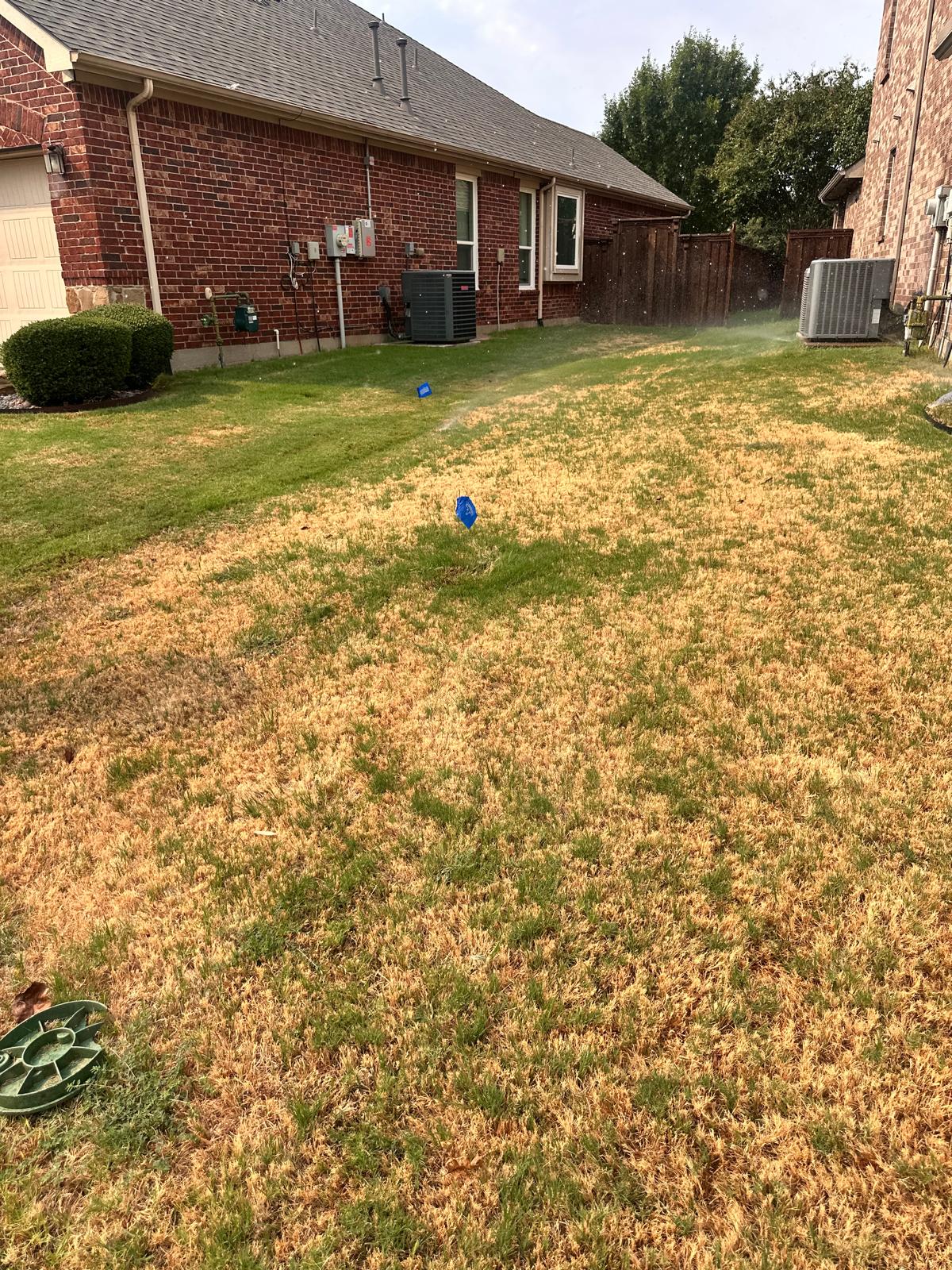
Our clay soil holds water differently than sandy soil. That means even a small clog or leak can leave dry spots fast and standing water can cause root rot if it sits too long.
HOA standards and curb appeal pressures
In neighborhoods like Valencia on the Lake or Frisco Hills, a broken zone isn’t just about grass it’s about keeping your place looking good for the street and the neighbors.
Why “waiting it out” makes the problem worse
A bad zone won’t “work itself out.” What starts as a simple valve issue today can turn into a bigger leak tomorrow.
Top Reasons Your Sprinkler Zone Isn’t Working (and How to Spot Them)
1. Hidden Valve or Solenoid Issues
What’s happening: The valve that controls water to your zone can get stuck, damaged, or buried over time. The solenoid (the small black or gray piece on top of the valve) can also burn out or fail, keeping it from opening.
How to spot it: If only one zone is out but the others run fine, the valve or solenoid is likely the culprit. Sometimes you’ll hear a faint “click” when it’s trying to open if you don’t, that’s a clue.
Pro tip: Valves are usually in a green-lidded box in the yard, but Little Elm’s older systems sometimes have them buried deeper or stacked in larger boxes. Over the years, mulch or landscaping rock can hide them completely which is why we often use a valve locator.
2. Wiring or Controller Malfunctions
What’s happening: Wires can get chewed by rodents, cut by shovels or edgers, or pulled loose as the ground shifts. Controllers can also glitch or reset after power outages.
How to spot it: A zone that works one day and not the next can be a loose wire. If multiple zones are out, the controller might be to blame.
Pro tip: Check if your controller still has your schedule saved. If it’s gone, a dead backup battery or power outage probably wiped it out. And don’t trust wire colors to match zone numbers that’s why pros use testers instead of guessing.
3. Clogged or Damaged Sprinkler Heads
What’s happening: Dirt, grass clippings, or debris can clog a head, blocking water flow. A clog can also lower the pressure for several heads in the same zone.
How to spot it: A head might not pop up fully, the spray might be weak or uneven, or you might see pooling water around it.
Pro tip: Cleaning the filter inside often fixes it. But some heads have an internal check valve that can stick shut, especially if they’ve been unused for a while; it can act just like a clog even when the filter’s clean.
4. Broken Lateral Line or Main Line Leak
What’s happening: A lateral line leak will usually affect just one zone. A main line leak drops the pressure for all zones because it’s before the valves.
How to spot it: Lateral leaks often cause soggy spots or bubbling water when the zone runs. Main leaks might keep your pump or city meter running even when the system’s off.
Pro tip: If water keeps flowing with the controller off, it’s probably a main line leak. On city water? Shut everything in the house off and check your meter if it’s spinning, water’s going somewhere it shouldn’t.
5. Zone Programming Errors
What’s happening: Sometimes the controller settings are off, or it reset itself after a power outage.
How to spot it: If the zone runs in manual mode but not on schedule, it’s a programming problem.
Pro tip: Keep a quick photo of your program so you can reload it in seconds if it resets.
How to Fix a Broken Sprinkler Zone (Step-by-Step)
- Find the real cause — Don’t replace parts until you know what’s wrong.
- Use the right tools — Valve locators, multimeters, and pressure gauges save a ton of time.
- Repair and test — Some PVC repairs need special fittings so the pipe doesn’t weaken over time.
- Protect it with a warranty — In places like Union Park or Frisco Hills, that means if the fix doesn’t hold, you’re covered.
Preventing Future Sprinkler Zone Problems
- Have the system checked before each season.
- Keep heads clear of grass and dirt.
- Watch for low pressure, uneven watering, or soggy areas.
- Test your rain/freeze sensor yearly so you’re not watering in bad weather.
- In HOA neighborhoods like Valencia on the Lake, this also keeps the lawn looking right year-round.
FAQs About Sprinkler Zone Repairs in Little Elm
What causes one sprinkler zone to stop working?
Usually a bad valve or solenoid, wiring issue, or clogged head.
How do I know if my sprinkler valve is bad?
If one zone won’t turn on but the others do, the valve or solenoid is a good suspect.
Can I fix a broken sprinkler zone myself?
Some things are DIY-able, but leaks and wiring are usually better left to a pro.
Does a sprinkler repair come with a warranty?
Yes if it’s done right the first time, it should be backed by a solid warranty.
Protecting Your Yard and Your Peace of Mind
From Union Park to Paloma Creek, Frisco Hills to Valencia on the Lake, sprinkler problems happen to everyone. The difference is how fast you get them fixed and whether they’re fixed right.
Your lawn deserves a repair that’s done once and done right, so you can get back to your day without thinking about sprinklers again.