Why Does My Yard Hold Water? Understanding Drainage Problems in North Texas
Standing Water, Yard Flooding & Poor Drainage Don’t Usually Fix Themselves. Let’s Find Out Why It’s Happening.
If water doesn’t drain and keeps collecting in your yard after it rains, you’re probably asking one simple but important question about what’s causing the problem.
“Is this normal?”
Sometimes it is.
After a heavy storm, it’s common for parts of your yard to stay wet for a short time.
But if the same areas repeatedly collect water, stay muddy for days, or become unusable every time it rains, your property may have a drainage problem.
The good news?
You don’t have to know what’s causing it before reaching out.
Our job is to help you understand why the water is collecting and what options make the most sense for your property.
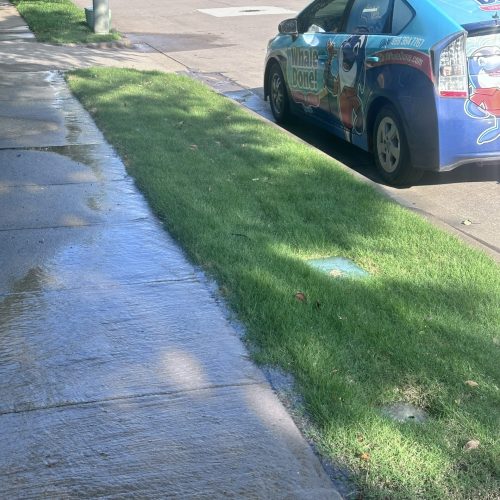
Is This A Drainage Problem?
Your property may have a drainage issue if you notice:
✔ Standing water after rain.
✔ The same area floods after every storm.
✔ Muddy spots that stay wet for several days.
✔ Water collecting near your home’s foundation.
✔ Grass dying in consistently wet areas.
✔ Mulch washing into the lawn.
✔ Soil erosion after heavy rain.
✔ Parts of your yard that you avoid because they’re always soggy.
If several of these sound familiar, it’s worth finding out why.
What Homeowners Often Think
“It only happens when it rains.”
You’re right.
And that’s exactly why many homeowners wait.
Once the weather turns dry, it’s easy to assume the problem has gone away.
In reality…
The rain stopped.
The drainage problem didn’t.
The next heavy storm usually brings the same standing water, muddy lawn, and frustration all over again.
Why Is Water Collecting In My Yard?
There isn’t one answer.
Several different conditions can cause standing water, and more than one may be affecting your property at the same time.
Some of the most common causes include:
Heavy Clay Soil
Much of North Texas has clay soil, which absorbs water slowly. After heavy rainfall, water often remains on the surface longer because it can't soak into the ground quickly.
Low Areas In The Landscape
Water naturally flows to the lowest point. If that low area has no way to drain, water continues collecting there after every storm.
Roof Runoff
Your roof moves a tremendous amount of water during a storm. If that water isn't directed away from the home properly, it can create recurring wet areas around the foundation or throughout the yard.
Hidden Sprinkler Leaks
Not every wet spot is caused by rainfall. A leaking sprinkler system can produce symptoms that look almost identical to poor drainage. That's one reason we evaluate both possibilities before recommending a solution.
More Than One Issue
Sometimes there isn't just one cause. A property may have heavy clay soil, a low area, and roof runoff all contributing to the same drainage problem. Understanding how those factors work together is an important part of finding the right solution.
Why Waiting Usually Doesn’t Solve The Problem
Drainage problems rarely repair themselves.
When the weather dries out, the symptoms disappear—but the underlying conditions remain.
Waiting until the next storm often means:
✔ The same standing water.
✔ The same muddy lawn.
✔ The same frustration.
Many homeowners choose to address drainage concerns during dry weather so improvements can be planned and completed before the next heavy rain.
Why Some Homeowners Decide To Fix It Now
Every homeowner’s situation is different.
Some want to enjoy their backyard without avoiding muddy areas.
Some are concerned about water collecting near the foundation.
Others are preparing to landscape or sell their home and want to address recurring drainage issues before they become questions from buyers.
Whatever your reason, understanding the problem is always the first step.
How We Determine What’s Causing The Problem
We don’t believe in recommending a solution before understanding the cause.
During your Whale Done Assessment™, we’ll evaluate:
✔ Where water is collected.
✔ How water moves across your property.
✔ Whether the issue appears to be drainage-related or irrigation-related.
✔ Conditions around your home’s foundation and landscape.
✔ The most likely cause—or combination of causes.
Only then do we recommend the next step.
Sometimes that’s a French drain.
Sometimes it’s another solution.
Sometimes the issue isn’t drainage at all.
Our goal is to help you make the right decision—not simply recommend a product.
What Happens Next?
Once we understand why water is collecting, we’ll explain your options in plain English.
If a French drain is the right solution, we’ll show you how it works, why it’s being recommended, and answer every question you have before any work begins.
If another solution makes more sense, we’ll explain that too.
Honest recommendations are part of the Whale Done way.
Frequently Asked Questions
Is standing water after heavy rain always a drainage problem?
Not always.
Some temporary pooling after an unusually heavy storm can be normal.
However, if the same areas repeatedly collect water or stay wet for several days, it’s worth having the property evaluated.
Can a sprinkler leak look like a drainage problem?
Yes.
Hidden irrigation leaks often create wet areas that look very similar to poor drainage.
That’s one reason we evaluate both possibilities during the assessment.
Should I wait until it rains again before scheduling?
You can.
However, many homeowners prefer scheduling during dry weather so there’s time to evaluate the property and make informed decisions before the next heavy rain arrives.
How do you know which drainage solution is right?
Every property is different.
Our assessment is designed to identify the cause of the problem before recommending any solution.
Whale Done
Ready To Understand What's Causing The Water?
You don’t have to guess why your yard stays wet.
Schedule your Whale Done Assessment™ and let us evaluate your property, explain what we find, and help you decide on the solution that’s right for your home.
$99 Investment • Applied Toward Approved Repairs
Or call (469) 384-7767 to speak with our team.