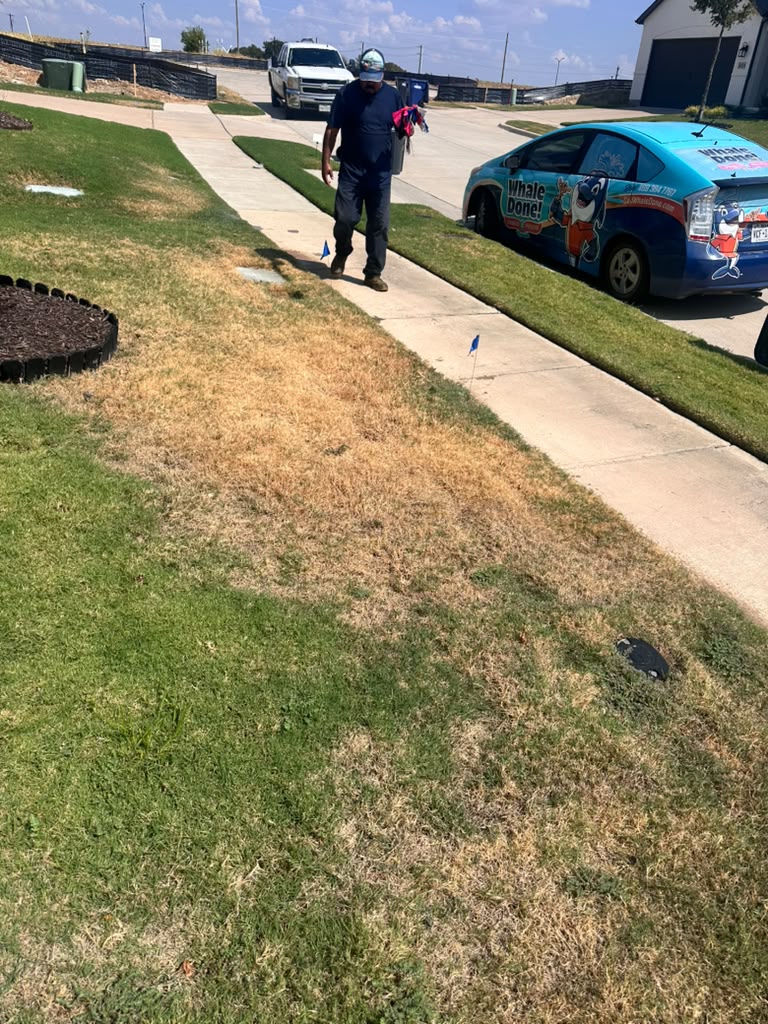
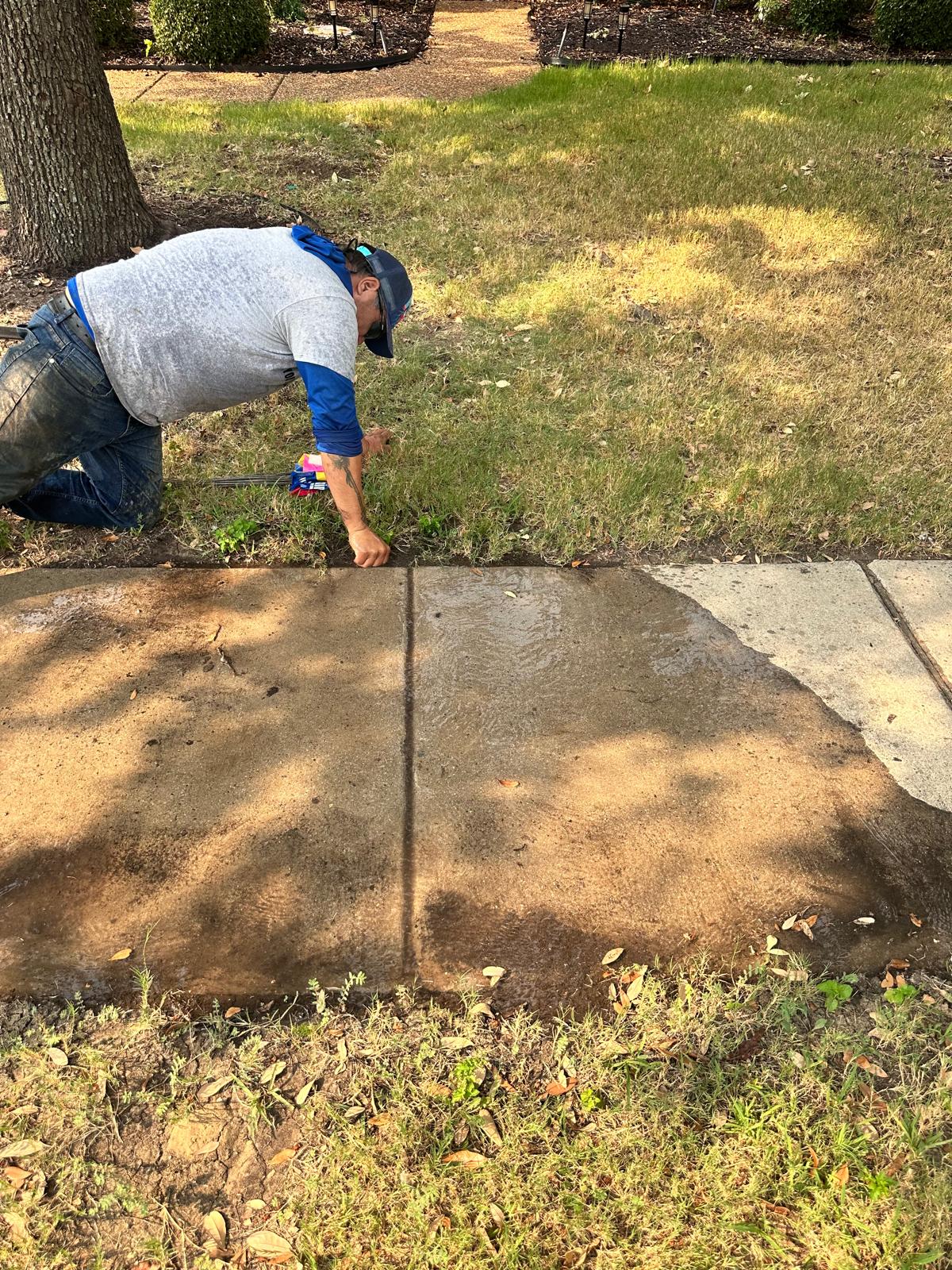
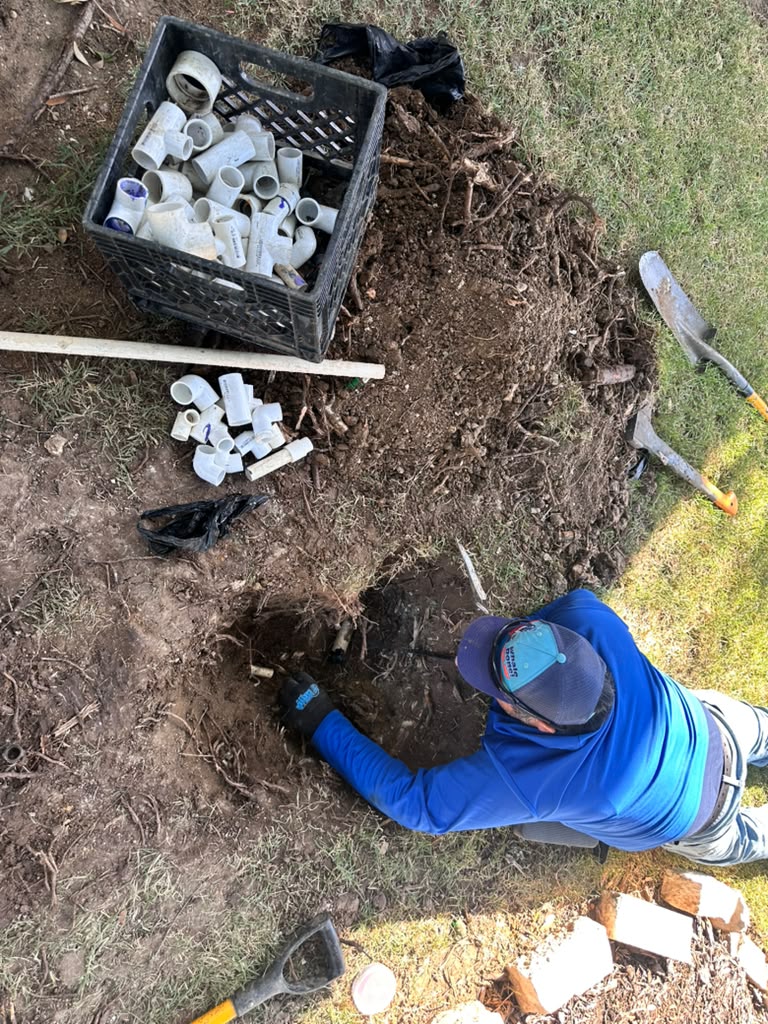
The best time to add drip irrigation in Murphy TX is when you notice flower beds, shrubs, or foundation plantings struggling under standard spray heads — usually because spray irrigation wastes water on narrow beds, mulch, or plants with different watering needs than turf. Drip irrigation also makes sense during a landscape renovation, a new planting project, or when a homeowner wants to reduce water use in beds without affecting lawn coverage. It is not usually necessary for open turf areas, which are typically better served by rotor or spray zones.
At a Glance
- Difficulty: Moderate (best installed by a licensed irrigation professional for proper zoning)
- Estimated Time: 1–2 days for a typical residential bed system
- Tools Needed: Drip tubing, emitters, a dedicated valve, pressure regulator, filter
- Works For: Flower beds, shrubs, foundation plantings, vegetable gardens, potted arrangements
- May Not Solve: Poor lawn health, turf drainage issues, or problems unrelated to bed watering
Why Drip Irrigation Matters in Murphy TX
Standard spray heads are designed to cover open turf efficiently, but they are inefficient in narrow or irregularly shaped beds. Water lands on leaves, mulch, and sidewalks instead of soil, and much of it evaporates before it reaches the root zone.
Drip irrigation delivers water directly to the base of each plant through low-flow emitters. This reduces evaporation, limits fungal disease caused by wet foliage, and allows different plant types to receive the exact amount of water they need.
Signs It May Be Time to Add Drip Irrigation in Murphy TX
A homeowner doesn’t need to guess. A few clear signs usually point to the right time:
- Plants near the house are stressed while the lawn nearby looks healthy
- Spray patterns overshoot beds, watering sidewalks, driveways, or siding instead of soil
- Mulch washes out repeatedly after each watering cycle
- New landscaping is being installed and needs a dedicated water source
- Water bills feel high relative to the size of the planting beds
- Foundation plantings are inconsistent, with some areas overly wet and others bone dry
If two or more of these sound familiar, drip irrigation is worth evaluating.
Step-By-Step: How the Decision Process Works
1. Evaluate the Current Zone Coverage
A licensed technician checks whether beds are currently tied into a spray or rotor zone. Mixed zones — turf and beds sharing one valve — are one of the most common reasons plants underperform.
2. Identify Plant Water Needs
Different plants require different amounts of water. Grouping plants by water need (“hydrozoning”) makes drip irrigation far more effective than a single blanket zone.
3. Check Water Pressure and Flow
Drip systems operate at much lower pressure than spray heads. A pressure regulator and filter are typically required to prevent emitter clogging or tubing failure.
4. Plan Emitter Placement
Emitters are placed based on plant size and root spread — not evenly spaced like spray heads. Larger shrubs may need two or more emitters; smaller perennials may need only one.
5. Separate the Zone
For drip irrigation to work correctly, it should run on its own valve and its own watering schedule, separate from turf zones.
Common Mistakes Homeowners Make
- Connecting drip lines to an existing spray zone instead of creating a dedicated zone
- Skipping the pressure regulator, which shortens the life of tubing and emitters
- Overwatering with drip, assuming it needs to run as long as spray heads
- Placing emitters too close to the stem, encouraging rot in some plant types
- Not adjusting for plant growth, leaving young plants under-watered as they mature
Avoiding these mistakes is often the difference between a drip system that performs well for years and one that requires constant troubleshooting.
Local Considerations in Murphy, TX
North Texas conditions make drip irrigation especially useful for Murphy homeowners:
Clay soil
Murphy drains slowly and tends to shed water before it can soak in, so the slow, direct application from drip emitters reduces runoff far more effectively than spray irrigation, which often ends up on the surface.
Summer heat
Increases evaporation rates, which means water sprayed into the air loses more moisture before it ever reaches the root zone; drip irrigation delivers water directly to the soil, making it a more efficient option during the hottest months.
Foundation plantings
bBenefit from consistent, controlled moisture, since drip irrigation avoids the wet-dry cycles common with spray systems and can help reduce the soil expansion and contraction that contributes to movement near the slab during dry stretches.
Water restrictions
Common across Collin County and the broader North Texas region during peak summer months, are easier to comply with when a low-flow drip system is used, since it applies far less water than spray or rotor zones over the same period.
Wind
Can distort spray patterns in open beds, pushing water onto sidewalks, driveways, or neighboring plants instead of the intended target; drip irrigation avoids this issue entirely since water is applied directly to the soil rather than sprayed through the air.
Homeowners can review current watering guidance through resources like the EPA WaterSense program and North Texas-specific guidance from Texas A&M AgriLife’s turfgrass and landscape research, both of which support drip irrigation as an efficient watering method for beds and gardens.
Related Problems That Aren’t Solved By Drip Irrigation
Adding drip irrigation solves bed-watering inefficiency, but it will not fix:
- Low system-wide water pressure — often traced back to a separate plumbing issue, a partially closed main valve, or a supply line problem rather than anything related to the drip zone itself, and typically requires a full system check.
- Uneven turf coverage — usually caused by incorrect spray head spacing, mismatched nozzle types, or heads that were never adjusted for the shape of the lawn, none of which a drip zone in the beds can influence.
- Controller programming errors — a scheduling problem rather than a hardware failure, often caused by incorrect run times, overlapping zones, or a controller that reset after a power outage and needs to be reprogrammed.
- Underground leaks — can mimic poor plant health even in beds that are properly zoned for drip irrigation, since water is being lost before it ever reaches the emitters, gradually starving the root zone.
If a homeowner is still seeing inconsistent results after adding drip irrigation, one of these related issues is often the cause. A full system inspection can help identify whether the issue is bed-related or system-wide.
Frequently Asked Questions
- Does drip irrigation work well in Texas clay soil?
Yes. Clay soil drains slowly, and drip irrigation’s slow, direct application actually works better than spray irrigation, which often runs off before it can soak in.
- Can drip irrigation be added to an existing sprinkler system?
In most cases, yes. A licensed irrigation company can convert an existing bed zone to drip or add a new dedicated drip zone, depending on the layout.
- How long should a drip zone run compared to a spray zone?
Drip zones typically run longer per cycle but use far less water overall, since flow rates are much lower than spray or rotor heads.
- Is drip irrigation more expensive than spray irrigation?
Installation costs can be similar or slightly higher upfront, but drip systems generally use less water over time, which can offset the difference through lower water bills.
- Will drip irrigation help protect my home’s foundation?
Consistent, controlled moisture near the foundation can help reduce the soil expansion and contraction that contributes to foundation movement, though drip irrigation should be part of a broader watering strategy, not the only solution.
Bottom Line
Drip irrigation in Murphy TX is worth considering any time flower beds, shrubs, or foundation plantings are struggling under standard spray coverage, or when new landscaping is being installed. It is not a universal fix for every irrigation issue, but for beds, gardens, and foundation zones, it is one of the most efficient and plant-friendly watering methods available in North Texas’s clay soil and summer heat.
Next Step
Homeowners who are unsure whether their beds would benefit from drip irrigation don’t need to guess. A licensed irrigation company can evaluate current zoning, soil conditions, and plant placement to determine whether a dedicated drip zone makes sense — or whether adjustments to the existing system would solve the problem first.
Related Resources
- Sprinkler System Repair in Murphy, TX
- How to Adjust Sprinkler Heads for Better Coverage
- Signs of Underground Irrigation Leaks
- Seasonal Watering Guide for North Texas Lawns
Conclusion & Call to Action
If your flower beds struggle while your lawn thrives, it may be time to add drip irrigation in Murphy TX. It delivers water directly to plant roots, reduces waste, and holds up well in clay soil and summer heat. Not sure if your beds need it? A licensed irrigation professional can evaluate your yard and recommend the right fit — no guesswork required. Reach out to a trusted local irrigation team to get started.