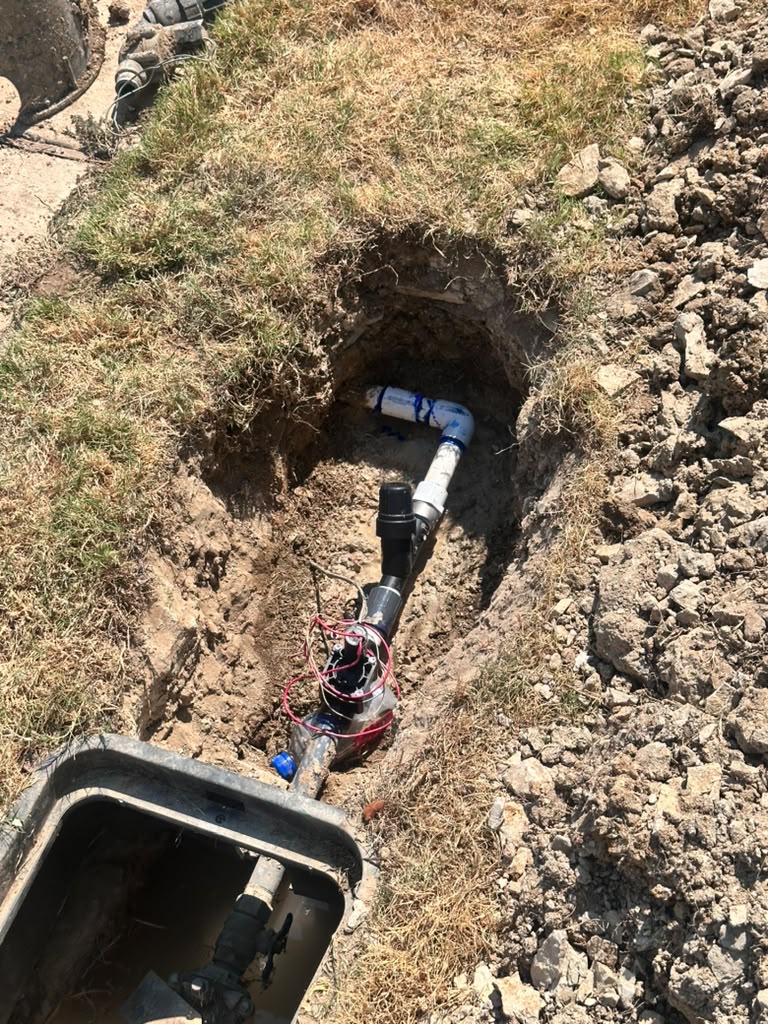
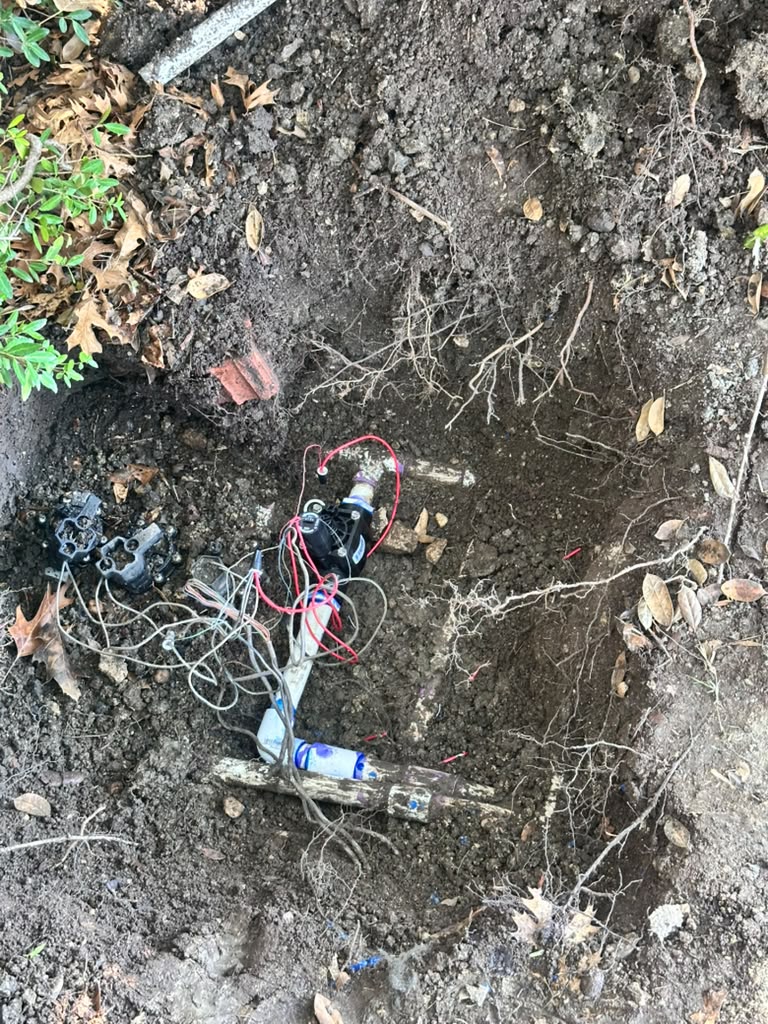
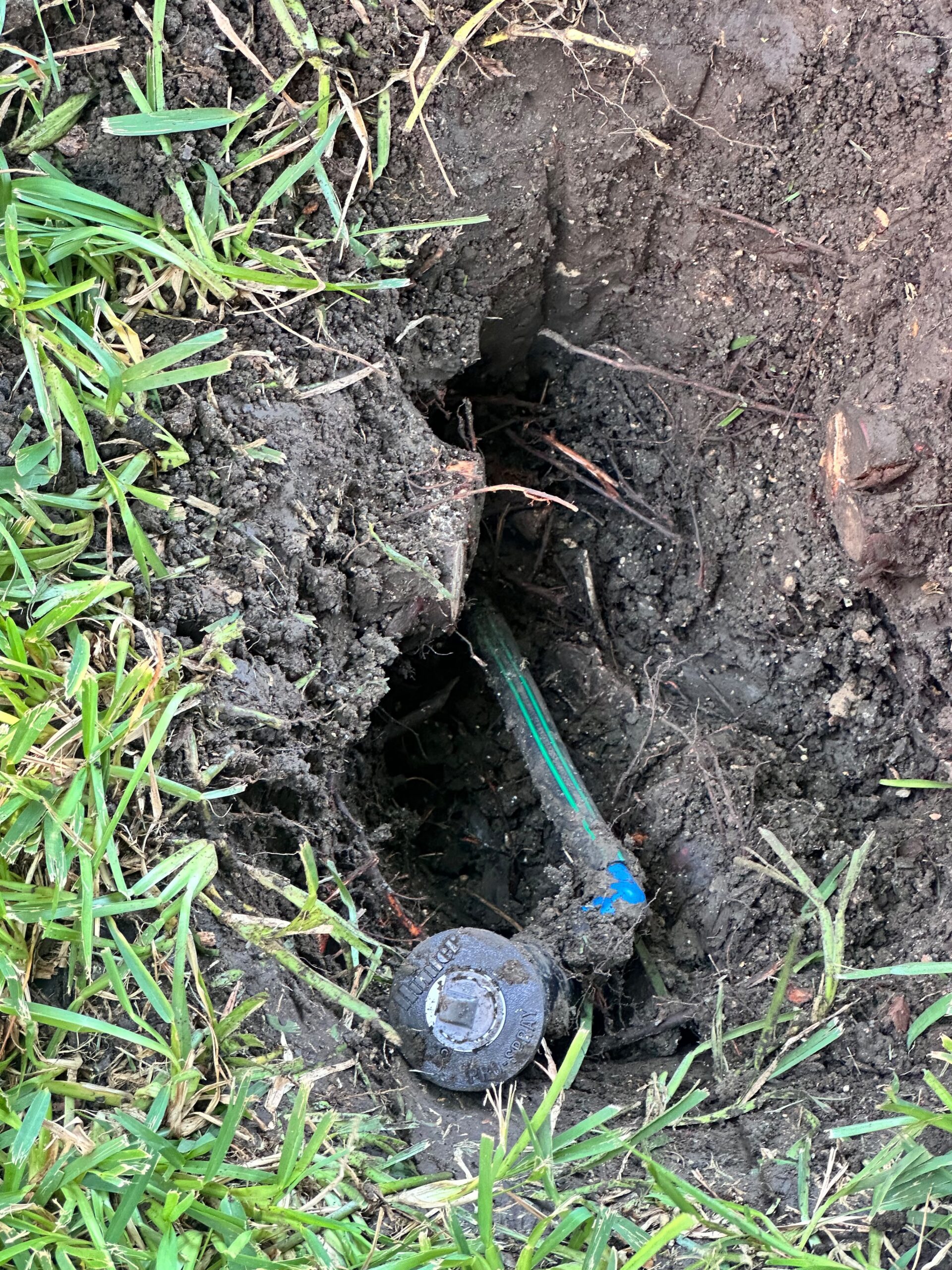
A drainage problem in Celina TX can be caused by a leaking sprinkler system, excessive irrigation, compacted clay soil, poor yard grading, or inadequate drainage pathways. The first step is determining whether the water is coming from the irrigation system or accumulating because the landscape cannot drain properly.
If standing water appears while sprinklers are running, an irrigation issue may be responsible. However, if water remains in the yard after rainfall or collects in the same low area even when the sprinkler system is off, grading or soil conditions may be contributing factors. A proper assessment helps identify the actual source before recommending sprinkler repairs or a drainage solution.
At a Glance: Identifying the Problem
| Category | Details |
| Common Causes | Sprinkler leaks, overwatering, clay soil, poor grading |
| First Step | Inspect and test the sprinkler system |
| Homeowner Checks | Observe wet areas, irrigation schedules, and water movement |
| Possible Solutions | Sprinkler adjustments, repairs, grading corrections, or drainage systems |
| When to Get Help | Persistent pooling, unexplained wet spots, or recurring runoff |
Why Is Water Collecting in Your Yard?
Standing water does not automatically mean your property needs a drainage installation. Several different problems can create similar symptoms, which is why identifying the source matters.
For homeowners in Celina, understanding the difference between irrigation problems and landscape drainage problems can prevent unnecessary repairs.
Here are the most common causes to investigate.
1. Broken or Leaking Sprinkler Heads
A damaged sprinkler head can release excessive water, creating concentrated streams that saturate the soil. Warning signs include bubbling, puddles during operation, uneven spraying, failure to retract, and unusually wet ground, often caused by cracked bodies, damaged nozzles, or loose connections.
What should you do?
Run the affected sprinkler zone briefly and observe the heads. Look for unusual spraying, bubbling, or water escaping around the base.
If the wet area develops specifically while that zone operates, investigate the sprinkler component before considering a drainage installation.
2. Underground Sprinkler Pipe Leaks
Underground sprinkler pipes can develop cracks or damaged connections, allowing water to escape beneath the surface. Signs include muddy soil, persistent wet spots, reduced water pressure, unusually green grass, and increased water consumption. These hidden leaks can resemble drainage problems because escaping water travels through the soil before reaching the surface.
What should you do?
Observe whether the wet area changes when the irrigation system is turned off. Check the water meter when no water should be running, while accounting for other household water use.
If the evidence points toward irrigation, a sprinkler leak investigation can help narrow down the source before excavation.
3. Clay Soil That Absorbs Water Slowly
Clay-rich soil in North Texas holds moisture and absorbs water more slowly than sandy soil. Standing water becomes more likely when heavy rainfall, extended sprinkler operation, compacted ground, or limited natural drainage prevents excess water from soaking into the soil.
Texas A&M AgriLife Extension explains that runoff is more common in compacted and clay soils, particularly on sloped properties.
What should you do?
Avoid immediately increasing watering times when the lawn appears dry in certain areas. Check whether the soil is already holding moisture beneath the surface.
Breaking longer watering schedules into shorter cycles can give water more time to soak into the ground.
4. Poor Yard Grading
Grading determines how the ground slopes and directs water across a property. Uneven surfaces or low areas can collect runoff, causing persistent puddles, soil erosion, or water flowing toward the house, even when sprinklers are turned off.
What should you do?
Observe how water moves across your property after rainfall. Identify where it begins, the direction it travels, and where it eventually collects.
If water repeatedly follows the same path, the landscape’s grading may need to be evaluated.
5. Sprinkler Run Times That Exceed Soil Absorption
A sprinkler system can be working correctly mechanically and still contribute to water pooling.
This happens when the system applies water faster than the soil can absorb it. Longer watering cycles may cause water to flow across the surface rather than reaching the grass roots.
This is particularly important on compacted clay soil and sloped sections of a yard.
One possible adjustment is cycle-and-soak irrigation.
Cycle-and-soak irrigation divides watering into shorter cycles with breaks, allowing water to absorb gradually. Check schedules, observe runoff, reduce excessive watering times, allow sufficient intervals between cycles, and adjust irrigation based on weather and soil conditions.
The goal is to apply enough water for the landscape without creating unnecessary runoff.
How to Determine Whether You Have a Sprinkler or Drainage Problem in Celina TX
Before choosing a repair, the sprinkler system should be ruled out as the source of the water.
The following checks can help homeowners understand what may be happening.
Step 1: Turn Off the Sprinkler System
Temporarily disable the irrigation schedule and observe the wet area.
If the water continues appearing even when the system is not operating, the cause may involve groundwater movement, rainfall runoff, grading, or another source.
However, remember that water from an underground leak may take time to reach the surface.
Step 2: Inspect Each Sprinkler Zone
Manually operate individual zones and watch how water is distributed.
Pay attention to:
- Heads releasing unusually large amounts of water.
- Water bubbling from the ground.
- Uneven spray coverage.
- Water running toward sidewalks or low areas.
- Changes in water pressure.
If a particular zone creates the pooling, the irrigation system deserves further investigation.
Step 3: Observe the Yard After Rainfall
Rainfall provides another opportunity to understand how water moves across your property.
Look for areas where water naturally collects, especially near:
- Fence lines.
- Walkways and patios.
- Low sections of the backyard.
- Foundation-adjacent landscaping.
- Sloped sections of the lawn.
If the same locations repeatedly collect water after rainfall, the problem may be related to grading or drainage capacity.
Step 4: Compare the Findings
Consider the following observations:
| What You Notice | Possible Cause |
| Pooling only when sprinklers operate | Excessive irrigation or sprinkler malfunction |
| Wet soil around one sprinkler head | Damaged head or connection |
| Persistent wet spot with sprinklers off | Underground leak or another water source |
| Water collects after rainfall | Grading or drainage concerns |
| Runoff develops on a slope | Soil absorption or irrigation application rate |
| Water flows toward the house | Possible grading or drainage concern |
These observations help narrow down the possibilities, but they do not confirm a diagnosis by themselves.
Step 5: Determine the Appropriate Solution
Once the irrigation system has been evaluated, the next step is identifying whether the remaining problem involves the landscape.
A sprinkler repair may be appropriate when a damaged head, leaking pipe, faulty valve, or incorrect watering schedule is responsible.
A drainage solution may be worth considering when water continues collecting because of grading, surface runoff, or inadequate water movement across the property.
The assessment should determine which direction makes sense.
When Is a Drainage Solution Better Than Sprinkler Repair?
If the sprinkler system is operating properly but water continues collecting in the yard, it may be time to evaluate the landscape itself.
Different drainage solutions address different water movement problems.
French Drains
A French drain is an underground drainage system designed to collect and redirect excess water through a perforated pipe surrounded by drainage material.
It may be appropriate when water accumulates in saturated areas or needs a controlled underground pathway away from a problem location.
However, the system must have a suitable collection area and discharge location.
Channel Drains
Channel drains collect surface water through a grated trench installed in areas where runoff travels across hard surfaces.
They may be useful around patios, driveways, and other paved areas where water cannot naturally soak into the ground.
Downspout Drainage
Roof runoff can contribute to yard saturation when water from gutters is discharged too close to the home or into an area with limited drainage.
Downspout drainage systems help carry roof water away from the immediate discharge point toward an appropriate outlet.
The correct option depends on where the water originates, how it moves, and where it can safely be directed.
Common Mistakes Homeowners Should Avoid
When water collects in the yard, it is tempting to choose the fastest-looking solution. However, addressing the wrong cause can create additional expenses without resolving the problem.
Avoid these common mistakes:
- Installing a French drain immediately: A drain may not solve a problem caused by a leaking sprinkler pipe.
- Increasing sprinkler run times: More water can worsen pooling when soil absorption is already limited.
- Ignoring underground leaks: A hidden irrigation leak may continue saturating the soil even when visible sprinkler heads appear normal.
- Focusing only on the puddle: The location where water collects may be different from where it originates.
- Ignoring grading: A drainage system may need to account for the direction water naturally travels across the property.
- Making repairs without testing: Replacing components without confirming the source can result in unnecessary work.
The best approach is to understand the cause before selecting a solution.
Local Considerations for Celina, TX Homeowners
Celina homeowners should consider how North Texas weather and soil conditions affect irrigation and drainage.
Clay-Heavy Soil
Clay-rich soil can absorb water slowly, increasing the possibility of surface runoff when irrigation or rainfall exceeds the ground’s absorption capacity.
Heavy Rainfall
During periods of heavy rainfall, water may collect in low areas or move across the property faster than the landscape can handle.
Hot Summers
North Texas summers can increase landscape watering needs. However, longer sprinkler run times should not automatically be used without observing how the soil responds.
Seasonal Changes
Watering requirements change throughout the year. A schedule that works during summer may be excessive during cooler months or after significant rainfall.
Soil Movement and Yard Changes
Landscaping projects, construction, new patios, edging, and changes in soil levels can affect how water moves across a property.
Homeowners should pay attention to drainage patterns after major yard improvements because even relatively small changes can alter surface runoff.
Frequently Asked Questions
1. Can a sprinkler leak cause standing water in my yard?
Yes. A leaking sprinkler head, underground pipe, or connection can release enough water to saturate the surrounding soil. Testing the irrigation system helps determine whether it is responsible.
2. How do I know if my yard needs a French drain?
A French drain may be appropriate when excess water collects in an area because of subsurface drainage conditions. However, the source of the water and available discharge location should be evaluated before installation.
3. Why does my yard hold water even when the sprinklers are off?
Possible causes include heavy rainfall, clay soil, poor grading, groundwater movement, roof runoff, or an underground irrigation leak. Turning off the sprinkler system helps with diagnosis but does not automatically rule out a hidden leak.
4. Can changing my sprinkler schedule prevent water pooling?
Sometimes. Shorter watering cycles with appropriate breaks can reduce runoff when sprinklers apply water faster than the soil can absorb it. However, schedule adjustments will not correct poor grading or an underground leak.
5. Should I repair my sprinkler system or install a drainage system first?
The sprinkler system should be evaluated first to determine whether irrigation is contributing to the problem. If the system is functioning properly and water still collects because of landscape conditions, a drainage assessment can help identify an appropriate solution.
Bottom Line
Standing water can have several causes, and choosing the wrong repair may leave the original problem unresolved.
Start by evaluating the sprinkler system, checking for leaks, inspecting individual zones, and reviewing watering schedules. If irrigation is not responsible, examine the property’s grading, soil conditions, and natural water flow.
A drainage solution may be appropriate, but only when the assessment confirms that the landscape is the source of the problem.
Get the Right Answer Before Choosing a Repair
If you continue noticing wet areas, pooling, or unexplained runoff, a professional evaluation can help determine whether your sprinkler system or landscape drainage needs attention.
Whale Done Sprinklers & Irrigation serves Celina homeowners with an assessment-first approach. We identify the problem, explain your options, and help you make an informed decision before repairs begin. Call +1 (469) 384-7767 or email clientsupport@callwhaledone.com to schedule your Whale Done Assessment™.