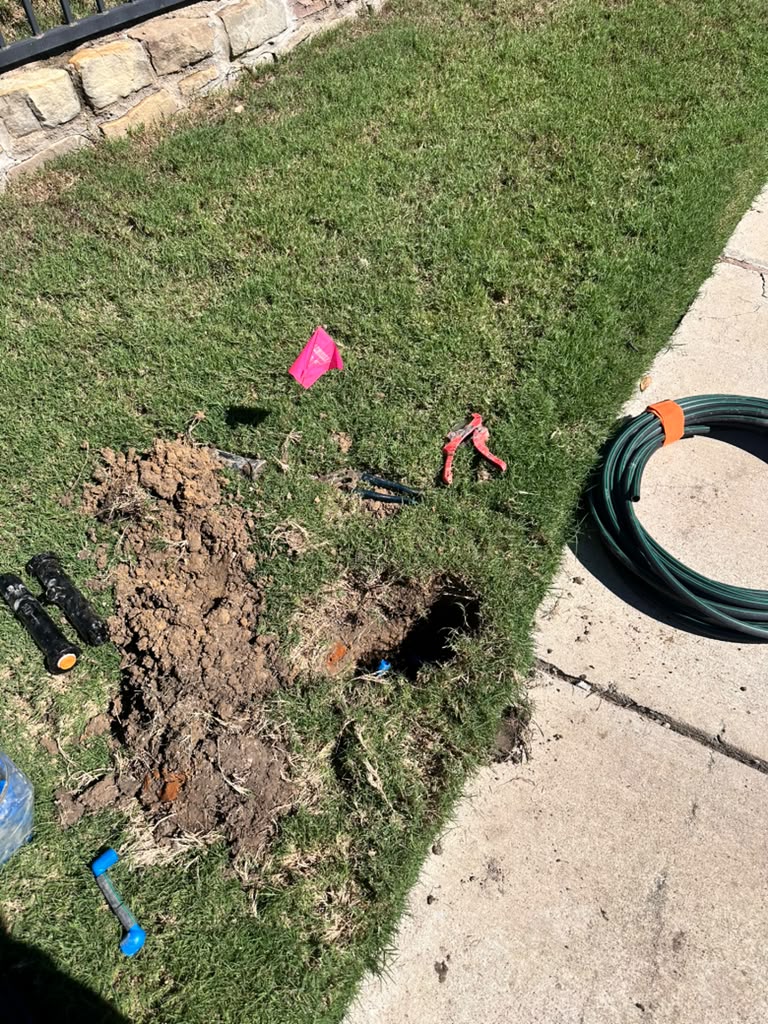
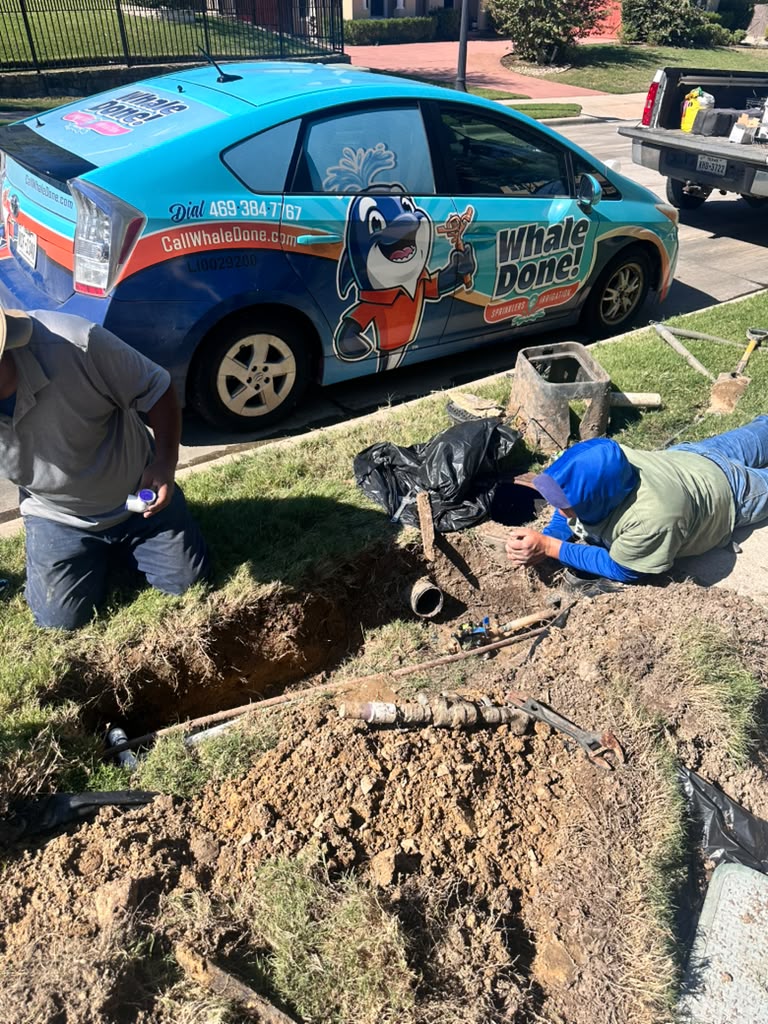
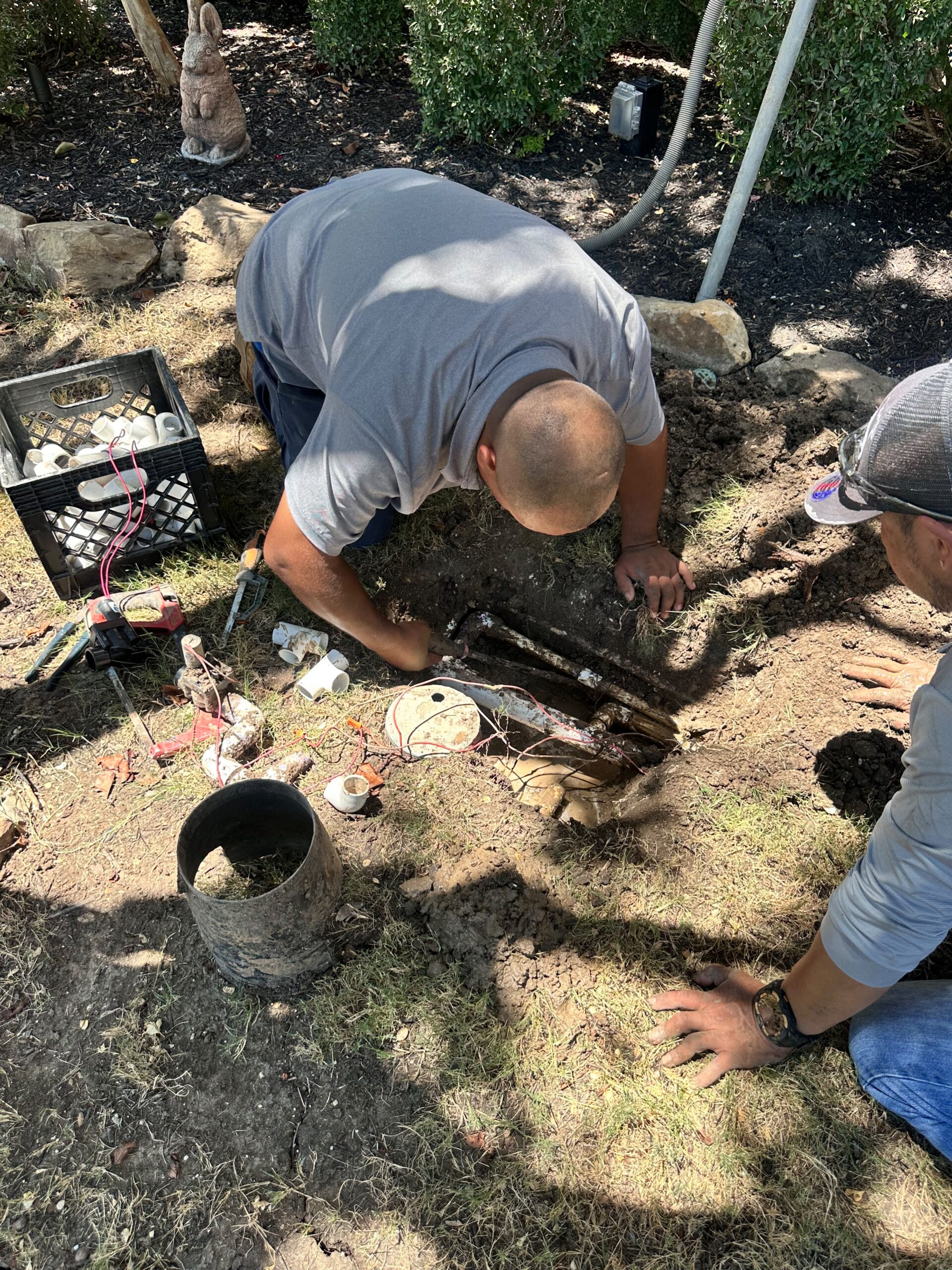
Yes. Fall yard work is one of the most common reasons for a broken sprinkler head in Princeton TX. Mowers, edgers, aerators, and shovels can clip, crack, or crush heads, and shifting clay soil and tree roots can push them out of position.
A broken head usually shows up as a geyser or fountain at one spot. A cracked line tends to cause soggy ground, weak pressure across a zone, or water that appears away from any head. Knowing which one you have tells you whether it’s a simple fix or a job for a licensed professional.
At a Glance
- Difficulty: Easy to identify, easy to moderate to repair a head
- Estimated time: 20-45 minutes to inspect, longer to repair
- Tools needed: Flashlight, phone camera, small shovel, replacement head or nozzle if needed
- Works for: Geysers, tilted heads, sunken heads, and sprays that look off
- May not solve: Cracked underground lines, valve leaks, or damage near the foundation
Why Fall Yard Work Breaks Heads
Fall is a busy season in the yard. Leaves come down, grass gets a final cut, and many homeowners edge, aerate, or plant. Sprinkler heads sit right at ground level, so they are easy to hit.
Heads are also easy to miss. Once grass slows down in fall, heads can be hidden by leaves, mulch, or tall turf. A mower blade that clips a head you can’t see can crack it in a second.
Damage often goes unnoticed in fall because the system runs less. The problem shows up later, when watering resumes.
Common Causes of Fall Sprinkler Damage
Mowers
Blades can slice the top off a head, and wheels can crush one that sits too high. Heads that have risen above the grass line are the most exposed. Look for heads with scraped or missing tops.
Edging and Trimming
String trimmers can chip plastic bodies and nozzles. Metal edgers can cut into risers and shallow pipe near sidewalks and beds. Damage near hard edges is common.
Aeration
An aerator pulls plugs from the lawn with sharp tines. Those tines can strike heads, risers, and shallow lines. Many homeowners don’t realize a line was hit until water shows up days later.
Tree Roots
Roots grow toward moisture and can push against pipe and fittings. Over time they can lift a head or squeeze a line. Heads near trees often tilt first.
Shifting Soil
Princeton’s clay soil swells when wet and shrinks when dry. That movement can tilt heads, sink them, or stress fittings. Fall rain after a dry summer often makes this more noticeable.
Foot and Vehicle Traffic
Heavy foot traffic, ladders, and parked vehicles can crack heads along driveways and walkways. Fall cleanup and holiday decorating bring more of this than usual.
How to Spot a Broken Sprinkler Head in Princeton TX
A short walkthrough can find most problems. It takes about 30 minutes.
Step 1: Walk the Yard Before You Run the System
Look for heads that are cracked, missing caps, tilted, or surrounded by loose soil. Take photos of anything unusual.
Step 2: Run One Zone at a Time
Turn on each zone from the controller. Watch each head pop up and spray.
Step 3: Look for Geysers and Fountains
A tall column of water at one spot usually means a broken head or riser. Note the zone and location.
Step 4: Check the Spray Pattern
A weak, crooked, or misty pattern may mean a damaged nozzle or a clogged head. Compare it with the heads next to it.
Step 5: Look at the Ground
Check for soggy soil, pooling water, or sunken areas. These can point to a leak below the surface.
Step 6: Listen and Feel
After the zone shuts off, look for a head that keeps dripping. A hissing sound near a valve box or a cold wet spot can point to a line problem.
Step 7: Write Down What You Find
Record the zone, location, and what you saw. A short note makes repairs faster and helps you track open items.
Broken Head vs. Cracked Line
The two problems can look alike at first. These clues help you tell them apart.
More likely a broken head if:
- Water shoots up from a single head
- The damage is visible, such as a cracked body or missing nozzle
- The pattern returns to normal when the head is replaced
- Water stops when the zone is turned off
- The area around the head is only wet while the zone runs
More likely a cracked line if:
- Soil is soggy between heads
- The whole zone has low pressure
- Water bubbles up from the ground away from any head
- Wet spots stay after the zone is off
- A sinkhole or sunken patch appears
- Your water meter moves when everything is off
If you see signs of both, start with the head and watch what changes. A line problem often needs more than a simple swap.
What You Can Fix Yourself
Some repairs are manageable for many homeowners:
- Replacing a cracked nozzle
- Straightening a slightly tilted head
- Clearing debris from a nozzle
- Replacing a head on a threaded riser, if you can find the lines safely
Turn off the zone before you start. Dig carefully, since lines may be shallow, and avoid pulling hard on risers.
When to Call a Licensed Professional
Some problems are better handled by a licensed sprinkler company:
- Water that keeps flowing after the zone is off
- Soggy ground that doesn’t dry out
- A cracked line, pipe, or fitting
- Wet soil near the foundation or slab
- A broken riser that is deep or hard to reach
- Several damaged heads in one zone
You don’t have to rush every problem. A single broken head on a zone you’ve turned off can often wait for a convenient time.
How to Avoid Damage During Fall Yard Work
A few minutes of prep can prevent most fall damage.
- Flag your heads: Use small flags or stakes before mowing or aerating.
- Run each zone once: Mark every head so you know where they are.
- Lower mower height near heads: Be careful around heads that have risen.
- Tell the crew: Let lawn and aeration crews know where heads and lines are.
- Keep leaves clear: Piles can hide heads and nozzles.
- Check again afterward: Run each zone after yard work and look for new problems.
Common Mistakes Homeowners Make
- Assuming a wet spot is a broken head. It could be a line, rain, or drainage.
- Skipping the post-yard-work check. Damage found early is usually simpler.
- Digging without knowing where lines are. You can cause a bigger break.
- Leaving a broken head running. Water waste and soggy soil add up.
- Replacing only the head when the line is damaged. The leak will return.
- Forgetting about winter. Cracked parts can get worse in a freeze. See our guide on sprinkler winterization in Princeton TX.
North Texas Considerations
Local conditions make fall damage more likely and sometimes harder to see.
- Clay soil: Princeton’s clay shifts with moisture, which can tilt heads and stress fittings.
- Foundation movement: Soil near the house moves more, so lines near the slab deserve a closer look.
- Fall rain after dry summers: Sudden moisture can change the soil and expose damage.
- Brief freezes: A cracked head or fitting can worsen in a freeze.
- Wind and heat: Dry, windy fall days can hide small leaks by drying wet spots quickly.
- Water restrictions: Check current rules with the City of Princeton and your water provider before running test cycles.
For state rules on irrigation work, see the TCEQ irrigation program. For general guidance on finding and fixing outdoor water waste, the EPA’s WaterSense outdoor resources are a good place to start.
Related Problems That Look Like a Broken Head
If a head looks fine but something still seems off, the cause could be:
- Low water pressure: A weak spray across several heads may be a pressure issue. See our guide on low sprinkler water pressure.
- Valve problems: A valve that doesn’t close can cause constant leaking. Learn more about sprinkler valve repair.
- Underground leaks: A cracked line can mimic a head problem. Read about sprinkler leak detection.
- Clogged nozzles: Debris can distort the spray pattern.
- Controller settings: Wrong schedules can overwater a zone.
Frequently Asked Questions
Can mowing or edging break a sprinkler head?
Yes. Mower blades and trimmers can crack heads, chip nozzles, and cut risers. Heads that sit above the grass line are the most exposed.
Can aeration damage sprinkler lines?
It can. Aerator tines can hit heads, risers, and shallow lines. Marking heads and lines before aeration and checking each zone afterward helps catch problems early.
How do I tell a broken head from a cracked line?
A broken head usually shows a geyser or visible damage at one spot. A cracked line often causes soggy ground, low pressure across a zone, or water away from any head.
Is it okay to leave a broken sprinkler head until spring?
Sometimes. If the zone is shut off and the head isn’t near your foundation, many homeowners wait. A leak that continues with the zone off should be checked sooner.
Can tree roots damage sprinkler heads and pipes?
Yes. Roots can lift heads and put pressure on pipes and fittings over time. Heads near large trees often tilt or sink first.
Conclusion
A broken sprinkler head in Princeton TX is common after fall yard work, and it’s often an easy fix when found early. Look for a geyser at one spot, then check for soggy ground, weak pressure, or a moving water meter that could point to a cracked line. Turn off the zone first. A licensed sprinkler company can confirm whether it’s a head or a line and explain your options. Our goal is to help you decide what makes sense.