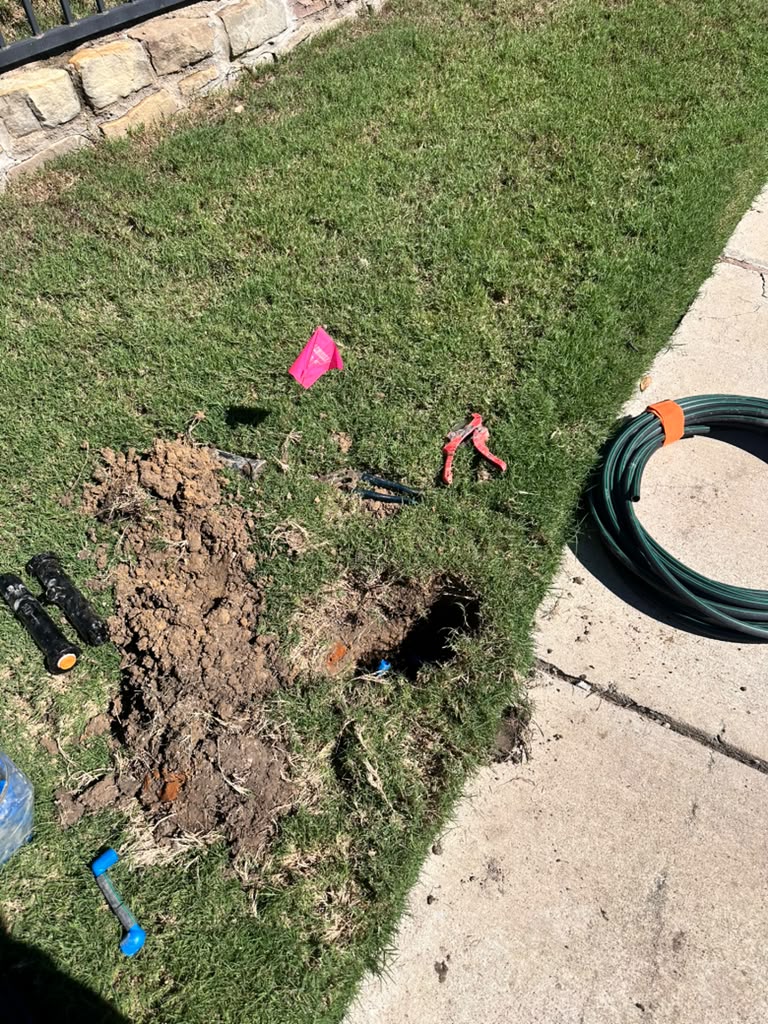
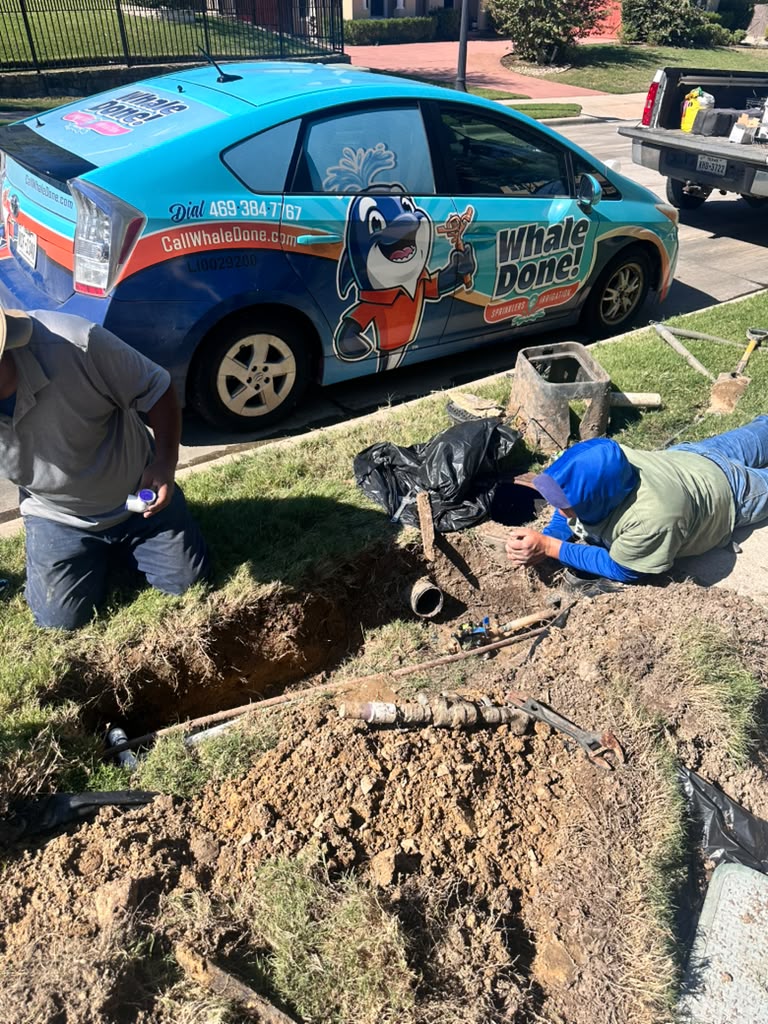
Broken sprinkler pipes in Melissa TX are most often caused by mowers, edging tools, aeration, tree roots, and shifting clay soil. Fall is a common time for these leaks to appear because yard work and soil movement both increase.
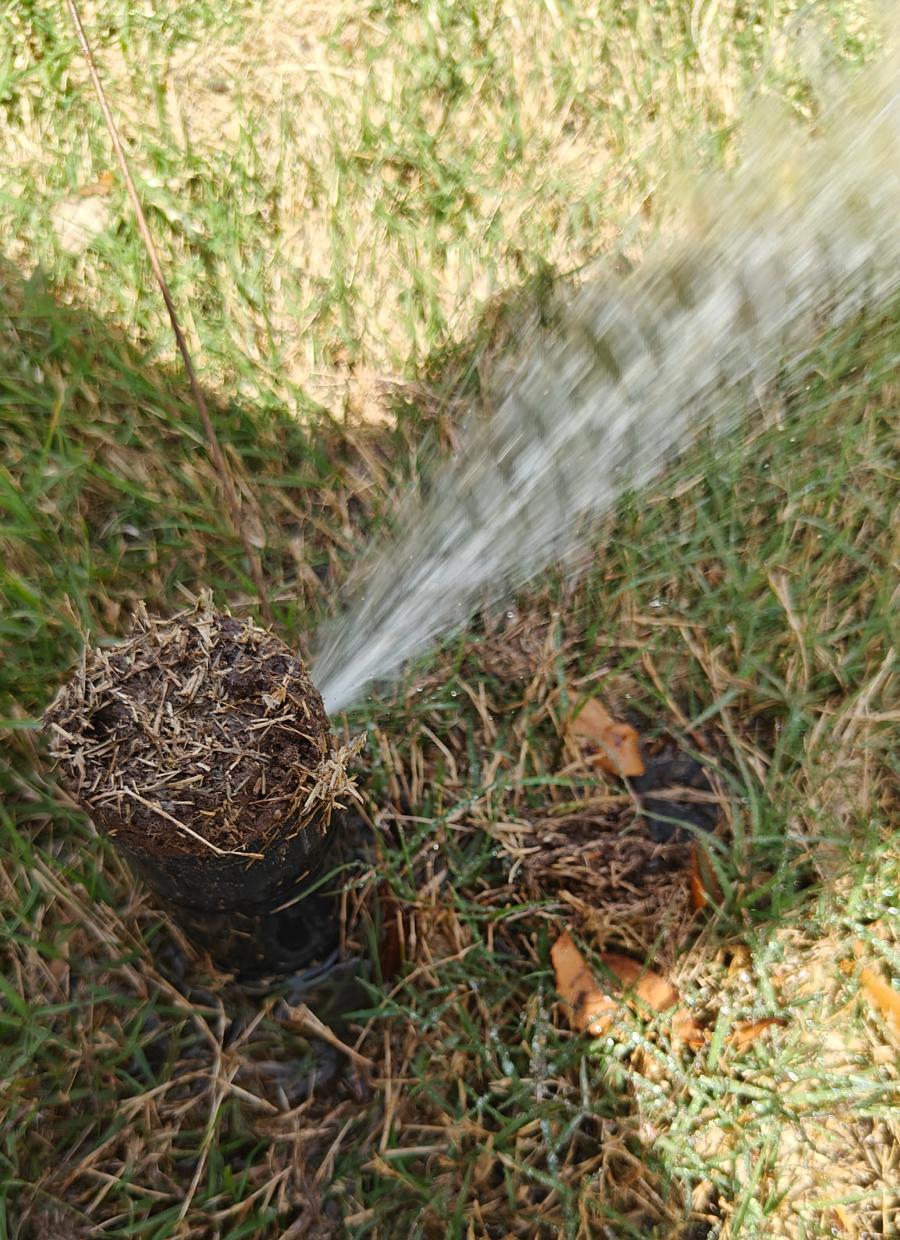
A broken head usually shows up as a geyser or pooled water around one spot. A cracked line tends to cause soggy ground, low pressure across a whole zone, or water that keeps surfacing after the system shuts off. If you can’t tell which one you have, a licensed sprinkler company can locate the break.
At a Glance
| Difficulty | Spotting the signs: easy. Repairing a cracked line: best left to a licensed professional |
| Estimated Time | 15 to 20 minutes to walk the yard and check each zone |
| Tools Needed | Phone for photos, small flag or stake, a flashlight, your controller |
| Works For | Telling a broken head from a cracked pipe and noting where problems are |
| May Not Solve | Hidden leaks deep underground, which may need professional leak detection |
Why Sprinkler Pipes Break
Most sprinkler pipes are plastic and buried a few inches to a foot underground. They hold up well until something hits, squeezes, or pulls on them.
Damage often builds slowly. A small crack from a shovel or root pressure can hold for weeks before it starts to leak.
That is why many homeowners notice problems in fall. The system has had a full summer of use, and yard work is in full swing.
Common Causes of Broken Sprinkler Pipes in Melissa TX
Several everyday activities and natural conditions can damage a system. Knowing them helps you narrow down what happened.
- Mowers: Heavy mowers can crush or shear heads that sit too high or have sunk.
- Edging: Edgers cut close to the ground and can slice shallow pipes and fittings.
- Aeration: Aerator tines pull plugs from the soil and can puncture lines or break heads.
- Tree roots: Roots grow around and against pipes, squeezing or shifting them.
- Shifting soil: Clay expands and contracts, which pulls on pipes and fittings.
- Digging projects: Fences, flower beds, and utility work can hit buried lines.
Most of these are preventable once you know where your lines run.
Mowers and Edging
Mowers and edgers are the most common cause of damaged heads. A head that has settled below the grass line is easy to miss and easy to hit.
Edgers can also reach shallow pipes along walkways and driveways. Lines near hard surfaces are often buried only a few inches deep.
Raising your mower deck near heads and marking their locations can reduce the risk.
Aeration
Core aeration is good for lawns, but it can harm sprinkler parts. The tines can puncture shallow pipes or snap the risers that hold heads.
Marking every head and visible valve before aeration helps. Many homeowners use small flags so the crew can see them.
If you hire a lawn service, tell them where the sprinkler lines are before they start.
Tree Roots
Roots grow toward moisture, and sprinkler lines provide plenty of it. Over time, roots can wrap around a pipe, press on a fitting, or push a line out of place.
Root damage tends to develop slowly. You may notice a zone that gradually loses pressure or a wet spot that appears near a tree.
Planting trees away from irrigation lines gives roots less reason to interfere.
Shifting Soil
North Texas clay swells when wet and shrinks when dry. That movement puts steady stress on pipes, fittings, and valve boxes.
Joints are usually the weak points. A fitting that was fine for years can eventually pull apart or crack.
Leaks near the foundation or along walkways can be a sign of soil movement.
How to Tell a Broken Head From a Cracked Line
The two problems can look similar at first. A few clues help separate them.
Signs of a Broken Head
- Water sprays straight up or out in an odd direction
- Water pools right around one head
- The head is cracked, missing, or knocked sideways
- Only that one spot is affected when the zone runs
Signs of a Cracked Line
- A soggy or sunken area that stays wet
- Low pressure or weak spray across several heads in the zone
- Water bubbling up where there is no head
- Wet ground that appears even when the system is off
- A water bill that jumps without a clear reason
A broken head is often a simple repair. A cracked line usually means digging, so it helps to know which one you are dealing with.
A Simple Way to Check Your System
You can learn a lot with a short walk through the yard.
- Run one zone at a time. This helps you match symptoms to a specific area.
- Watch each head. Note any that spray unevenly, leak, or fail to pop up.
- Look for wet ground. Pay attention to spots that stay soggy after the zone stops.
- Mark problem areas. Small flags make it easy to show a technician.
- Take photos. Pictures help track changes over time.
If a problem keeps showing up in the same spot after you replace a head, the issue may be a pipe below.
Common Mistakes Homeowners Make
Most delays in fixing leaks come from small oversights. Here are the mistakes that come up often.
- Ignoring small wet spots: They can point to a growing crack.
- Replacing heads without checking the pipe: The real problem may be underneath.
- Not marking heads before yard work: Mowers and aerators can hit hidden parts.
- Letting a leak run: It wastes water and can wash out soil.
- Digging without knowing where lines run: It is easy to cause new damage.
- Assuming every wet spot is a sprinkler leak: It may be a different issue entirely.
Local Considerations for Melissa and North Texas
Local conditions play a big role in how often sprinkler pipes break.
- Clay soil: It swells and shrinks, which stresses pipes and fittings.
- Heat: A long, hot summer can leave plastic parts brittle and worn.
- Wind: Wind can make spray patterns uneven and hide leaks from view.
- Seasonal watering: Fall watering needs to drop, so a leak may be easier to spot when the system runs.
- Water restrictions: Check with the city or your water provider for current rules.
- Foundation movement: Soil shifting near the house can strain nearby lines.
The Texas A&M AgriLife Extension offers helpful guidance on landscape and lawn care in Texas.
Related Problems to Watch For
Sometimes what looks like a broken pipe is something else. If you notice any of these, the cause may be different.
- Low water pressure: May point to a partly closed valve or a clog.
- A zone that won’t shut off: Often a valve problem rather than a pipe break.
- Wet spots in the yard: Could be drainage, a broken head, or a line leak.
- High water bills: May be a hidden leak or a stuck valve.
The EPA WaterSense program shares tips on finding leaks and using water wisely. If you suspect a leak, read our guide on finding an underground sprinkler leak. For zones that won’t behave, see our article on sprinkler valve problems.
When to Call a Professional
Some repairs are easy to handle yourself, like replacing a single damaged head. Others are better left to a licensed company.
Professional help may make sense when:
- A wet spot keeps returning after a head replacement
- Pressure drops across an entire zone
- You can’t find the source of a leak
- The break appears near the foundation or a tree
A licensed sprinkler company can locate the break and explain the options.
Frequently Asked Questions
What is the most common cause of broken sprinkler pipes?
Damage from mowers, edgers, and digging is among the most common. Tree roots and shifting clay soil are also frequent causes in North Texas.
How can I tell if a sprinkler pipe is cracked?
Look for soggy ground, weak spray across several heads, or water surfacing where there is no head. Wet areas that remain after the system shuts off are another sign.
Can aeration damage sprinkler lines?
Yes. Aerator tines can puncture shallow pipes or break heads. Marking heads and valves before aeration helps prevent damage.
Can I fix a broken sprinkler head myself?
Many homeowners can replace a single head. A cracked line usually takes digging and the right parts, so some homeowners choose a licensed professional.
Why do leaks seem to appear in fall?
Summer heat, lawn care, and soil movement all take a toll. Fall yard work, like edging and aeration, can add new damage.
Next Step and Bottom Line
Broken sprinkler pipes in Melissa TX often come from mowers, edgers, aeration, tree roots, and shifting clay soil. A broken head usually sprays or pools water in one spot, while a cracked line tends to cause soggy ground, weak spray across a zone, and wet areas that linger after the system shuts off. Checking one zone at a time, marking problem areas, and taking photos can help you tell the difference.
If you can’t find the source, a licensed sprinkler company can locate the break and explain your options, including what can wait and what shouldn’t. Whale Done is happy to answer questions or schedule a visit, and our goal is to educate first.