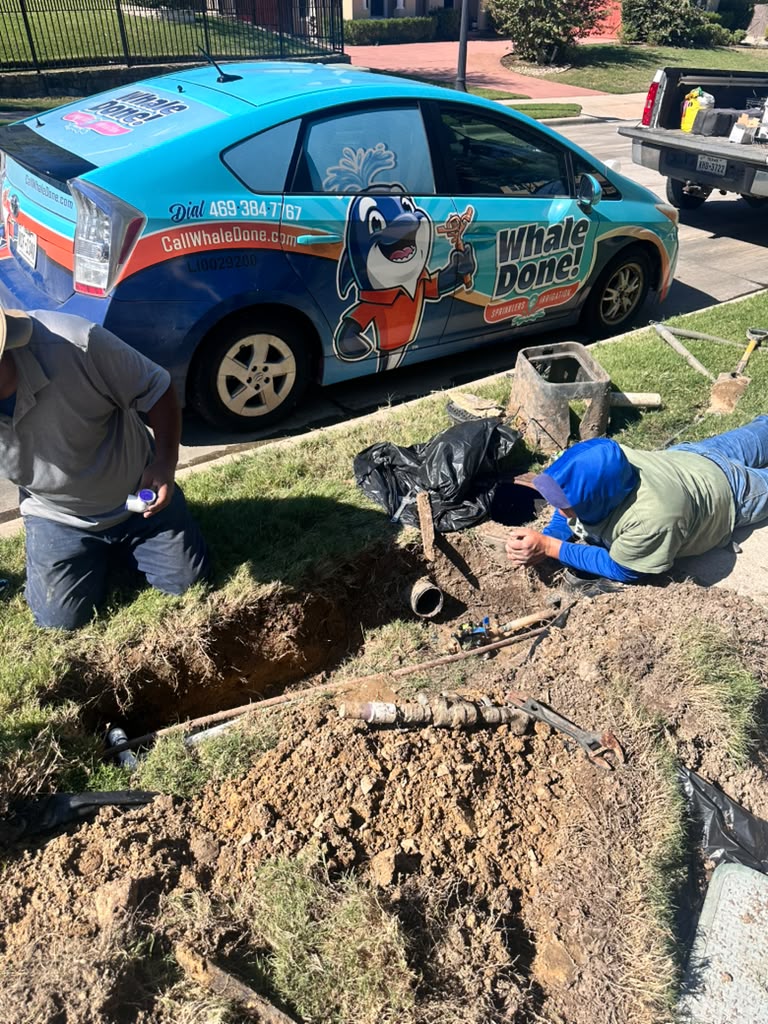
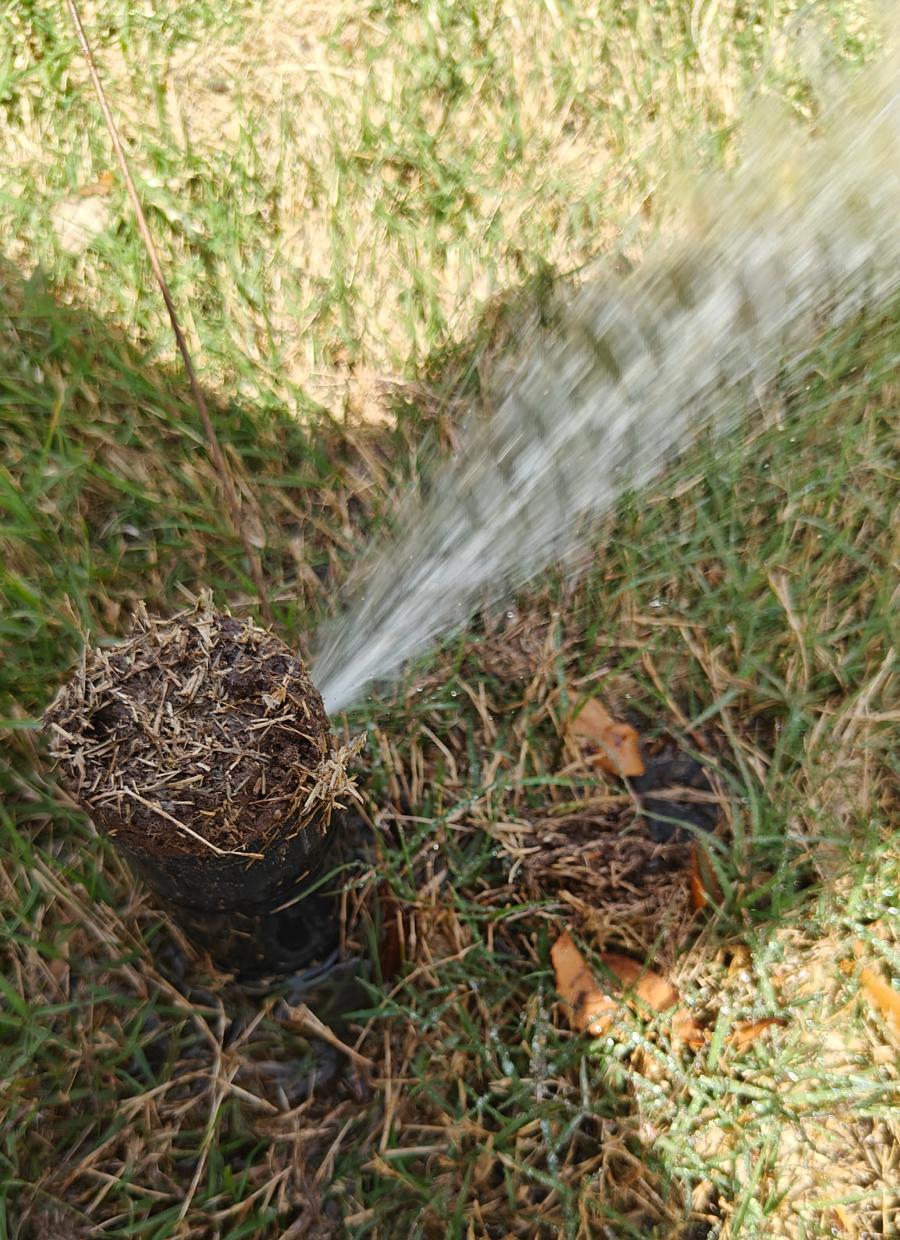
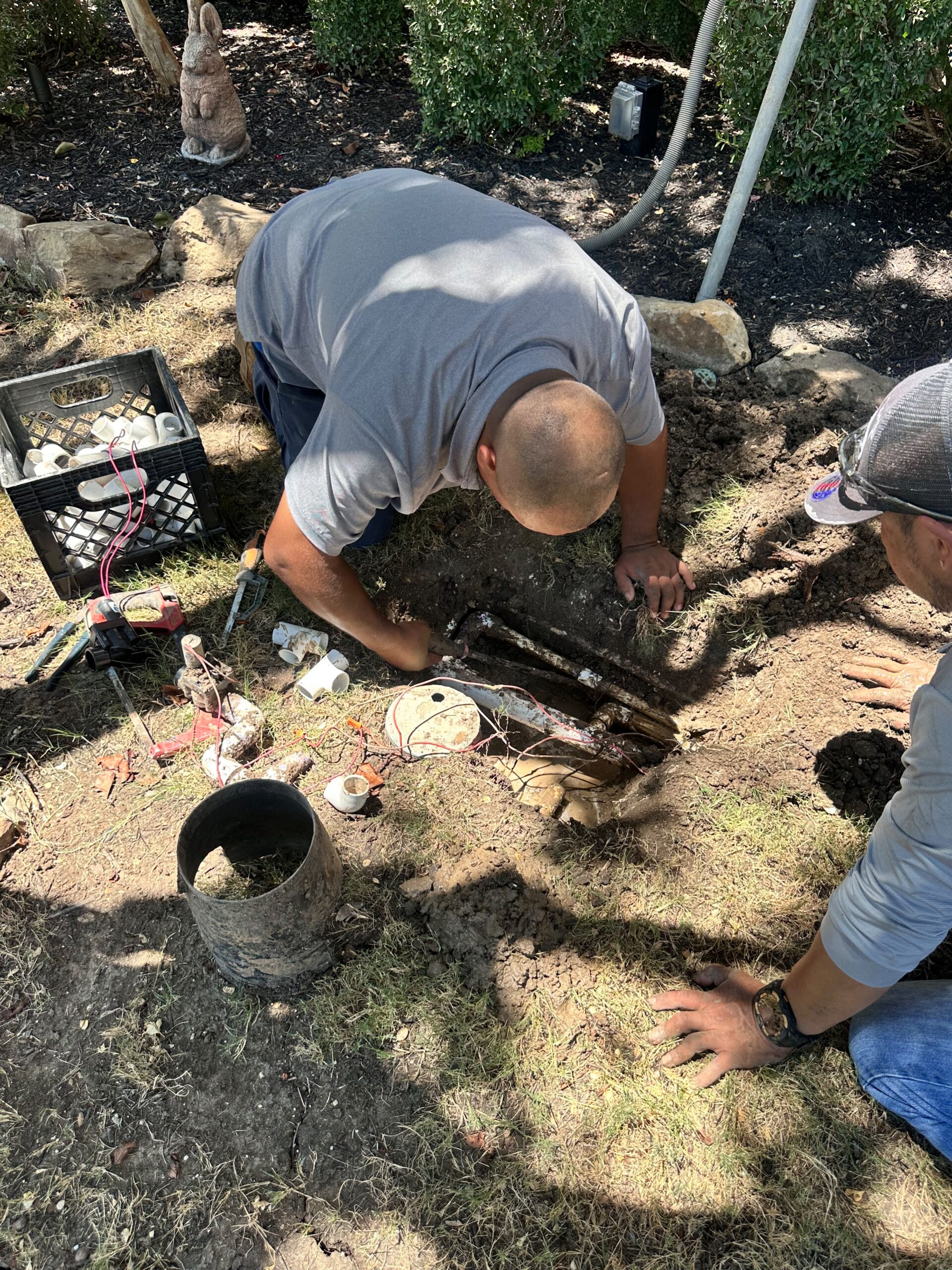
Sprinkler leaks in Wylie TX are worth fixing before winter because they waste water, soften the soil around pipes, and can leave damaged parts exposed when temperatures drop. A repair also isn’t finished until the zone has been run and the pressure and coverage have been checked. That test confirms the fix worked and nothing else is wrong.
Fixing leaks lowers the risk of problems, but it doesn’t guarantee a system will avoid every freeze issue. It does give you a clearer picture of your system’s condition before winterization.
At a Glance
- Difficulty: Easy for finding leaks, more involved for repairs
- Estimated time: 45-90 minutes to check the system
- Tools needed: Flashlight, phone camera, notes app, water meter access
- Works for: Finding leaks, confirming repairs, and checking pressure and coverage
- May not solve: Deep underground breaks, valve failures, or damage already caused by freezing
Why Leaks Matter Before Winter
A leak is a sign that something in the system isn’t sealed. That can be a cracked head, a loose fitting, a worn valve, or a damaged pipe. Cold weather doesn’t create these problems, but it can make them harder to deal with.
Here is why timing matters:
- Water keeps flowing: A leak on a pressurized line wastes water even when the sprinklers aren’t running.
- Soil gets saturated: Wet soil around a leak can shift and settle, which may stress nearby pipe.
- Damaged parts stay exposed: A cracked fitting or head is more likely to fail when water inside it freezes.
- Problems get harder to find: Fall and winter lawns need less water, so symptoms fade even though the leak is still there.
Fixing a leak early is usually simpler than repairing damage after months of leaking.
Signs of a Sprinkler Leak
Leaks don’t always look dramatic. Watch for these signs:
- Soggy or mushy soil that doesn’t dry out
- Pooling water near a head or valve box
- Sunken patches or lifted pavers
- A higher water bill with no change in use
- A water meter that moves when everything is off
- Weak or uneven spray from one zone
- Water in a valve box that doesn’t drain
Any one of these is worth a closer look. Several together are a strong hint that something needs attention.
How to Find Sprinkler Leaks in Wylie TX
You don’t need special tools for a basic check. These steps take most homeowners about an hour.
Step 1: Turn Off All Water Use
Shut off faucets, the dishwasher, the washer, and the ice maker. Make sure the controller isn’t running a cycle.
Step 2: Read Your Water Meter
Find the meter near the street, usually in a concrete box. If the dial or triangle is moving, water is going somewhere.
Step 3: Do the 15-Minute Test
Write down the meter reading. Wait 15 minutes without using water, then read it again. A changed number means there’s a leak, though not necessarily in the sprinklers.
Step 4: Close the Irrigation Shutoff and Retest
If your system has its own shutoff, close it and repeat the test. If the meter stops, the leak is likely on the irrigation side. If it keeps moving, check indoor plumbing or the line to the house.
Step 5: Run Each Zone One at a Time
Walk the yard while each zone runs. Look for geysers, bubbling water, mushy soil, and heads that keep dripping after the zone stops.
Step 6: Check the Valve Boxes
Lift the lids carefully. Standing water, hissing, or damaged wires can point to a valve leak.
Step 7: Write Down What You Find
Record the zone, location, and a photo for each issue. Note whether it looks like a head, a fitting, a pipe, or a valve.
A Repair Isn’t Finished Until the Zone Is Tested
Fixing the leak is only part of the job. A repair is finished when the zone has been run and the results have been checked.
Skipping this step is how a “fixed” leak turns into a second problem. A loose fitting, a missed crack, or a nearby issue may only show up when water flows again.
A complete check after a repair includes:
- Running the zone: Watch it start, run, and shut off.
- Looking for new leaks: Check the repair and the surrounding area.
- Checking pressure: Confirm the spray looks normal, not weak or misty.
- Checking coverage: Make sure the heads reach their targets evenly.
- Rechecking the meter: Confirm the leak is truly gone.
How to Check Pressure After a Repair
Pressure affects how a zone behaves. Too little or too much can both cause problems.
Signs of low pressure:
- Spray that barely reaches the next head
- Heads that don’t fully pop up
- Weak flow compared to before the repair
Signs of high pressure:
- Fine mist that blows off target
- Heads that fog or spray unevenly
- Water that sprays well past the lawn
If the pressure looks different after a repair, make a note. It may point to a part that wasn’t seated correctly or a separate issue in the zone.
How to Check Coverage After a Repair
Coverage shows whether the zone waters evenly. A repaired head that’s tilted or set too low can still leave dry spots.
Step 1: Run the Zone and Watch
Stand back and look at the full pattern. Note any gaps, overspray, or blocked areas.
Step 2: Check Head Height and Angle
Heads should sit at the right height and point the right way. Straighten any that look tilted.
Step 3: Clean and Adjust
Rinse out clogged nozzles and adjust arc or distance as needed. Run the zone again to confirm the change.
Step 4: Compare to Your Notes
Look at what you wrote before the repair. If the problem is gone, record it as fixed.
When Repairs Are Needed Before Winter
Some leaks should be addressed sooner. Others can wait.
Usually worth fixing before winter:
- Leaks that continue with the system off
- Wet soil near the foundation, slab, or retaining wall
- Cracked pipe or fittings above ground
- A leaking or cracked backflow preventer
- Valves that won’t close all the way
Often fine to wait until spring:
- A broken head on a zone that is shut off
- Minor spray pattern problems
- Clogged nozzles
- Small arc and distance adjustments
If you aren’t sure, note the issue and ask a licensed sprinkler company to take a look.
What Fixing Leaks Can and Can’t Do
It helps to know what to expect from a repair.
What it can do:
- Stop water waste
- Reduce soil saturation near pipes
- Remove known weak points before cold weather
- Give you a clean starting point for winterization
What it can’t do:
- Guarantee the system won’t freeze
- Fix hidden damage that hasn’t shown up yet
- Replace winterization steps like shutting off the supply and clearing the lines
Repairs and winterization work together. Neither one promises to prevent every freeze problem.
Common Mistakes Homeowners Make
- Skipping the test run. A repair isn’t done until the zone has been run and checked.
- Ignoring pressure and coverage. A leak can be fixed while the zone still waters poorly.
- Assuming a wet spot is always a sprinkler leak. It could be a water line, rain, or drainage.
- Waiting for a freeze warning. Repairs and winterization get harder to schedule once cold weather arrives.
- Digging without knowing where the lines are. You can cause a bigger break than the original.
- Treating repair as a substitute for winterization. They address different risks. See our guide on sprinkler winterization in Wylie TX.
North Texas Considerations
Local conditions affect how leaks behave and how they’re found.
- Clay soil: Wylie’s clay swells when wet and shrinks when dry. That movement can stress pipes and fittings over time.
- Foundation movement: Soil near the slab shifts more than open lawn, so lines near the house deserve a closer look.
- Brief hard freezes: One night below freezing can crack parts that hold water.
- Heat and wind: Dry, windy days can hide small leaks by drying the surface quickly.
- Seasonal watering: Lawns need less water in fall and winter, so symptoms can fade while the leak continues.
- Water restrictions: Check current watering rules with the City of Wylie and your water provider before running test cycles.
Texas regulates irrigation work, and the TCEQ irrigation program explains licensing and backflow requirements. The EPA’s WaterSense program also offers general guidance on finding and fixing outdoor water waste.
Related Problems That Look Like Leaks
Not every wet spot is a broken pipe. If you don’t find a leak, the cause might be:
- A stuck valve: A valve that doesn’t close can keep water flowing. See our guide on sprinkler valve repair.
- Poor drainage: Low spots can hold water after rain.
- High water pressure: Excess pressure can cause misting and leaks at the heads.
- Controller problems: Wrong schedules can overwater a zone.
- Indoor plumbing: A running toilet or leaking hose bib can move your meter. Read about sprinkler leak detection.
Frequently Asked Questions
Why should I fix sprinkler leaks before winter?
Leaks waste water, soften soil, and can leave damaged parts exposed to cold weather. Fixing them first gives you a clearer view of the system before winterization. It lowers risk but doesn’t promise to prevent all freeze damage.
How do I know a sprinkler leak repair worked?
Run the zone and watch for new leaks. Check that pressure and coverage look normal, then recheck your water meter. A repair isn’t finished until these checks are done.
Can I wait until spring to fix a small leak?
Sometimes. A broken head on a shut-off zone can often wait. A leak on a pressurized line, or wet soil near your foundation, shouldn’t.
Does fixing a leak mean my system won’t freeze?
No. Repairs remove known weak points, but cold weather can still affect a system. Winterization steps like shutting off the supply and clearing the lines are still important.
Do I need a licensed irrigator to fix a sprinkler leak?
Simple tasks like replacing a spray nozzle are often manageable at home. Many repairs on pipes, valves, and backflow devices need a licensed irrigator in Texas. Check local rules if you’re unsure.
Conclusion
Sprinkler leaks in Wylie TX are easier to handle before winter than after a freeze. Fix the leak, run the zone, and check pressure and coverage so you know the repair worked. Repairs lower the risk of problems, but they don’t promise freeze damage won’t happen. If you can’t find a leak or the zone still looks off after a repair, a licensed sprinkler company can inspect the system and explain your options for your yard. Our goal is clarity.