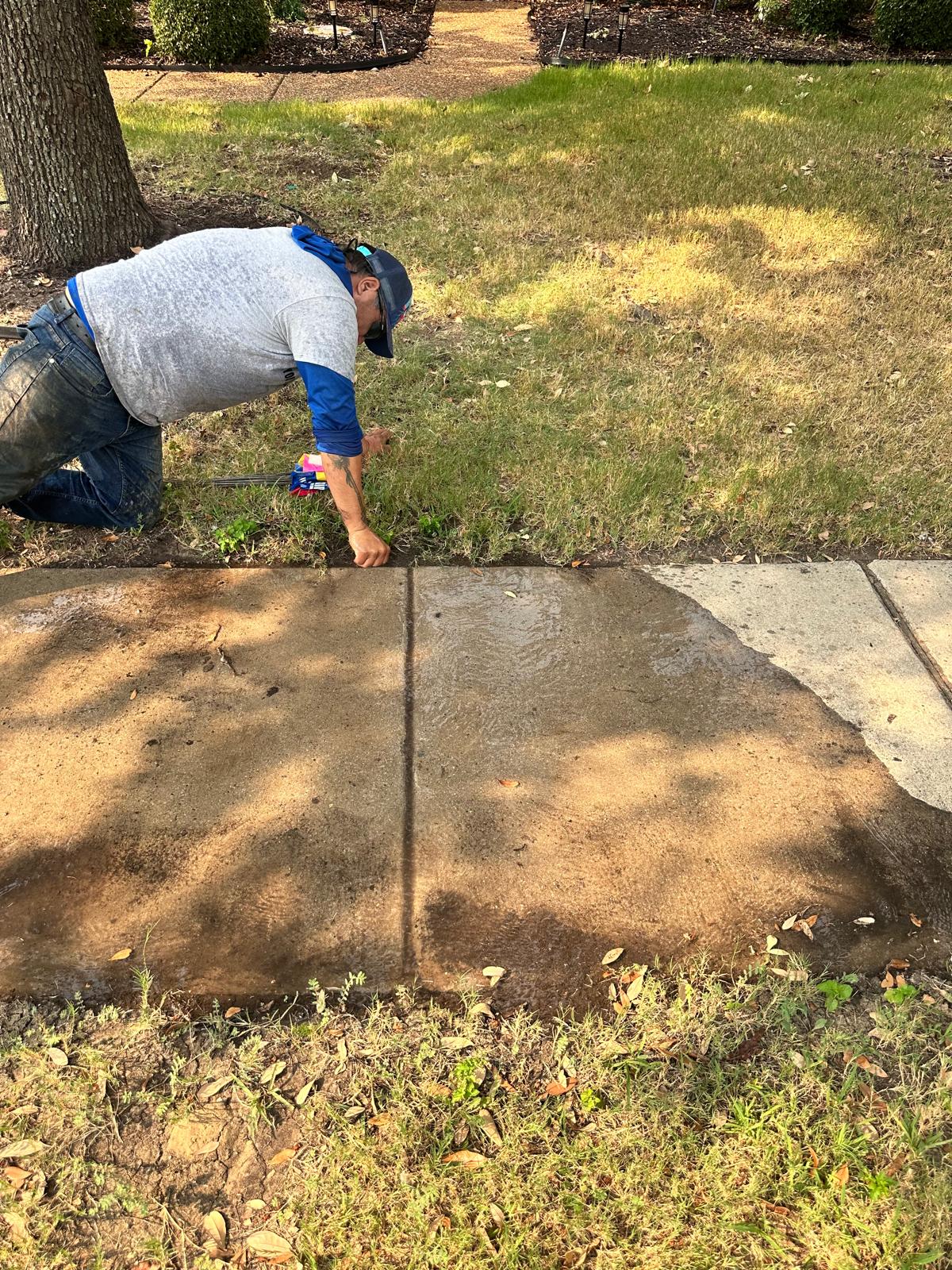
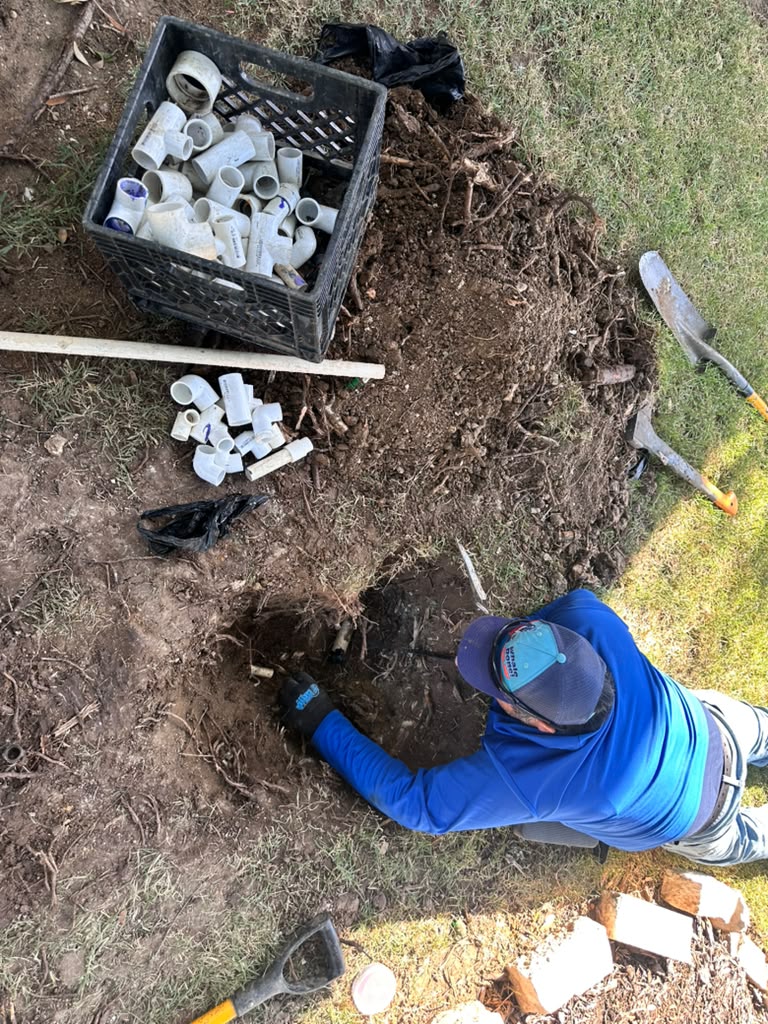
A sprinkler head in Plano TX typically shifts because of soil movement from clay expansion and contraction, physical impact from lawn equipment, foot traffic, or settling around the head after installation. Once a head tilts or sinks even slightly, its spray pattern no longer matches its original coverage area, which often shows up as a dry patch on one side and overwatering on the other. In most cases, the fix is a simple adjustment, though repeated shifting can point to a soil or installation issue worth addressing.
At a Glance
- Difficulty: Easy for straightening a tilted head; moderate if resetting the riser or pipe
- Estimated Time: 10–20 minutes per head
- Tools Needed: Shovel or hand trowel, level, replacement riser if needed
- Works For: Spray heads and rotor heads that have tilted, sunk, or drifted
- May Not Solve: Repeated shifting caused by underlying soil or pipe issues
Why Sprinkler Heads Shift in Plano
Sprinkler heads are installed at a specific height and angle to cover a defined area. When the ground beneath or around a head moves, even slightly, the head moves with it.
North Texas’s clay-heavy soil is especially prone to this kind of movement because it expands when wet and contracts when dry. That constant shifting can gradually tilt a head, push it deeper into the ground, or angle it away from its original spray direction.
Signs a Sprinkler Head Has Shifted
A few signs usually point to a head that’s moved out of position:
- A dry patch appears on one side of a head’s coverage area while the other side stays overwatered
- The head looks tilted rather than sitting straight up when it’s running
- Spray is hitting a fence, sidewalk, or the side of the house instead of the lawn
- The head sits noticeably lower or higher than it did previously
- Grass around the head looks worn down from water pooling in one spot
Common Causes of Sprinkler Head Shifting
1. Clay Soil Movement
Clay soil expands significantly when saturated and contracts as it dries. This cycle, repeated throughout the year, can gradually tilt or sink a sprinkler head even without any physical impact.
2. Lawn Equipment Impact
Mowers, edgers, and trimmers can nick or strike a head directly, especially if it isn’t sitting flush with the lawn. A single impact is often enough to knock a head out of alignment.
3. Foot Traffic and Pets
Heads located near walkways, play areas, or spots where pets frequently run can shift from repeated pressure, particularly if the surrounding soil is soft after watering.
4. Poor Initial Installation
A head that wasn’t set at the correct depth or properly compacted during installation is more likely to settle or shift over time compared to one installed correctly from the start.
5. Freeze-Thaw Cycles
While less severe than in colder climates, North Texas still experiences occasional freezes that can cause minor ground heaving, contributing to gradual head movement over multiple seasons.
Step-By-Step: How to Fix a Shifted Sprinkler Head
1. Turn Off the Zone and Expose the Head
Locate the head and clear away grass or mulch around its base so the riser and connection point are visible.
2. Check the Riser and Pipe Connection
Gently wiggle the head to see whether the movement is isolated to the head itself or extends down into the riser or supply pipe.
3. Straighten or Reset the Head
For minor tilting, the head can often be straightened by hand and repacked with soil. For heads that have sunk or shifted significantly, the riser may need to be reset to the correct height.
4. Test the Spray Pattern
Run the zone and observe the pattern from multiple angles to confirm the head is now covering its intended area without overspray onto the hardscript.
5. Compact the Soil Around the Base
Firmly pack soil around the reset head to reduce the chance of it shifting again from the same soft ground that allowed the original movement.
Common Mistakes Homeowners Make
- Only adjusting the nozzle when the entire head has physically tilted or sunk
- Ignoring repeated shifting, which often signals a soil or installation issue rather than a one-time event
- Packing loose, dry soil around the base, which doesn’t hold the head in place as well as properly compacted soil
- Mowing too close to heads that sit slightly above grade, increasing the risk of impact damage
- Assuming a shifted head is a valve or pressure problem, when it’s often a simple positioning issue
Local Considerations in Plano, TX
A few conditions specific to Plano and the broader Collin County area make sprinkler head shifting a common issue:
- Clay soil throughout Plano is particularly reactive to moisture changes, expanding noticeably after heavy rain and contracting during dry summer stretches, which creates a repeated cycle of ground movement that can tilt or sink heads gradually over the course of a year.
- Hot, dry summers followed by periods of heavier rainfall create sharp moisture swings in the soil, and this back-and-forth cycle tends to be more disruptive to sprinkler head positioning than steady, consistent moisture levels would be.
- New construction neighborhoods, common across parts of Plano, often have recently disturbed soil that hasn’t fully settled, making sprinkler heads installed shortly after construction more prone to shifting during the first year or two.
- Frequent mowing during peak growing season increases the odds of equipment contact with heads that sit slightly proud of the lawn surface, particularly in fast-growing turf that gets mowed more often through spring and summer.
- Foundation-adjacent zones deserve extra attention, since a shifted head watering unevenly near the slab can contribute to inconsistent soil moisture that affects foundation stability over time.
Homeowners can find general guidance on maintaining efficient irrigation systems through the EPA WaterSense program and regional soil and turf research from Texas A&M AgriLife Extension, both of which address how North Texas clay soil affects landscape maintenance.
Related Problems That Aren’t Solved By Adjusting a Sprinkler Head in Plano TX
Resetting a shifted head fixes most positioning issues, but it won’t resolve:
- Cracked or broken risers, which need to be replaced rather than adjusted, since a crack will continue leaking regardless of positioning.
- Low water pressure, which can cause weak or uneven spray even from a properly positioned head, and typically points to an issue elsewhere in the system.
- Valve issues, which affect whether a zone runs correctly at all, independent of how well any individual head is aligned.
- Underground leaks, which can cause soft, saturated soil around a head that leads to repeated shifting even after multiple adjustments.
If a head keeps shifting after being reset, a full system inspection can help determine whether an underlying issue is causing the movement.
Frequently Asked Questions
- How often do sprinkler heads need to be readjusted in Plano? There’s no fixed schedule, but checking heads at the start of each season is a reasonable habit, especially after North Texas’s typical wet-to-dry transitions.
- Can I fix a shifted sprinkler head myself? Yes, in most cases. Straightening a tilted head or repacking soil around the base is a simple task most homeowners can handle without professional help.
- Why does my sprinkler head keep shifting even after I fix it? Repeated shifting often points to an underlying issue, such as consistently soft soil, a nearby leak, or an improperly set riser depth, and may need a closer look.
- Does clay soil make sprinkler head shifting worse? Yes. Clay soil’s tendency to expand and contract with moisture changes is one of the most common causes of gradual head movement in North Texas.
- Is a shifted sprinkler head a sign of a bigger irrigation problem? Not usually on its own, but if multiple heads are shifting at once or shifting repeatedly, it’s worth checking for a leak or pressure issue affecting the surrounding soil.
Bottom Line
A sprinkler head in Plano TX most often shifts because of clay soil movement, physical impact from lawn equipment, or settling after installation. In most cases, the fix is straightforward: straighten the head, reset it to the correct height, and compact the soil around the base. Repeated or ongoing shifting is usually a sign that something else is going on, whether that’s consistently unstable soil, a nearby leak, or an installation issue that needs a closer look.
Next Step
Homeowners dealing with a head that keeps shifting despite repeated adjustments may be facing an underlying soil or plumbing issue rather than a simple positioning problem. A licensed irrigation company can inspect the riser, check for nearby leaks, and confirm whether the surrounding soil conditions are contributing to the repeated movement.
Related Resources
- Sprinkler System Services in Plano, TX
- How to Adjust Sprinkler Heads for Better Coverage
- Signs of Underground Irrigation Leaks
Conclusion & Call to Action
A sprinkler head in Plano TX usually shifts due to clay soil movement, equipment impact, or settling, and most of the time a simple reset solves it. Repeated shifting, though, often points to a bigger issue like a nearby leak or unstable soil. If your heads keep drifting out of position, a licensed irrigation professional can find the real cause. Reach out to a trusted local irrigation team today.