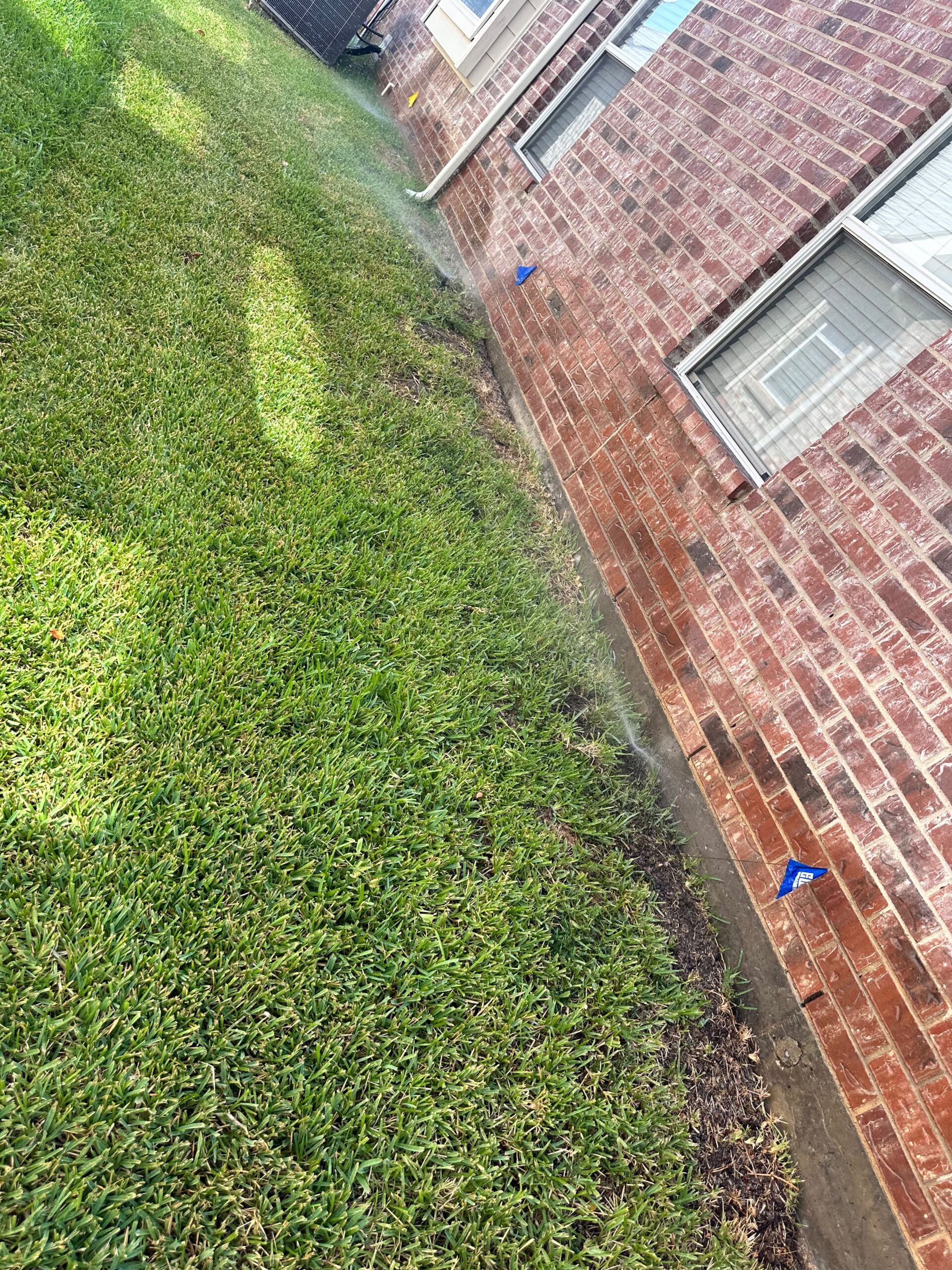
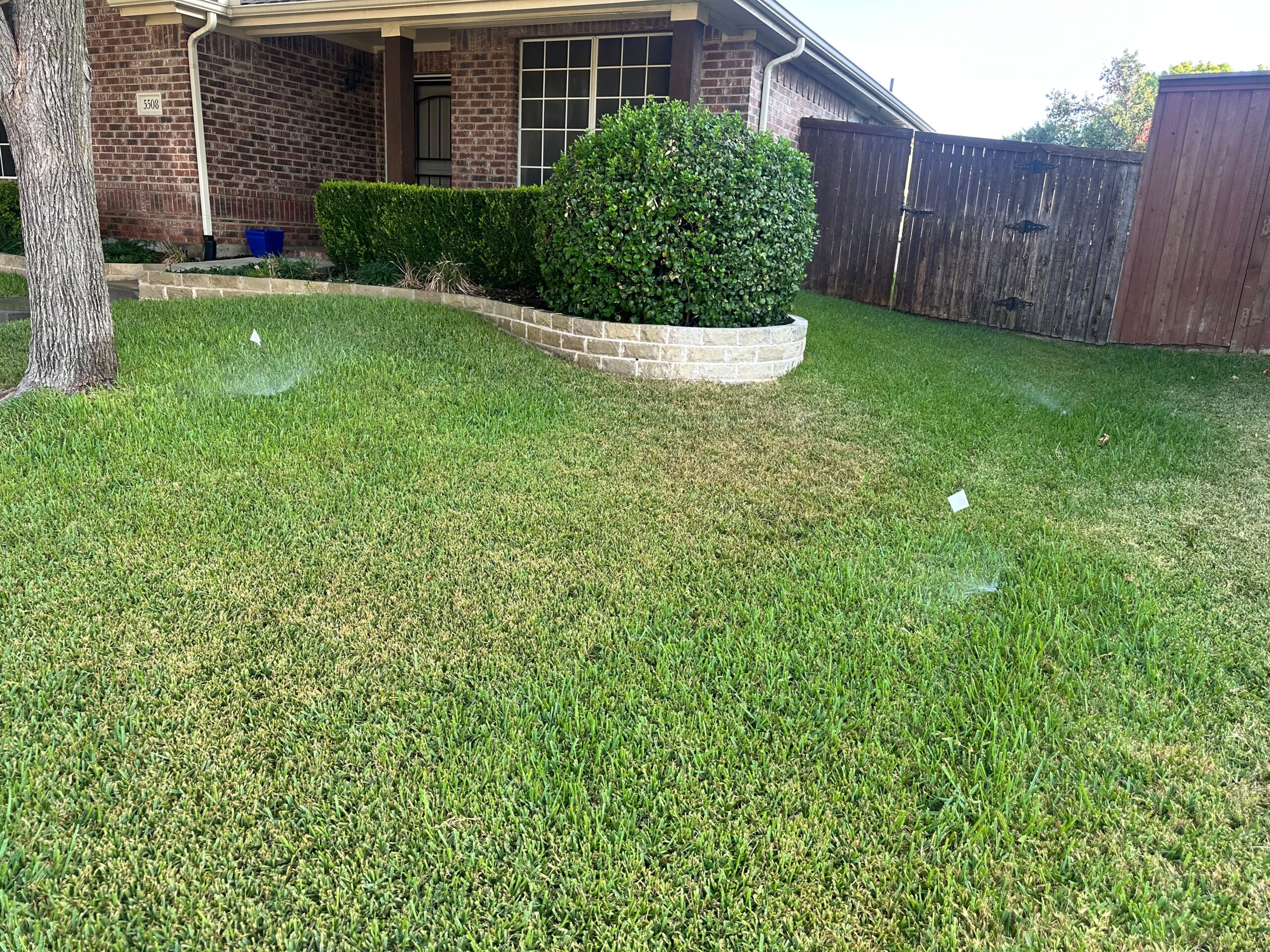
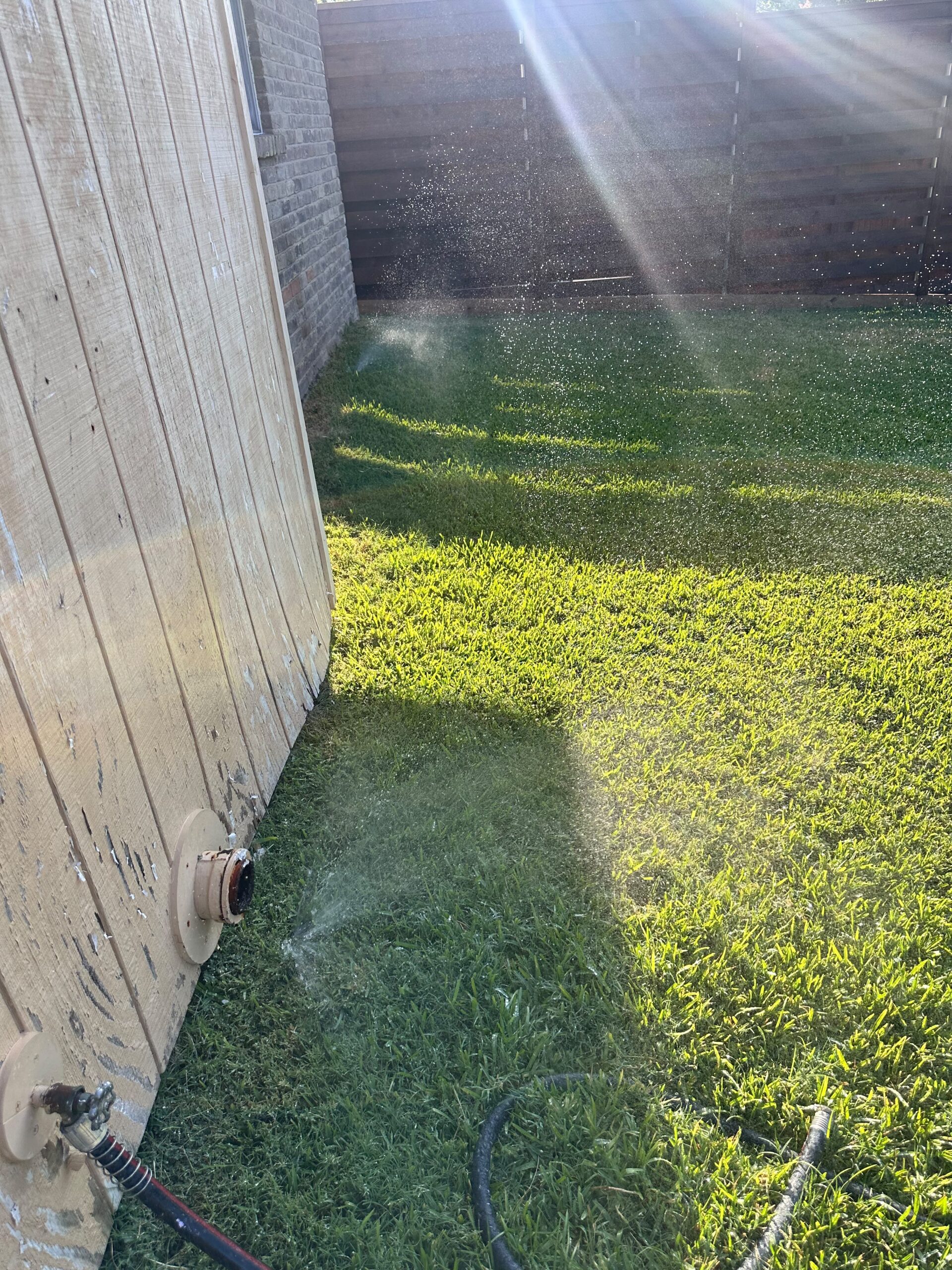
Your sprinkler system not working due to one of these causes: a faulty controller or incorrect programming, a failed zone valve or solenoid, low or high water pressure, clogged or broken sprinkler heads, or a tripped backflow preventer. In North Texas, worn nozzles and valve issues are among the problems frequently encountered during service calls. Systematically checking each component, starting at the controller, lets you identify the actual problem before spending money on repairs.
Key Takeaways
- A common reason a sprinkler system stops working is controller or programming failure, including incorrect schedules, dead batteries, or a tripped circuit breaker.
- Zone valve and solenoid problems are also common, and a faulty solenoid can prevent an entire zone from turning on or off.
- Low water pressure can make sprinkler heads pop up but fail to rotate or distribute water evenly, often caused by a partially closed shutoff valve or a leak in the supply line.
- Broken or clogged sprinkler heads are one of the most visible problems, and they are frequently caused by lawn equipment, foot traffic, or sediment buildup.
- In North Texas, clay soil expansion and summer heat accelerate component wear, making annual inspections an important part of system maintenance.
- A single faulty component causes many apparent failures, and a systematic inspection typically identifies the issue without requiring a full system replacement.
What Are the Most Common Reasons a Sprinkler System Stops Working?
A sprinkler system stops working when one or more of its core components, including the controller, valves, pressure supply, or heads, fail to perform their function. The system depends on every part working in sequence: the controller sends a signal, the valve opens, water flows at the correct pressure, and the heads distribute it across the target area. A failure at any point in that sequence can shut down one zone or the entire system.
Common causes include:
- Controller or timer malfunction (incorrect programming, power loss, dead backup battery)
- Faulty zone valve or solenoid (valve not opening or not closing)
- Low water pressure (partially closed shutoff valve, leak in the line, or municipal supply issue)
- Clogged or broken sprinkler heads (sediment, physical damage, or wear)
- Wiring faults (corroded connections, damaged wire, or a broken wire path)
- Backflow preventer issues (closed, damaged, or in need of testing)
- Seasonal damage (winter freeze, soil movement, or root intrusion)
As Whale Done Sprinklers & Irrigation notes: “In North Texas, many sprinkler problems that appear to be major repairs are often caused by worn nozzles, valve issues, controller programming, or coverage adjustments. A systematic inspection helps identify the actual cause before unnecessary repairs are made.”
The key point is that most sprinkler failures trace back to a small set of identifiable components, and you do not need to replace the whole system to restore function.
How Do You Troubleshoot a Sprinkler System Step by Step?
Troubleshooting a sprinkler system means checking each component in a logical order, starting with the simplest and least expensive issues first. This approach prevents unnecessary repairs and helps you communicate the problem accurately if you contact a licensed technician. The checklist below follows the signal path from controller to head.
Step-by-Step Sprinkler Troubleshooting Checklist
- Check the controller display. Confirm the screen is on, the date and time are correct, and the watering schedule is set to “Run” rather than “Off” or “Rain Hold.”
- Inspect the power source. Check the circuit breaker and replace the backup battery if the controller uses one.
- Verify the main shutoff valve is fully open. A partially closed valve is a common cause of low pressure across all zones.
- Test each zone manually from the controller. Identify whether the problem affects one zone or all zones, which points to either a valve/wiring issue (single zone) or a controller/pressure issue (all zones).
- Listen at the valve box. When a zone is activated, you should hear a faint click from the solenoid. Silence may indicate a wiring or solenoid fault.
- Walk each active zone. Look for heads that do not pop up, rotate, or spray, as well as pooling water that suggests a broken head or underground leak.
- Check the backflow preventer. Confirm both shutoff handles are parallel to the pipe (open position). A handle turned 90 degrees cuts the water supply.
- Inspect wiring at the controller and valve box. Look for corroded terminals, loose connections, or visible wire damage.
- Test water pressure at a hose bib near the system. Compare the reading with local plumbing requirements and the pressure range recommended by the sprinkler and nozzle manufacturers. Pressure that is too low or too high can reduce performance and damage components.
- Review the rain sensor or weather-based shutoff. A sensor stuck in the “wet” position will prevent the system from running even on a dry day.
The key point is that working through this checklist in order narrows the cause quickly and avoids misdiagnosis.
What Causes Only One Sprinkler Zone to Stop Working?
A single non-functioning zone often points to the valve or wiring serving that zone rather than a system-wide problem. Each zone in a residential irrigation system is controlled by a dedicated solenoid valve, which opens when the controller sends a 24-volt AC signal through the zone wire. If that wire is cut, corroded, or disconnected, or if the solenoid coil fails, that zone will not activate.
Common single-zone failure causes:
- Failed solenoid: The coil that opens the valve wears out over time and can be replaced without replacing the full valve body.
- Torn or disconnected zone wire: Digging, rodents, or soil movement can sever the wire path between the controller and the valve.
- Debris in the valve diaphragm: Small particles can lodge under the diaphragm, holding the valve open (causing continuous flow) or preventing it from opening.
- Manual bleed screw left open: If someone manually bled the valve during a previous repair and did not close it, the zone may run continuously or fail to pressurize.
A licensed irrigation technician can test zone wires with a multimeter to confirm whether the issue is electrical or mechanical. The bottom line is that single-zone failures are usually inexpensive to fix once the cause is correctly identified.
What Are the Most Common Sprinkler Repair Problems in North Texas?
North Texas presents specific conditions that accelerate sprinkler system wear compared to many other U.S. regions. The combination of heavy clay soils (which expand and contract with moisture changes), summer temperatures that frequently exceed 100 degrees Fahrenheit, and occasional hard freezes creates stress on buried components, above-ground heads, and controller wiring throughout the year.
Common repair issues seen in North Texas include:
- Worn or clogged nozzles: Mineral deposits and debris can reduce nozzle output and spray-pattern accuracy over time.
- Valve failures from debris: Clay particulate enters valve bodies through the supply line, causing diaphragms to fail or seats to wear prematurely.
- Controller programming drift after power outages: Thunderstorms cause frequent power interruptions in the DFW area, resetting controllers that lack battery backup.
- Freeze damage to above-ground components: Backflow preventers, valve boxes near the surface, and exposed poly pipe are vulnerable during hard freezes if the system was not properly winterized.
- Head displacement from soil movement: Expansive clay shifts heads out of alignment, changing spray direction and creating dry or saturated spots in the lawn.
- Coverage gaps from overgrown landscaping: Plant growth gradually blocks head spray patterns, requiring nozzle adjustments or head relocation to maintain even coverage.
Resources from Texas A&M AgriLife Extension and the Texas Commission on Environmental Quality offer guidance on efficient irrigation scheduling and water conservation practices specific to Texas conditions.
The key point is that North Texas sprinkler problems are often predictable and preventable with annual inspections before the summer irrigation season begins.
Why Does Low Water Pressure Affect the Entire Sprinkler System?
Low water pressure affects the entire sprinkler system when the problem originates upstream of all zone valves, typically at the main shutoff, the backflow preventer, or the municipal supply connection. When pressure is insufficient, heads pop up partially, do not rotate, or produce a weak spray that falls short of the intended coverage area. Dry spots in your lawn are often the first visible sign of a system-wide pressure problem.
Causes of low pressure across the full system:
- Partially closed main shutoff valve or ball valve at the backflow preventer
- A damaged or partially closed backflow preventer
- A leak in the main supply line between the meter and the manifold
- Reduced municipal water pressure during peak summer demand hours
- A pressure regulator that has failed in the reduced position
Excessive pressure can also cause sprinkler heads to mist, create uneven coverage, and accelerate component wear. Compare system pressure with the operating range specified by the sprinkler and nozzle manufacturers. EPA WaterSense recommends pressure-regulated equipment where irrigation pressure is higher than the level needed for efficient operation.
The bottom line is that pressure problems require checking the full supply path before adjusting or replacing heads, since new heads will fail just as quickly under the same abnormal pressure.
How Does a Faulty Controller or Timer Cause Sprinkler Failure?
A sprinkler controller, also called a timer or irrigation clock, is the brain of the system. It sends timed electrical signals to each zone valve to open and close on the programmed schedule. When the controller fails, loses power, or holds incorrect programming, zones will not run, will run at the wrong time, or will run continuously.
Controller-related failures include:
- Power loss without battery backup: The controller loses its schedule after an outage and reverts to default settings or shuts down entirely.
- Rain sensor override: A sensor that has not dried out after rainfall holds the system in a suspended state, preventing all zones from running.
- Seasonal mode or “off” switch activated: Controllers with seasonal adjustment dials can be accidentally set to 0%, which suppresses all runtimes.
- Blown fuse on the transformer output: Many controllers include a small fuse protecting the 24-volt output. A blown fuse disables all zones simultaneously.
- Corroded terminal connections: Moisture inside the controller cabinet causes wire terminals to corrode, breaking the signal path to one or more zones.
As a controller ages, discontinued parts, limited compatibility, or component wear may make replacement more practical than repair. A sprinkler controller assessment from a licensed technician can determine whether the unit can be restored or should be upgraded to a smart, weather-based model.
The key point is that a controller problem is often the easiest and least expensive fix in the system, which is why it should always be the first component you check.
What Role Does the Backflow Preventer Play in Sprinkler System Failures?
A backflow preventer protects the potable water supply by preventing irrigation water from flowing backward. In Texas, testing requirements depend on the type of backflow assembly, the water provider, and locally adopted plumbing codes. Some jurisdictions require annual testing, while others apply different schedules or conditions. When the backflow preventer fails, is closed, or is damaged, it can cut water supply to the entire irrigation system or allow pressure drops that reduce system performance.
Signs that your backflow preventer may be causing your system failure include:
- No water flow to any zone despite correct controller programming
- Visible damage, corrosion, or leaking from the backflow device housing
- The shutoff handles are not fully parallel to the supply pipe
- The system ran normally before a recent freeze or impact event
Backflow testing performed by a licensed tester confirms whether the device is functioning correctly and, in Texas, produces the documentation required by your water utility. Replacing a failed backflow preventer restores full system water supply and brings the installation back into regulatory compliance.
The bottom line is that a closed, damaged, or malfunctioning backflow assembly can contribute to a system-wide loss of water or pressure. Follow the inspection and testing schedule required by your local water provider.
Can You Repair a Sprinkler System Yourself, or Do You Need a Licensed Professional?
Many basic sprinkler repairs are within the capability of a homeowner with standard tools, while other work is best handled by a licensed irrigation professional. Texas generally requires people and businesses providing irrigation services to the public to hold the appropriate TCEQ license. Homeowners working on their own residence may qualify for an exemption, but local codes, water-provider requirements, electrical work, and backflow testing rules may still apply.
Repairs you can typically handle yourself:
- Replacing a broken or clogged sprinkler head (same model and nozzle type)
- Adjusting head spray patterns or arc settings
- Reprogramming or replacing a controller (non-electrical supply work)
- Cleaning a clogged nozzle screen
- Closing or opening the main shutoff valve and backflow preventer handles
Repairs best handled by a licensed professional:
- Backflow preventer replacement or testing
- Zone valve replacement or new valve installation
- Wiring diagnosis and repair requiring a multimeter or valve locator
- Underground pipe repair involving excavation
- Any modification to the system that changes coverage area or adds zones
If you have already completed the troubleshooting checklist and the problem is not resolved, a professional sprinkler repair inspection provides a systematic diagnosis. A sprinkler system inspection is also a practical first step before summer, as technicians will identify worn components, coverage gaps, and efficiency issues in a single visit. For properties with landscaping that would benefit from water-efficient watering, a drip irrigation assessment can reduce water use while improving plant health.
The key point is to distinguish simple homeowner maintenance from regulated, hazardous, or technically complex work. When in doubt, check local requirements and hire an appropriately licensed irrigation or backflow professional.
When Is My Sprinkler Problem a Sign of a Bigger Issue?
Some sprinkler symptoms point to minor adjustments, while others indicate significant underlying problems that worsen quickly if left unaddressed. Recognizing the difference saves you from small issues becoming expensive emergencies.
Symptoms that suggest a larger problem:
- Water pooling at the surface between heads: This often indicates an underground pipe leak or a fitting failure below grade, not just a head issue.
- Wet spots in the lawn that never dry out: A valve stuck in the open position continuously delivers water to a zone even when the controller is off.
- Multiple zones failing simultaneously: This points to a controller power problem, a main supply interruption, or a system-wide pressure failure.
- Significant increases in your water bill without visible cause: A hidden leak in the supply line or a stuck-open valve can waste thousands of gallons per billing cycle before becoming visible.
- Corrosion or white mineral deposits at multiple heads: This suggests sustained pressure problems or water chemistry issues that are degrading components across the system.
The EPA WaterSense program notes that a well-maintained landscape irrigation system should not produce runoff or standing water during normal operation. Persistent wet areas often indicate a leak, drainage problem, or component failure rather than normal system operation.
The key point is that visible water waste and multi-zone failures are signals to act quickly, since water loss compounds daily and soil saturation can damage foundations, turf, and landscaping.
What Is the Difference Between a Sprinkler Head Problem and a Zone Valve Problem?
A sprinkler head problem is localized, affecting only the specific heads that are damaged or clogged, while a zone valve problem affects every head in that entire zone. Understanding this distinction lets you diagnose correctly without replacing components unnecessarily.
| Symptom | Likely Cause | Affected Area |
| One or two heads not popping up | Broken or clogged heads | Specific head locations only |
| Entire zone has no flow | Failed solenoid or valve | All heads in that zone |
| Entire zone runs continuously | Valve stuck open or debris in diaphragm | All heads in that zone |
| All zones have weak pressure | Main supply or pressure issue | System-wide |
| All zones fail to run | Controller, power, or backflow issue | System-wide |
| Uneven spray in one zone | Mixed nozzle types or worn nozzles | Heads within one zone |
When a single head fails, replacement is straightforward and low cost. When an entire zone fails, check the solenoid wiring with a multimeter before replacing the valve body, since the solenoid coil alone is often the faulty part. The bottom line is that correctly mapping the symptom to its scope, single head vs. full zone vs. system-wide, is the most important diagnostic step you can take.
Should You Schedule a Professional Sprinkler Inspection?
A professional sprinkler inspection is the most efficient way to identify problems you cannot see, including underground leaks, low-flow nozzles, coverage gaps, and components nearing end of life. The Irrigation Association recommends that irrigation systems be inspected annually by a qualified professional to maintain efficiency and prevent water waste.
For North Texas homeowners, scheduling an inspection before the summer irrigation season, typically in March or April, gives you time to address problems before peak watering demand in June through September. An inspection also documents system conditions, which can be useful when buying or selling a property.
The bottom line: a preventive inspection can identify smaller problems before they become emergency repairs or compound over a season.
Conclusion: Why Is My Sprinkler System Not Working?
Your sprinkler system most likely stopped working because of a controller programming error, a failed zone valve or solenoid, a water pressure problem, a clogged or broken head, or a closed backflow preventer. Each of these causes is diagnosable with a systematic inspection that moves from the controller outward to the heads. In North Texas specifically, hard water mineral deposits, clay soil movement, and periodic freeze events accelerate the normal wear rate on all components.
Most homeowners can complete the basic troubleshooting checklist and handle minor head replacements on their own. Problems involving valves, wiring, underground pipes, or backflow devices are best handled by a licensed irrigator, both for quality of repair and Texas regulatory compliance.
The bottom line: the majority of sprinkler failures trace back to a small number of identifiable components, and a systematic, zone-by-zone inspection is the most reliable way to find and fix the actual cause.
Frequently Asked Questions
What causes a sprinkler system to stop working?
A sprinkler system commonly stops working because of controller problems, a faulty zone valve or solenoid, low water pressure, clogged or broken sprinkler heads, or a closed backflow preventer. Electrical issues such as a tripped breaker or corroded wiring are also frequent causes. Identifying whether one zone or the entire system is affected helps narrow the diagnosis quickly.
How can I troubleshoot my sprinkler system before calling for repair?
Start troubleshooting by checking the controller for correct programming, power supply, and any active rain sensor overrides, then verify the main shutoff and backflow preventer handles are fully open. Manually activate each zone from the controller to isolate whether the problem is single-zone or system-wide. Walk each zone during operation and look for heads that do not pop up, rotate, or spray normally.
Can I repair my sprinkler system myself?
Homeowners can often handle basic maintenance such as replacing compatible sprinkler heads, cleaning clogged nozzles, and correcting controller programming. Texas homeowners working on their own residence may qualify for a licensing exemption, but local codes and water-provider requirements still apply. Backflow testing, electrical work, major excavation, and complex valve or supply-line repairs are best handled by appropriately licensed professionals.
What are the most common sprinkler repair problems in North Texas?
Common sprinkler repair problems in North Texas include worn or clogged nozzles, zone valve diaphragm failures, and controller programming loss after power outages. Expansive clay soils shift head alignment over time, and above-ground components including backflow preventers are vulnerable to freeze damage during hard winter events.
When should I call a licensed sprinkler repair company?
Call a licensed sprinkler repair company when your troubleshooting checklist does not identify the problem, when an entire zone or the full system fails to respond, or when you find evidence of an underground leak such as persistent wet spots or an unexplained spike in your water bill. Businesses performing irrigation work for the public generally require the appropriate TCEQ license. Backflow testing, electrical work, and other regulated services may require additional credentials or compliance with local requirements.
Need Help With Your Sprinkler System?
If your sprinkler system is still not working after completing these troubleshooting steps, the problem may involve a damaged valve, underground pipe, wiring fault, backflow preventer, or controller component.
Whale Done Sprinklers & Irrigation provides professional sprinkler inspections, troubleshooting, and repairs throughout North Texas and the DFW area. Our team can identify the source of the problem and recommend the appropriate repair without replacing parts unnecessarily.
Schedule sprinkler repair with Whale Done Sprinklers & Irrigation today.
About the Author
Whale Done Sprinklers & Irrigation is a licensed irrigation company serving homeowners and commercial properties throughout North Texas and the DFW area. The team specializes in sprinkler repair, system inspections, backflow testing, drip irrigation, and controller repair.
References
- EPA WaterSense — Water-efficient landscape irrigation guidance and pressure management resources.
- Irrigation Association — Industry standards and irrigation inspection and maintenance guidance.
- Texas A&M AgriLife Extension — Irrigation scheduling guidance and water management resources for Texas landscapes.
- Texas Commission on Environmental Quality (TCEQ) — Texas irrigator licensing requirements, backflow guidance, and water-use regulations.