If you’ve stepped outside after a storm and noticed water pooling, leaving your yard looking more like a swamp than a lawn, you’re not alone. Standing water after rainfall isn’t just annoying, it’s a clear signal that something beneath the surface isn’t working the way it should.
Whether you’re dealing with soggy patches, muddy shoes, or water creeping toward your home’s foundation, this guide breaks down why it happens and how to fix it without feeling overwhelmed.
Why is water pooling in my yard after it rains?
Water pools occur due to poor yard grading that prevents water from flowing away from your home, compacted soil that limits absorption, clogged or missing drainage systems, excessive gutter runoff, or hidden underground leaks. When water has nowhere to go, it settles on the surface, gradually damaging turf, plant roots, and surrounding soil structure. Over time, persistent moisture can lead to foundation concerns, erosion, and increased mosquito activity, creating both structural and comfort issues for homeowners.
A proper drainage solution is essential to redirect excess water safely and efficiently. In many cases, a professionally designed French drain offers an effective long-term fix by collecting and channeling water away from problem areas. This solution helps restore healthy drainage patterns, protects your home’s foundation, and preserves the overall integrity of your landscape.
5 Common Reasons Your Yard Doesn’t Drain Properly
1. Your Yard Isn’t Sloped Correctly
Every yard should have a subtle slope that directs rainwater away from the home instead of allowing it to collect near the foundation. When a yard is flat or contains low spots, water naturally settles and remains for extended periods. Over time, this standing moisture can soften soil, stress the foundation, and weaken turf roots. Lawns in these areas often stay soggy long after rainfall, making them more vulnerable to disease, erosion, and uneven growth that affects the yard’s overall appearance.
2. Soil That’s Too Compacted to Absorb Water
In North Texas, clay-heavy soil is a common cause of drainage problems. With repeated foot traffic, lawn equipment use, and natural settling, the soil becomes tightly packed and loses its ability to absorb water efficiently. When rain falls, it cannot penetrate the dense surface, causing water to remain on top. This creates puddles that damage grass roots, limit oxygen flow, and contribute to persistent muddy areas throughout the yard.
3. There’s No Real Drainage System
Without a proper drainage system such as a French drain, surface drain, or swale, excess rainwater has no clear route to exit your property. As a result, water accumulates in low-lying areas and near structures. In some cases, drainage systems were installed years ago but have since become clogged, crushed, or buried. When these systems fail, they quietly allow water to pool, leading to long-term soil and landscape damage.
4. Gutters Are Dumping Water Too Close to the House
Gutters and downspouts play a critical role in managing roof runoff, but problems arise when water is released too close to the home. Downspouts that discharge near the foundation can saturate a single area of the yard every time it rains. This repeated overflow erodes soil, weakens grass, and increases the risk of water reaching crawl spaces or slab foundations, where it can cause costly structural issues.
5. There’s a Hidden Sprinkler Leak
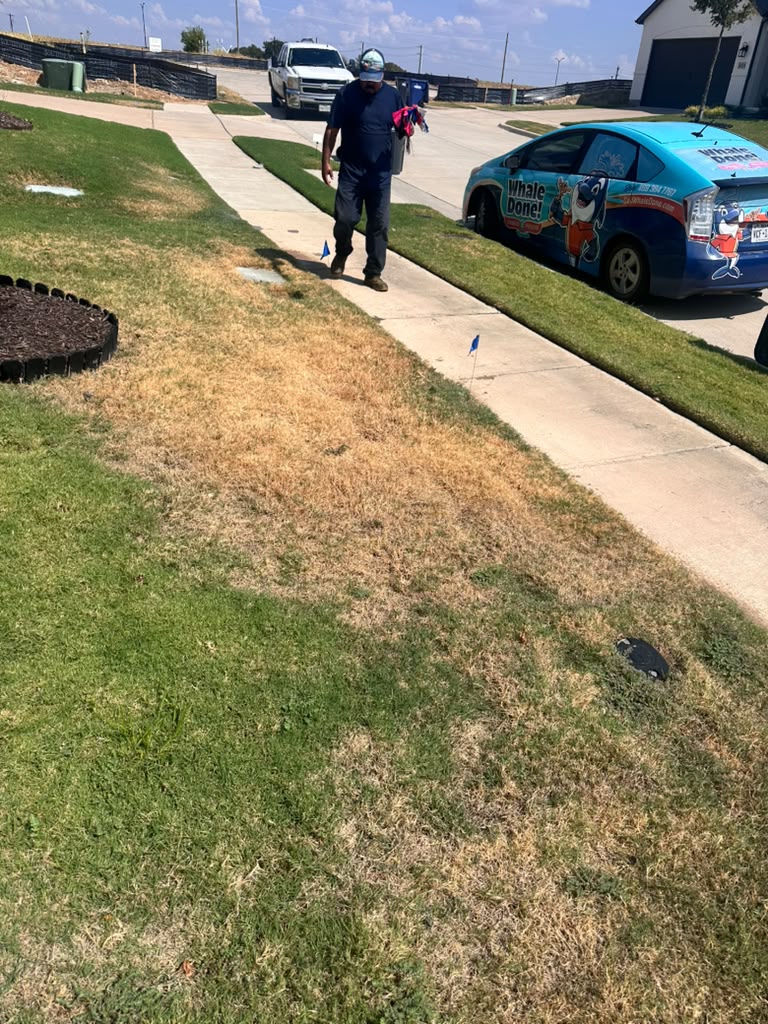
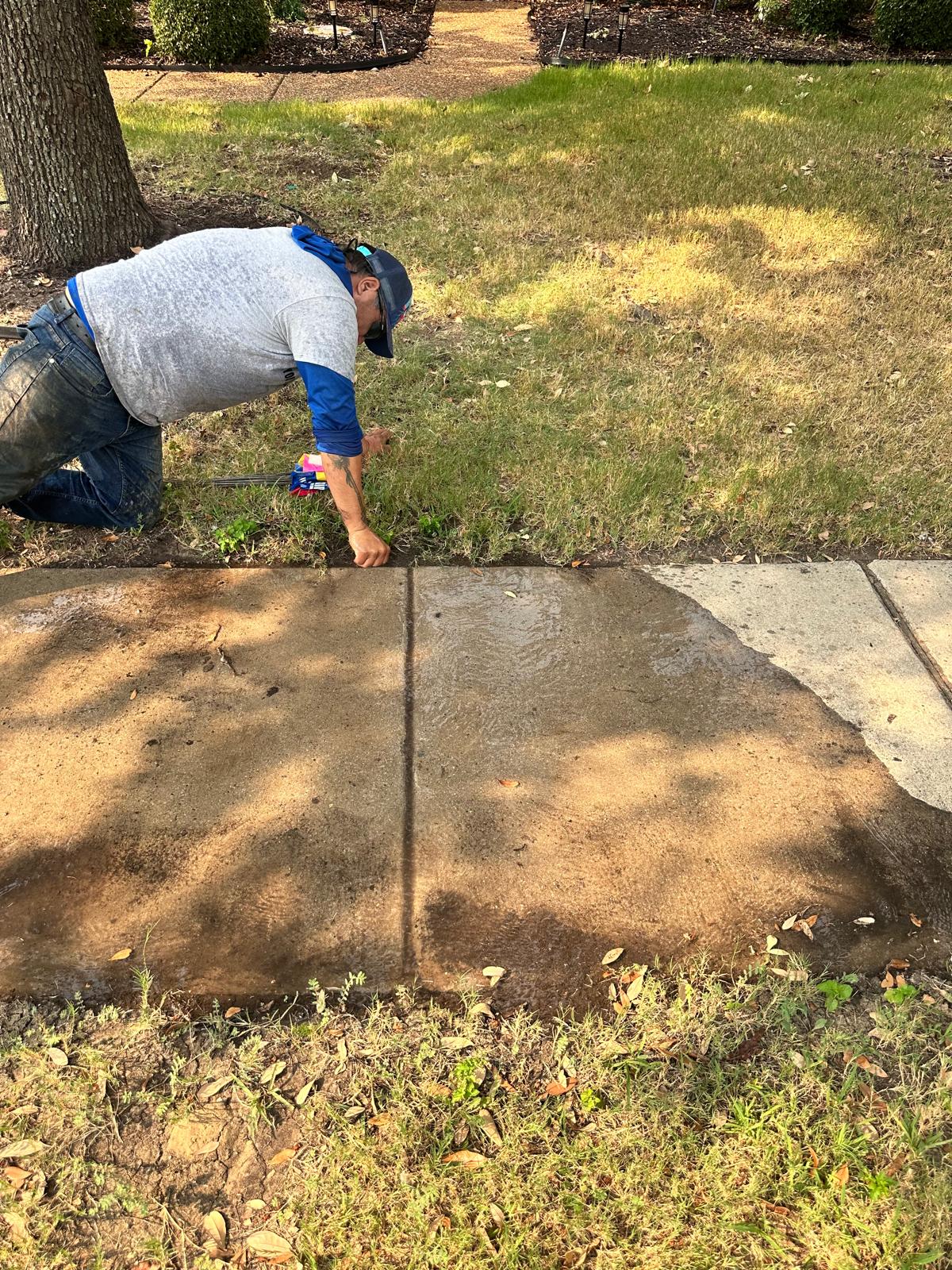
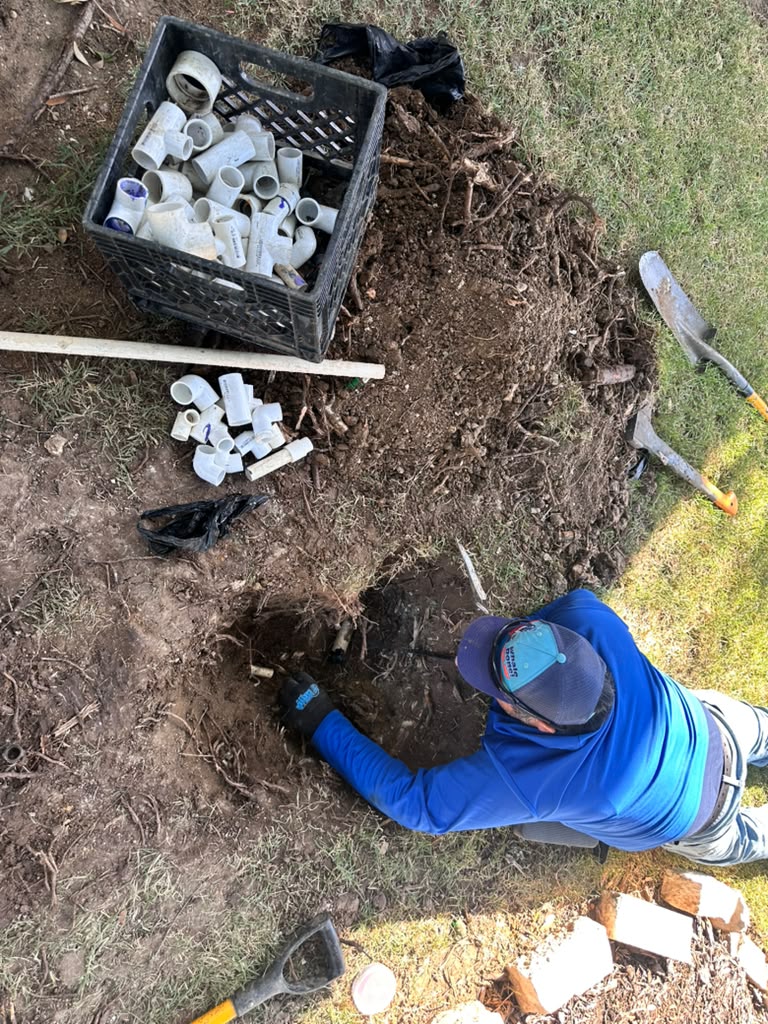
When water pooling appears without recent rainfall, the issue may be an underground sprinkler system leak rather than a drainage problem. Cracked PVC pipes, broken lateral lines, or leaking valves can release water slowly and continuously beneath the surface. Because these leaks often go unnoticed, they can oversaturate soil for days or weeks, creating soft spots, uneven turf growth, and unexpectedly high water bills.
How to Fix It: French Drain to the Rescue
When it comes to long-term, low-maintenance drainage, the gold standard is a French drain, a buried trench filled with gravel and a perforated pipe that redirects water away from where it shouldn’t be.
A French drain helps:
- Dry out soggy lawn areas
- Protect your home’s foundation
- Prevent future flooding
- Extend the life of landscaping
- Keep mosquitoes from breeding in standing water
Other options may include regrading the yard, adding surface drains, or extending gutter downspouts. But the first step is always the same: figure out why your yard is flooding in the first place.
Why You Shouldn’t Wait
Pooling water isn’t just a cosmetic issue.
- Foundation shifting: Excess standing water weakens surrounding soil, causing uneven pressure that can lead to cracks, movement, and long-term structural instability.
- Mud and erosion: Constant water flow washes away topsoil, creating muddy patches, uneven surfaces, and exposed roots that damage your landscape’s stability.
- Lawn disease and plant damage: Overly wet soil suffocates roots, encourages fungal growth, and weakens grass and plants, eventually leading to thinning or die-off.
- Slippery walkways: Persistent moisture on hard surfaces promotes algae buildup, increasing slip hazards and making walkways unsafe for family and visitors.
- Mosquito infestations: Standing water creates ideal breeding grounds for mosquitoes, increasing pest activity and raising the risk of bites and disease transmission.
All of these can start with one bad puddle and turn into an expensive fix if ignored too long.
What To Do Next (Without Getting Overwhelmed)
If you’re in North Texas and tired of the puddles, the mess, or the mystery this is what we recommend:
- Get a professional inspection.
A drainage expert can identify whether your issue is grading, soil, downspouts, or something underground. - Don’t DIY a solution that won’t last.
Many fixes like digging shallow trenches or laying rock don’t address the cause—they just move the problem around. - Ask about a French drain.
It’s often the most reliable fix for recurring pooling problems especially in our Texas soil and storm patterns.
Final Takeaway:
Water pooling after rain is a problem worth solving.
Not just because it’s annoying but because it’s pointing to something deeper. With the right drainage plan (and the right partner), you can get your yard back and protect your home for the long haul.
Serving Collin County & Beyond
At Whale Done Sprinklers, we install custom French drain systems designed for our Texas climate and soil—without tearing up your yard. If you’re seeing puddles, patches, or pooling after every storm, we’re here to help you figure it out.
FAQ
Q: Why is my backyard flooding after rain?
A: Poor grading, heavy clay soil, clogged or missing drains, or broken sprinkler lines can all cause yard flooding after heavy rain.
Q: What’s the best way to fix a soggy yard?
A: A professionally installed French drain is one of the most effective ways to remove standing water and protect your property.
Q: Do I need to regrade my yard or install a French drain?
A: It depends on the slope and soil conditions. A drainage inspection can determine the best fix for your yard.
Conclusion
Water pooling in your yard is more than a minor inconvenience—it’s a warning sign that drainage, grading, or irrigation issues need attention. Left unresolved, standing water can lead to foundation damage, unhealthy lawns, safety hazards, and costly repairs. The good news is that with the right diagnosis and a long-term solution like a professionally installed French drain, these problems can be effectively resolved.
Addressing the root cause now protects your landscape, your home, and your investment for years to come. If you’re ready to stop guessing and start fixing the issue the right way, professional help makes all the difference.
Whale Done Sprinklers & Irrigation
+1 (469) 384-7767
clientsupport@callwhaledone.com