Sprinklers run in Allen TX during rain most often because the system either doesn’t have a rain sensor installed, the sensor is disconnected or malfunctioning, or the controller is set to override weather-based settings. Some systems are also programmed on a fixed schedule that doesn’t account for rainfall at all, so the sprinklers simply run because that’s what the schedule says to do. Checking the rain sensor, confirming it’s wired in correctly, and reviewing the controller’s settings is usually enough to identify the cause and stop it from happening again.
At a Glance
- Difficulty: Easy for basic checks, moderate if wiring is involved
- Estimated Time: 10–20 minutes to diagnose
- Tools Needed: None for a visual check, a screwdriver if wiring needs to be inspected
- Works For: Missing, disconnected, or miscalibrated rain sensors and controller override settings
- May Not Solve: A failed sensor unit or wiring damage that requires replacement or professional repair
Why Sprinklers Run During Rain
Most modern irrigation systems are designed to include a rain sensor or a smart controller with weather-based scheduling, both of which are meant to skip a watering cycle when enough rain has already fallen. When sprinklers still run during a storm, it usually means that the safeguard either isn’t installed, isn’t working, or isn’t connected the way it should be.
A few common reasons this happens include:
- The system was never equipped with a rain sensor to begin with
- The sensor is disconnected, unplugged, or wired incorrectly
- The sensor cup is dirty, blocked, or not calibrated to trigger properly
- The controller has a manual override or “bypass” setting turned on
- A smart controller’s weather data isn’t syncing correctly with local conditions
Older systems, in particular, are less likely to have a rain sensor installed by default, since this feature became more common in newer installations. If a homeowner takes over a system that was already in place, it’s worth confirming whether a sensor exists at all before assuming one is simply malfunctioning.
How Rain Sensors Are Supposed to Work
A rain sensor typically sits outside, often mounted on a roofline or fence, and uses small absorbent discs that expand as they collect rainfall. Once enough water has been absorbed, the sensor sends a signal to the controller telling it to skip the next scheduled cycle. As the discs dry out over the following days, the sensor resets and allows watering to resume automatically.
Smart controllers work a little differently. Instead of a physical sensor, they pull local weather data through a Wi-Fi connection and adjust the schedule based on recent or forecasted rainfall. If that connection drops or the weather data source is inaccurate, the controller may not skip a cycle even when it should.
Step-by-Step: How to Check Why Sprinklers Run in Allen TX During Rain
Step 1: Locate the Rain Sensor
Look for a small round device, often mounted near the roofline or on a fence post, usually within sight of the controller’s wiring path. If nothing is visible, the system may not have a rain sensor at all.
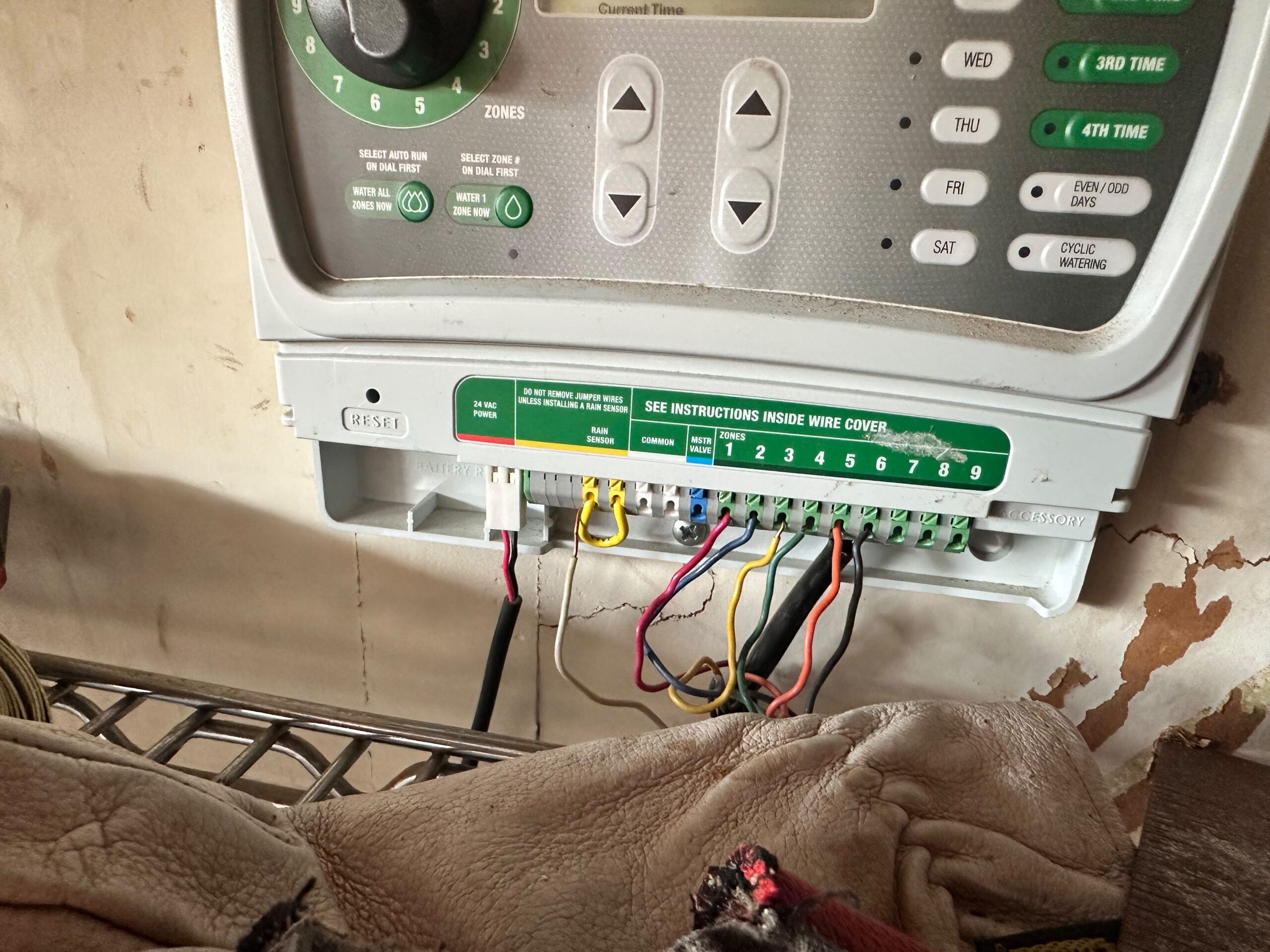
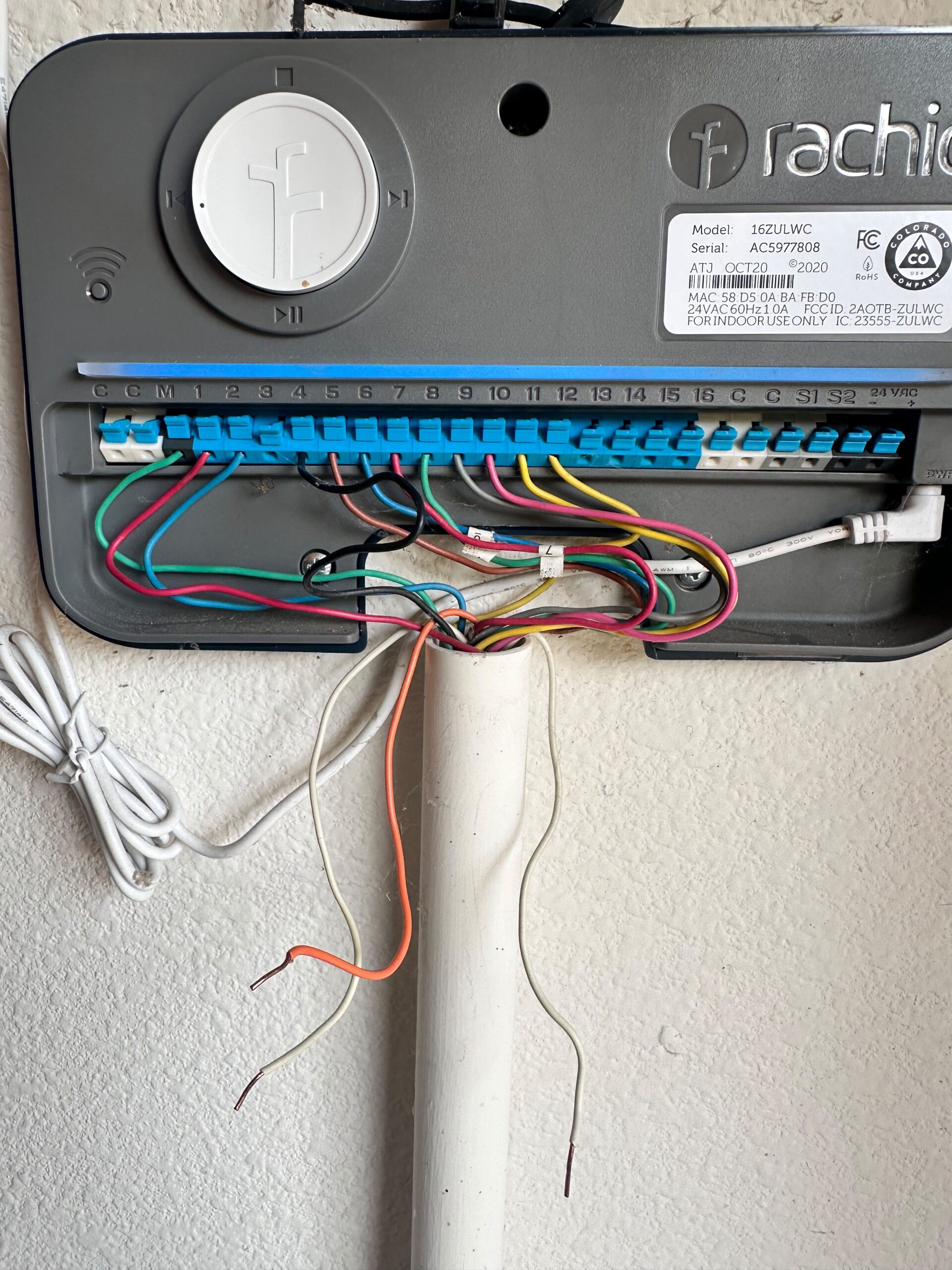
Step 2: Check the Wiring Connection
Open the controller and confirm the sensor’s wires are connected to the correct terminals. A loose or disconnected wire will prevent the sensor from communicating with the controller.
Step 3: Inspect the Sensor for Damage or Blockage
Check the sensor discs for dirt, debris, or cracking. A sensor that’s blocked or damaged may not absorb water correctly, even during heavy rain.
Step 4: Test the Sensor Manually
Some sensors have a test button or dial that can be adjusted to trigger a bypass signal. If pressing or adjusting it doesn’t stop the system, the sensor itself may need replacement.
Step 5: Review the Controller’s Override Settings
Check the controller for a “rain sensor bypass” or “sensor off” setting, which some systems include for testing purposes and occasionally get left on by mistake.
Step 6: Confirm Smart Controller Connectivity
If the system uses a Wi-Fi connected smart controller, confirm it’s still connected to the home network and that the weather data source is up to date.
Common Mistakes Homeowners Make
- Assuming a rain sensor is automatically included. Not all systems have one installed, especially older ones.
- Leaving a bypass setting on after testing. Some controllers include an override switch that’s easy to forget about once flipped.
- Ignoring a dirty or blocked sensor. Built-up debris can prevent the sensor from absorbing rain correctly, even if it’s wired properly.
- Assuming Wi-Fi controllers never need a check. A dropped connection can cause a smart controller to miss updated weather data.
- Waiting to fix it because water seems cheap. Wasted watering adds up over a season and puts unnecessary stress on already saturated soil.
Local Considerations for Allen, TX
Sprinklers run in Allen TX during rain for the same general reasons as anywhere else, but a few local factors are worth keeping in mind:
- Clay soil: Much of Allen sits on dense clay soil that drains slowly, meaning watering during or right after rain can lead to pooling and runoff rather than absorption. Guidance from Texas A&M AgriLife Extension notes that clay soils hold moisture longer than sandy soils, making unnecessary watering more likely to cause standing water.
- Heat: Even after a storm, high summer temperatures can dry out topsoil quickly, which sometimes tempts homeowners to leave the schedule as-is rather than adjusting it.
- Wind: Storms in North Texas often bring wind gusts that can affect how evenly rainfall is distributed across a yard, sometimes leaving one section drier than the rest despite recent rain.
- Water restrictions: Many Allen neighborhoods follow watering day and time restrictions. Checking current guidance from the Texas Commission on Environmental Quality or the local water provider can help confirm the schedule is compliant.
- Seasonal watering: Rainfall patterns shift throughout the year in North Texas, so a sensor or smart controller that isn’t calibrated correctly can cause more noticeable waste during wetter seasons like spring.
- Foundation movement: Consistent, appropriate watering helps stabilize soil moisture around a home’s foundation, so a malfunctioning rain sensor can contribute to uneven watering patterns over time.
Related Problems That Can Look Similar
If the rain sensor checks out fine but the system still seems to run at odd times, the issue may be something else:
- Overlapping or incorrect start times in the controller’s schedule
- A stuck valve that’s running independently of the programmed schedule
- Outdated or incorrect programming left over from a previous season
- A wiring fault causing inconsistent communication between the controller and the sensor
If start times and schedules seem off in general, our guide on how to check sprinkler start times walks through what to review. For broader controller adjustments, our article on what homeowners should change on their sprinkler controller each season covers additional settings worth checking.
Frequently Asked Questions
- Do all sprinkler systems have a rain sensor?
No. Rain sensors became more common in newer installations, but many older systems were never equipped with one.
- How much rain does it take to trigger a rain sensor? Most rain sensors are calibrated to trigger after roughly one-eighth to one-quarter inch of rainfall, though this can often be adjusted.
- Can I add a rain sensor to an existing system? Yes. A rain sensor can typically be added to most controllers, though the installation may require a licensed technician for correct wiring.
- Why would my smart controller still water after rain? This can happen if the controller loses its Wi-Fi connection or if the weather data source doesn’t accurately reflect local rainfall.
- Is it bad for my lawn if sprinklers run during rain? Occasional overwatering usually won’t damage a healthy lawn, but frequent overwatering can contribute to runoff, fungus, and wasted water over time.
Bottom Line
Sprinklers run in Allen TX during rain most often because of a missing, disconnected, or malfunctioning rain sensor, or a controller override setting that wasn’t switched back after testing. Checking the sensor’s wiring, cleanliness, and calibration, along with reviewing the controller’s settings, usually identifies the cause without much trouble. In most cases, this is a quick fix rather than a sign of a larger system problem, and it rarely points to an issue with the heads, valves, or piping. Homeowners who catch it early can usually resolve it in one visit, whether they handle it themselves or bring in a technician for the wiring.
Conclusion
Sprinklers run in Allen TX during rain most often because of a missing or malfunctioning rain sensor, not a bigger system failure. Checking the sensor’s wiring, cleanliness, and calibration usually solves the issue quickly and without much cost. If the sensor still isn’t working after a check, or your system doesn’t have one installed at all, a licensed sprinkler company can inspect the setup and recommend the right fix. This is also a good opportunity to confirm the rest of your controller’s settings are accurate. Consider scheduling a check-up soon to stop the waste and keep your system running efficiently all season.