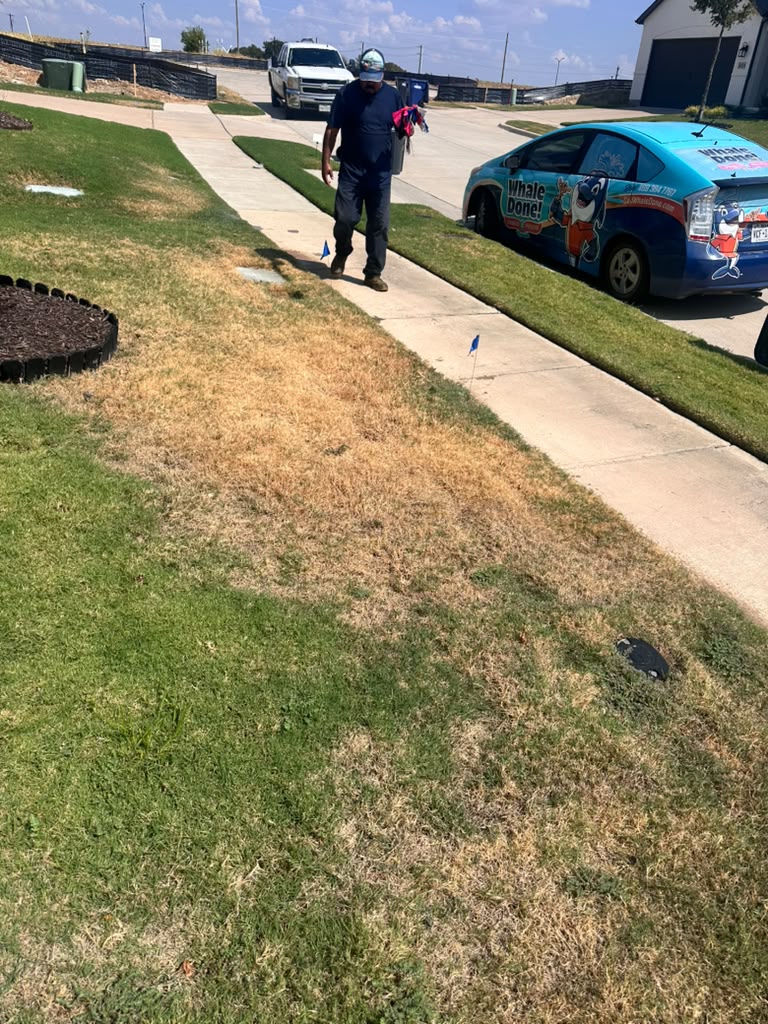
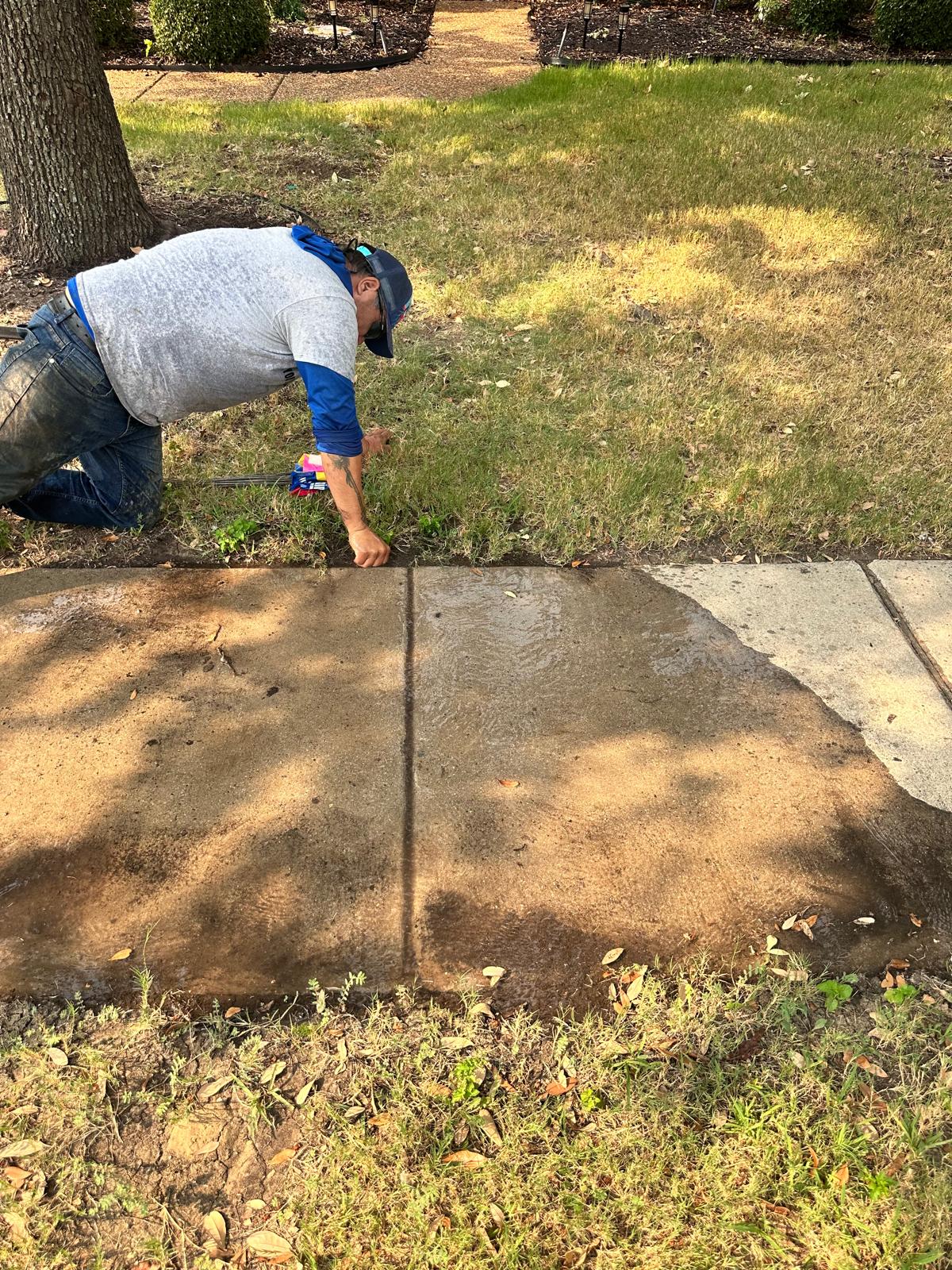
A dry patch does not always need more watering. A sprinkler controller that looks dead does not always need replacement. Water pooling near one sprinkler head does not necessarily reveal where a leak began.
These symptoms can have several possible causes, which is why choosing the right lawn sprinkler system contractor matters. A useful evaluation should do more than identify the most visible symptom. It should investigate the relevant parts of the system, explain the findings, and connect the recommended work to the actual problem.
If you are searching for a “lawn sprinkler system contractor near me,” use this guide to compare local companies, prepare for your appointment, and make a more informed hiring decision.
Quick Answer: What Should You Look for in a Sprinkler Contractor?
Look for a contractor who:
- Regularly works on the type of irrigation system or problem you have
- Holds the appropriate Texas irrigation credential for the work being offered, when required
- Explains how the reported problem will be evaluated
- Tests relevant components before recommending major work
- Communicates the proposed scope and charges clearly
- Provides written recommendations for substantial repairs
- Has reviews and service records reflecting genuine local experience
- Distinguishes among programming, repair, and replacement
- Avoids guaranteed savings and one-size-fits-all solutions
- Follows safe practices around power and exposed wiring
Price matters, but it should be considered alongside diagnosis, scope, communication, and whether the proposed solution addresses the likely cause.
What Does a Lawn Sprinkler System Contractor Do?
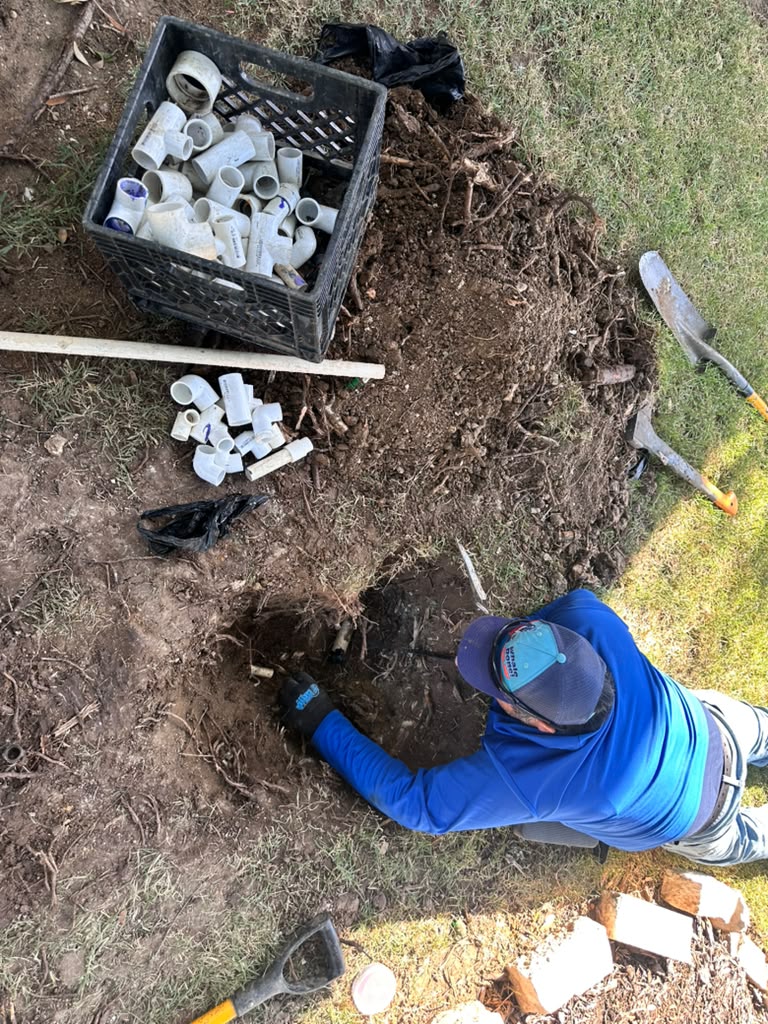
A contractor’s work may include inspections, controller troubleshooting, zone testing, leak detection, valve work, programming, maintenance, and other professional sprinkler repair services. The exact scope varies by company, appointment, symptoms, and property conditions.
Depending on the reported problem, an evaluation may include checking:
- Sprinkler heads and nozzles
- Irrigation valves
- Controller programming
- Low-voltage controller wiring
- Rain-sensor status
- Irrigation-zone operation
- Visible leaks or unusually wet areas
- Pressure and spray performance
- Coverage across turf and planting areas
Not every appointment requires every checkpoint. The appropriate process depends on the symptoms, property, system design, and agreed scope of work.
A strong contractor should explain what will be checked, why those checkpoints are relevant, and when broader testing may be useful.
Why the Same Symptom Can Have Several Causes
One of the most useful qualities in a sprinkler contractor is the ability to diagnose rather than assume.
Consider a brown area in the lawn. The immediate reaction may be to increase watering time, but the actual cause could be:
- A clogged nozzle
- A damaged or misaligned sprinkler head
- Low pressure in that zone
- Poor head-to-head coverage
- A valve that is not opening completely
- Incorrect controller programming
- A leak reducing available flow
- A landscape condition unrelated to irrigation
Adding more watering time may not correct these problems. It could increase watering elsewhere without improving the affected area.
Unexplained wet areas, bubbling water, reduced pressure, or persistent moisture may justify professional sprinkler leak detection before visible parts are replaced. The place where water appears is not always where the leak began.
The same principle applies to controller and valve problems. A zone that will not start, stop, or water normally does not automatically prove that its valve has failed. Controller output, low-voltage wiring, pressure, underground leaks, and other components can produce similar symptoms.
A proper evaluation should identify the cause before sprinkler valve repair or replacement is recommended.
Choose Experience That Matches Your Needs
A company may specialize in installation, repair, controller programming, maintenance, or a combination of services. Before scheduling, confirm that the contractor routinely handles your type of system or problem.
Useful questions include:
- Do you troubleshoot existing irrigation systems?
- Do you work with traditional and smart controllers?
- Can you evaluate wired and wireless rain sensors?
- Do you diagnose valve and low-voltage wiring problems?
- Can you test individual irrigation zones?
- Do you evaluate coverage and spray performance?
- Do you work with the controller or equipment installed at my property?
Brand familiarity can be helpful, but recognizing a product is not the same as diagnosing the system. Relevant components should still be evaluated before repair or replacement is recommended.
Verify the Appropriate Texas License
Texas regulates professional landscape-irrigation work. The Texas Commission on Environmental Quality explains that people performing or offering regulated landscape-irrigation services generally need the applicable TCEQ credential, subject to limited exemptions.
Homeowners can review the rules and search licensing information through the TCEQ Landscape Irrigation program.
Before hiring, consider asking:
Who will supervise or perform the irrigation work, and how can I verify the applicable Texas license?
Whale Done Sprinklers & Irrigation lists Texas Landscape Irrigator License No. LI0029200 on its website. Homeowners may independently verify licensing information through TCEQ.
License verification is one important step, but it does not replace reviewing the contractor’s communication, diagnostic process, proposed scope, and relevant experience.
Look for a Clear Diagnostic Process
Ask the contractor how the reported problem will be investigated.
A useful answer should connect the symptom to specific checkpoints.
If one zone does not run, troubleshooting may involve controller programming, the zone terminal, low-voltage field wiring, valve response, and available pressure.
If sprinklers continue operating during rainfall, the contractor may check the rain-sensor setting, connection, controller status, and shutdown response.
If one area receives uneven watering, the evaluation may include sprinkler-head condition, nozzle selection, spray alignment, pressure, spacing, and zone run time.
If water continues to appear after irrigation stops, several explanations may be possible. Homeowners can review why a sprinkler may leak when the system is off to understand why diagnosis should come before assuming that one component needs replacement.
The contractor does not need to promise a diagnosis before seeing the system. However, the company should be able to describe a reasonable process for narrowing down the cause.
Be cautious when major work is recommended without relevant testing or a clear explanation.
How to Evaluate Customer Reviews
Online reviews can help you compare local sprinkler contractors, but the overall rating is only one signal.
Look for detailed reviews that explain:
- The problem the homeowner experienced
- What service was performed
- Whether the technician explained the findings
- How clearly the company communicated
- Whether the homeowner understood the recommended work
- How questions or follow-up concerns were handled
- Whether the experience appears recent and genuine
Reviews involving problems similar to yours may be more informative than short comments containing no service details.
No business will necessarily have perfect feedback. Look for consistent patterns in professionalism, communication, responsiveness, and problem-solving. Also consider how the company responds to critical reviews. A calm, specific, and constructive response may reveal more than the complaint alone.
What Should a Useful Estimate Include?
A useful estimate helps you understand what you are approving.
For substantial work, ask whether the estimate identifies:
- The observed problem or condition
- The proposed repair or service
- The components expected to be used
- Labor included in the scope
- Diagnostic or service-call charges
- Work that is excluded
- Applicable warranty terms, if offered
- Conditions that could change the final price
- How additional work would be authorized
Some underground problems cannot be fully assessed until testing begins or a component is exposed. The contractor should distinguish among what is known, what remains uncertain, and what would require additional approval.
Example of a useful scope
“Evaluate Zone 4, identify the cause of low pressure, and provide a repair recommendation. Additional underground repairs require homeowner approval.”
Example of a vague scope
“Fix sprinkler system as needed.”
The first example defines the immediate scope and approval boundary. The second leaves too much open to interpretation.
You may choose to compare multiple estimates for significant work. If you do, compare the diagnosis and scope rather than looking only at the final price. Two estimates may cover very different amounts of testing, labor, and materials.
Questions to Ask Before Hiring
A short conversation can reveal whether a company’s process fits your needs.
Consider asking:
- What types of sprinkler problems do you regularly troubleshoot?
- Who will supervise or perform the irrigation work?
- How can I verify the applicable Texas irrigation license?
- What will be evaluated during my appointment?
- Will you test the affected irrigation zone?
- Could broader zone testing be recommended if the problem involves the controller, wiring, pressure, or several components?
- How will you determine whether the problem involves programming, a sprinkler head, wiring, a valve, pressure, or coverage?
- Is there a diagnostic or service-call charge?
- Will you explain the findings before completing additional work?
- Will I receive a written estimate for substantial repairs?
- How are changes to the approved scope authorized?
- Are any warranty terms offered for the proposed work?
- Is follow-up service available if the original symptom continues?
- For installation or major modifications, who confirms any applicable local requirements?
Requirements can vary by project and jurisdiction. They should be checked for the actual property rather than assumed from general online information.
Repair, Reprogram, or Replace?
A trustworthy recommendation should reflect the diagnosis rather than automatically favoring replacement.
Reprogramming
Reprogramming may be appropriate when the equipment functions but the watering days, start times, zone run times, seasonal adjustment, rain-sensor setting, or other controller options are incorrect.
One common programming issue is the use of multiple start times when only one is intended. Depending on the controller, each start time may begin the complete watering program rather than one individual zone.
Repair
Repair may be appropriate when a specific serviceable component or connection is causing the problem. Examples may include a damaged sprinkler head, clogged nozzle, loose low-voltage connection, field-wire problem, valve component, or another repairable part.
Replacement
Replacement may be considered when equipment is damaged, unreliable, incompatible with the system’s needs, unavailable for practical repair, or no longer performing the required function.
Age can provide context, but it should not be the only deciding factor. An older controller may still perform the functions a homeowner needs. A newer controller can still have programming, wiring, setup, connectivity, or compatibility problems.
Ask the contractor to explain why the recommended option is more appropriate than the alternatives.
Smart Controllers Are Helpful, but They Do Not Fix Everything
Compatible smart sprinkler controllers may provide app access, weather-aware adjustments, alerts, and remote schedule management. These features can make irrigation management more convenient when the controller is compatible, connected, installed correctly, and programmed for the property.
EPA WaterSense explains that qualifying weather-based and soil-moisture-based controllers use environmental information to adjust irrigation schedules. Homeowners considering this technology can review the EPA WaterSense controller guidance.
Product-level savings should not be guaranteed. Results depend on the property, equipment, programming, maintenance, weather, and previous watering practices.
A smart-controller upgrade cannot repair:
- Leaking valves
- Broken sprinkler heads
- Damaged field wiring
- Clogged nozzles
- Low-pressure conditions
- Poor coverage
- Underground pipe damage
Before upgrading, ask whether the existing wiring and irrigation zones should be evaluated. A new controller still depends on the physical system it operates.
Different Landscapes May Need Different Approaches
A property can include turf, trees, shrubs, garden beds, and other planting areas with different irrigation needs. These areas do not necessarily benefit from identical equipment, zone design, or schedules.
After evaluating the property, a contractor may discuss options such as drip irrigation for appropriate planting areas. The right approach depends on the plants, layout, soil, pressure, existing system, and maintenance requirements.
Avoid assuming that one irrigation method is automatically best for every part of the property.
Warning Signs to Watch For
Pause and ask additional questions if you encounter:
- Pressure to approve work immediately
- A major replacement recommendation without relevant testing
- Vague descriptions of the proposed work
- Guaranteed savings or exact water-reduction claims without property-specific evidence
- Claims that one controller or product solves every irrigation issue
- Refusal to explain what was found
- Unclear charges or work added without approval
- Advice encouraging unsafe electrical handling
- Guaranteed results or universal same-day availability
- A recommendation that does not address the symptom you reported
- An inability or refusal to provide applicable Texas licensing information
A scheduling delay or difference of opinion is not automatically a warning sign. The more important question is whether the contractor communicates honestly and bases recommendations on reasonable observations or testing.
What Homeowners Can Document Safely Before the Appointment
Good information can help a contractor prepare for the visit. Without opening equipment or touching exposed wiring, document:
- Which zone appears affected
- Whether the controller display is blank or showing an error
- Whether the problem happens every time or intermittently
- When you first noticed the issue
- Whether the controller recently lost power or programming
- Where water is pooling or dry areas appear
- Whether the problem occurs during scheduled and manual operation
- Clear photos or short videos of the visible symptom
- The controller’s brand and model, if visible without opening it
- Any recent landscaping, construction, or utility work near sprinkler lines
EPA WaterSense also recommends monitoring landscapes for pooling water, brown areas, overspray onto hard surfaces, damaged sprinklers, clogged drip lines, and seasonal schedule problems. Its home irrigation maintenance guidance provides additional observations homeowners can make safely.
Do not open household electrical panels, handle exposed power connections, or perform voltage testing without appropriate knowledge and equipment. Sprinkler controllers use low-voltage field wiring, but their power sources can still present electrical hazards.
Why Local Experience Can Help
North Texas properties vary in landscape design, soil conditions, sun exposure, water pressure, plant material, system age, and controller type.
A contractor familiar with the region may recognize common system configurations and seasonal programming concerns. Local experience may also help the company understand the practical conditions affecting properties in its service area.
However, local knowledge should support an evaluation rather than replace one. Even neighboring homes can have different controllers, zone layouts, pressure conditions, and landscape needs. Recommendations should be based on the actual property.
Frequently Asked Questions
How do I find a reputable lawn sprinkler system contractor near me?
Start with companies that serve your location and regularly handle your type of problem. Read detailed recent reviews, ask how the issue will be evaluated, verify the applicable Texas irrigation credential, and confirm service-call charges and the approval process. For substantial work, consider requesting a written estimate and comparing the scope with other options.
How can I verify a Texas landscape irrigator’s license?
Use the licensing resources available through the Texas Commission on Environmental Quality. Ask the contractor for the applicable license number and confirm that it is current and appropriate for the work being offered.
What should I ask a sprinkler company before hiring it?
Ask who will perform or supervise the work, what will be inspected, how the symptom will be tested, what the appointment includes, how additional work is approved, and whether substantial recommendations will be provided in writing. You can also ask about relevant experience, follow-up service, and any warranty terms offered.
Should a contractor test every irrigation zone?
It depends on the complaint and agreed scope. Testing the affected zone is often relevant. Broader zone testing may be helpful when the issue could involve controller programming, low-voltage wiring, pressure, or several system components. Ask what testing is recommended and why.
How do I compare sprinkler-repair estimates?
Compare the diagnosis, proposed work, parts, labor, exclusions, additional charges, approval process, and applicable warranty terms. A lower estimate may cover a narrower scope, so compare what is included rather than price alone.
When should a sprinkler controller be repaired or replaced?
That depends on the identified problem, equipment condition, available repair options, compatibility, and the features the homeowner needs. Power, wiring, programming, sensor, and display issues should be evaluated before replacement is recommended.
Is the cheapest sprinkler contractor the best choice?
Not necessarily. A lower price may represent good value, but it may also reflect a different scope. Compare what will be tested, what work is included, which components are proposed, and how the company handles additional findings.
Can a smart controller solve an uneven-watering problem?
Only when controller programming contributes to the problem. A smart controller will not correct physical issues such as damaged heads, clogged nozzles, poor coverage, faulty valves, leaks, or low pressure.
Choose a Contractor Who Helps You Understand the System
A stronger hiring decision begins with clear information.
Look for a lawn sprinkler system contractor who listens to the symptoms, evaluates relevant components, explains the findings in plain language, and recommends work that matches the diagnosis. Compare licensing, scope, communication, safety, and long-term suitability alongside price.
The goal is not simply to find someone who can replace a sprinkler part. It is to find a company that can help identify why the system is not performing correctly and explain the reasonable options for addressing it.
Need help evaluating your sprinkler system? Whale Done Sprinklers & Irrigation is a licensed lawn sprinkler system contractor serving North Texas. Schedule a professional sprinkler-system evaluation to identify the issue and discuss appropriate next steps.