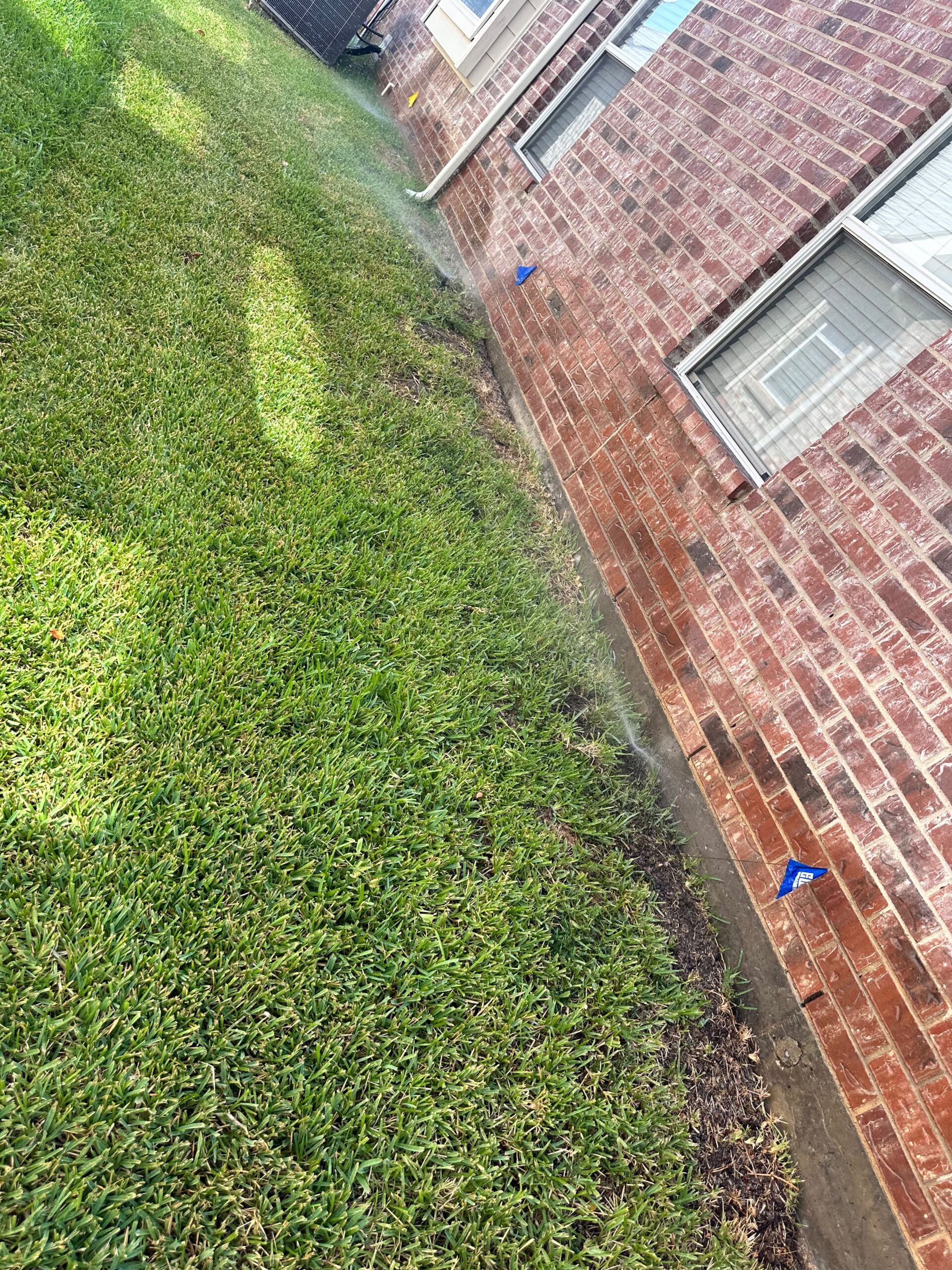
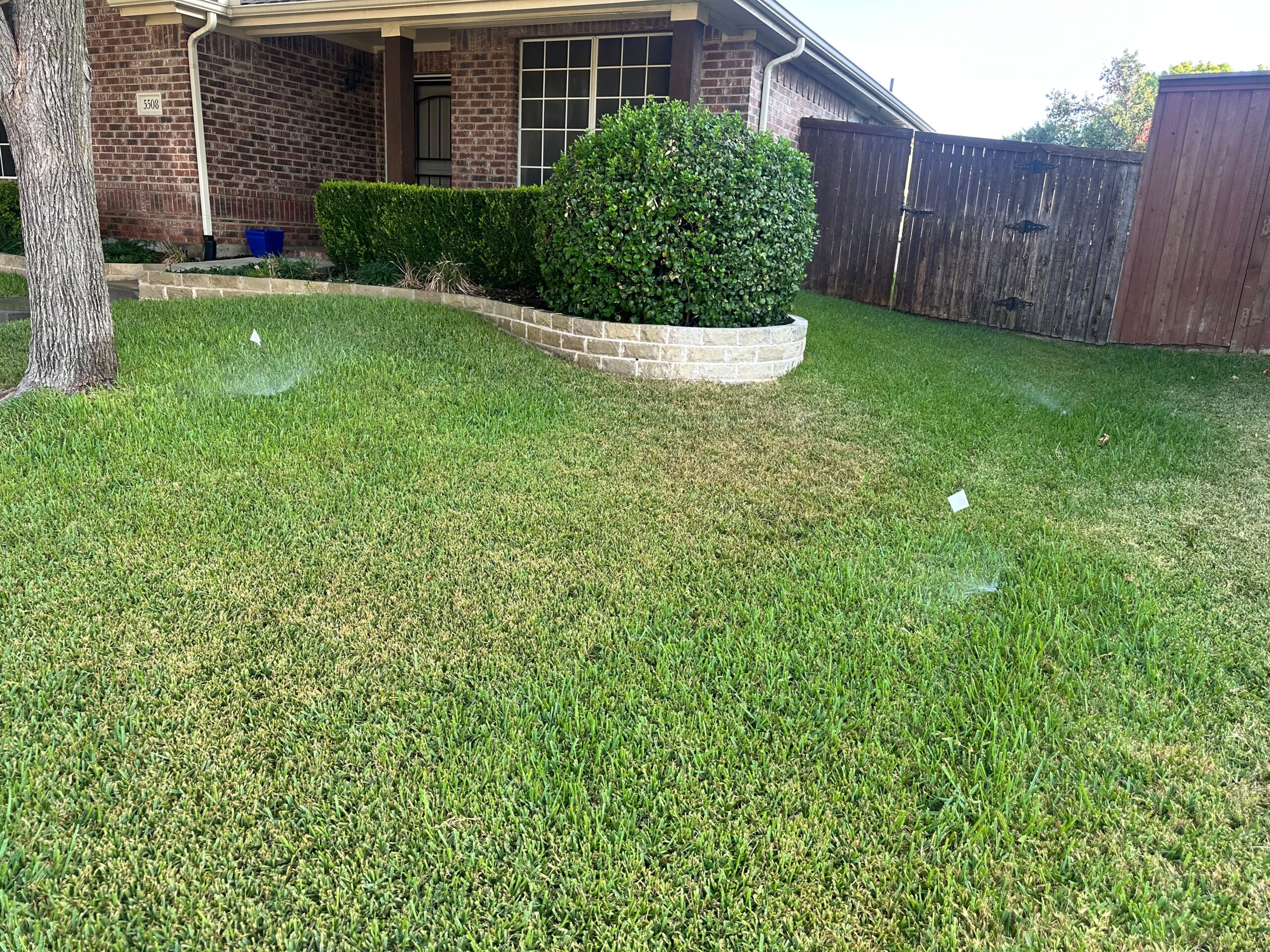
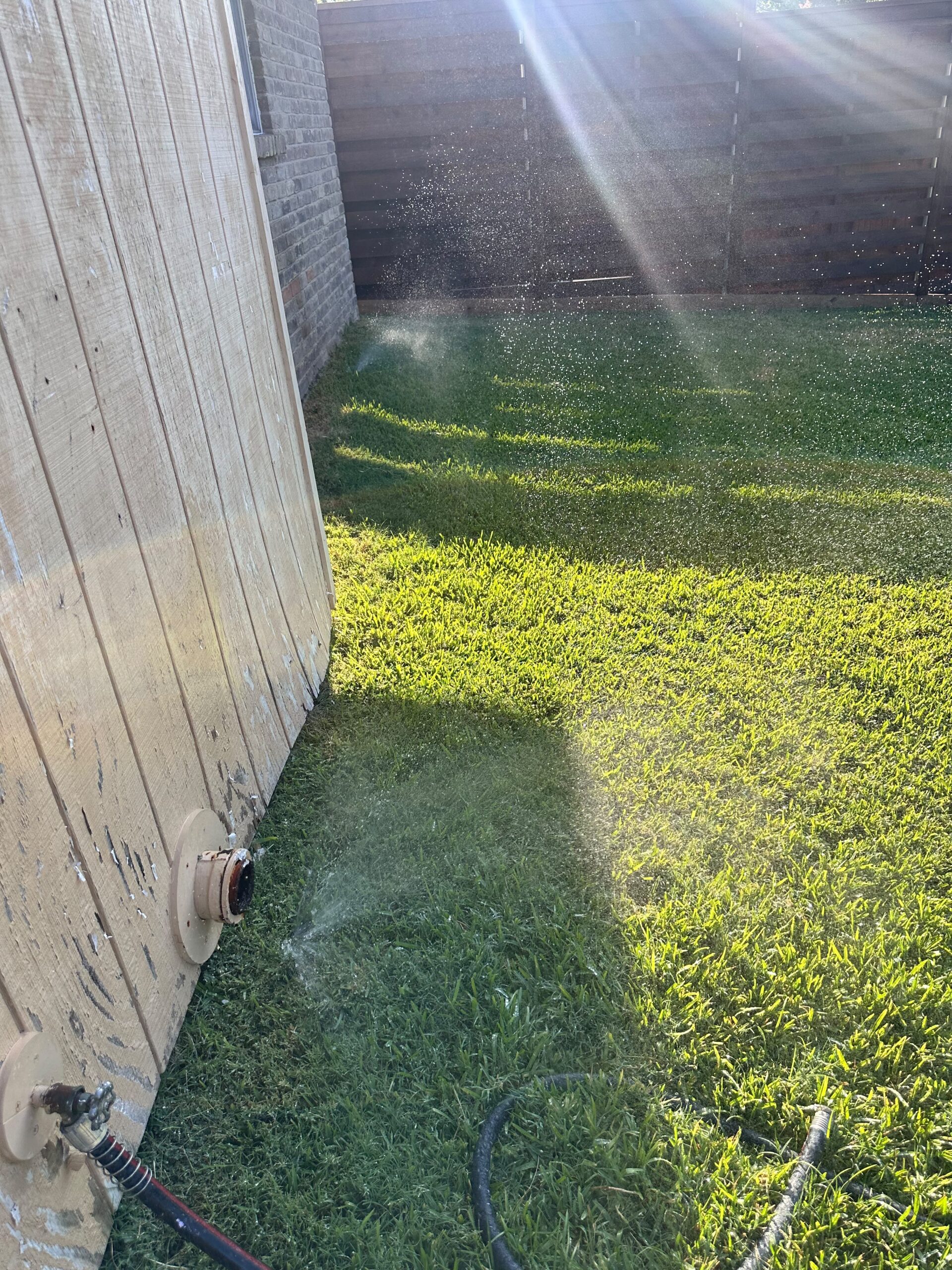
A sprinkler system in Aubrey TX typically uses more water than expected because of an outdated watering schedule, an undetected leak, overlapping zones, or heads that are misaligned and spraying beyond the lawn. High water use isn’t usually caused by one dramatic failure; it’s more often a combination of small inefficiencies that add up over weeks of regular watering. Identifying which of these factors applies is the first step toward bringing water use back in line with what the lawn actually needs.
At a Glance
- Difficulty: Easy to diagnose scheduling issues; moderate to locate leaks
- Estimated Time: 30–45 minutes for a full system review
- Tools Needed: None for a basic check; pressure gauge and leak detection equipment for deeper issues
- Works For: Spray zones, rotor zones, and drip zones
- May Not Solve: Underground main line leaks or municipal pressure issues
Why Water Use Adds Up Quickly
Irrigation systems run on a schedule set months or even years ago, and that schedule doesn’t always get updated as seasons, plant growth, and weather patterns change. A system watering on a spring schedule through the peak of summer, for example, can use significantly more water than the lawn actually needs.
At the same time, leaks, overlapping coverage, and misaligned heads all waste water without necessarily being obvious to the homeowner. Because irrigation typically runs early in the morning, these inefficiencies often go unnoticed until the water bill reflects them.
Signs Your Sprinkler System in Aubrey TX May Be Using Excess Water
A few patterns tend to point toward water being wasted somewhere in the system:
- The water bill has increased without a clear explanation, such as new landscaping or expanded lawn area
- Zones run longer than expected or overlap with each other during the same watering window
- Certain areas of the lawn stay soggy well after a cycle has finished
- Spray is hitting driveways, sidewalks, or siding instead of landscaped areas
- The system runs on days it isn’t needed, such as immediately after rainfall
- A zone that used to run for a set time now seems to take longer to complete its cycle
Common Causes of Excess Water Use
1. An Outdated Watering Schedule
Many systems are programmed once and rarely adjusted. A schedule that doesn’t account for seasonal temperature changes, rainfall, or plant maturity often results in far more water being applied than necessary.
2. Undetected Leaks
A leak in a pipe, fitting, or valve continues wasting water on every cycle the affected zone runs, often without any obvious surface sign until the leak becomes more significant.
3. Overlapping or Redundant Zones
Zones that were poorly planned or have shifted coverage over time can end up watering the same area twice, effectively doubling water use in that section of the yard.
4. Misaligned or Damaged Heads
Heads spraying onto hardscape instead of soil waste water without providing any benefit to the lawn or landscaping, and this waste continues every time that zone runs.
5. No Rain Sensor or Smart Controller
Systems without a rain sensor or smart controller continue running on their programmed schedule even after recent rainfall, watering a lawn that doesn’t need it yet.
6. Excessive Runtime for Zone Type
Different zone types need different runtimes. Drip zones, for example, generally require longer run times at lower flow, while spray zones need shorter, more frequent cycles, and a mismatch here can lead to overwatering.
Step-By-Step: How to Reduce Excess Water Use
1. Review the Current Watering Schedule
Compare current run times and frequency against the season and recent rainfall. Many systems benefit from a seasonal adjustment rather than a single year-round setting.
2. Walk Each Zone While It Runs
Watch for overlapping spray, heads aimed at hardscape, and any areas that stay wet longer than the rest of the lawn after a cycle finishes.
3. Check for Leaks
Look for wet spots, bubbling, or unusually green patches that appear consistently, which can indicate water escaping before it reaches the intended coverage area.
4. Consider a Rain Sensor or Smart Controller
Adding a rain sensor prevents the system from running after recent rainfall, while a smart controller can automatically adjust watering based on weather and soil moisture data.
5. Compare Zone Types and Runtimes
Confirm that spray, rotor, and drip zones are each running for an appropriate amount of time based on how they apply water, rather than using the same runtime across every zone type.
6. Track Water Use Over a Few Cycles
After making adjustments, monitor the water bill and system performance over the next billing cycle to confirm the changes are having the intended effect.
Common Mistakes Homeowners Make
- Never adjusting the schedule seasonally, leaving the system on a spring or summer setting long after conditions have changed
- Assuming a high water bill is unrelated to irrigation without checking the system directly
- Overlooking small, consistent leaks because they don’t create a dramatic puddle or visible damage
- Running every zone for the same amount of time regardless of whether it’s a spray, rotor, or drip zone
- Skipping a rain sensor, allowing the system to run on schedule even after a heavy rain event
Local Considerations in Aubrey, TX
A few conditions specific to Aubrey and the surrounding Denton County area affect how much water a system tends to use:
- Clay soil, common throughout Aubrey, absorbs water slowly, which means longer watering cycles can result in runoff rather than deeper soil penetration, wasting water that never actually benefits the root zone of the grass or plants.
- Hot, dry summers increase evaporation and can tempt homeowners to increase watering frequency without checking whether the existing schedule is already sufficient, sometimes leading to more water use than the lawn actually requires.
- Newer developments across Aubrey, where lawns and landscaping are still establishing root systems, may have watering schedules set for young plants that haven’t been adjusted as those plants matured and required less frequent watering.
- Water restrictions, commonly enforced across Denton County during peak summer months, make it especially important to confirm the system isn’t watering on restricted days or during restricted hours, since doing so wastes water and may violate local ordinances.
- Larger lot sizes, common in parts of Aubrey, mean more zones and more total irrigated area, which can make small inefficiencies, like one leak or one overlapping zone, add up to a larger overall water impact than they would on a smaller property.
Homeowners can review general guidance on efficient irrigation practices through the EPA WaterSense program and regional watering research from Texas A&M AgriLife Extension, both of which offer guidance on reducing unnecessary water use in North Texas landscapes.
Related Problems That Aren’t Solved By Adjusting the Schedule
Updating the watering schedule addresses some water waste, but it won’t resolve:
- An active leak in the system, which continues wasting water on every cycle regardless of how well the schedule is optimized.
- A failing valve, which can cause a zone to run longer than intended or fail to shut off completely, independent of the programmed schedule.
- Low system-wide pressure, which can actually mask overwatering in some zones while underwatering others, complicating diagnosis based on schedule alone.
- Municipal water pressure fluctuations, which originate outside the home’s irrigation system and aren’t something a schedule adjustment can account for.
If water use remains high after schedule adjustments and a basic system review, a full evaluation can help identify a less obvious cause.
Frequently Asked Questions
- How much water should a typical residential sprinkler system use? This varies significantly based on lawn size, zone types, and climate, but a sudden or gradual increase in water bills without a clear cause is usually worth investigating directly.
- Can a rain sensor really make a noticeable difference in water use? Yes. Preventing even a few unnecessary watering cycles after rainfall over the course of a season can add up to a meaningful reduction in total water use.
- How do I know if high water use is from irrigation or something else in my home? Comparing water use on days the system runs versus days it doesn’t can help isolate irrigation as the source, along with checking for other potential causes like plumbing leaks.
- Is it normal for water use to increase during summer? Some increase is expected due to heat and evaporation, but a sharp or disproportionate jump compared to previous summers often points to an inefficiency worth investigating.
- Should I turn off my sprinkler system entirely if I suspect a leak? Yes, turning off the system prevents further water loss while the issue is being diagnosed, especially if a leak is suspected but hasn’t yet been located.
Bottom Line
A sprinkler system in Aubrey TX that’s using more water than expected is usually dealing with one or more common issues: an outdated schedule, a leak, overlapping coverage, or misaligned heads. None of these are unusual, and most can be identified with a straightforward walk-through of the system. Addressing them not only reduces water waste but often brings the water bill back in line with what the lawn actually needs, especially important given Aubrey’s clay soil and seasonal water restrictions.
Next Step
Homeowners who’ve reviewed their schedule and checked for obvious issues but are still seeing high water use may be dealing with a leak or valve issue that isn’t visible on the surface. A licensed irrigation company can perform pressure testing and a full system review to identify exactly where the water is going and recommend the right fix.
Related Resources
- Sprinkler System Services in Aubrey, TX
- Signs of Underground Irrigation Leaks
- Can One Leak Weaken an Entire Zone?
Conclusion & Call to Action
A sprinkler system in Aubrey TX often uses excess water due to an outdated schedule, a hidden leak, or overlapping coverage rather than one obvious cause. Clay soil and seasonal restrictions in the area make catching these issues early especially worthwhile. If your water bill seems high without a clear reason, a licensed irrigation professional can pinpoint exactly where the waste is happening. Reach out to a trusted local team today.