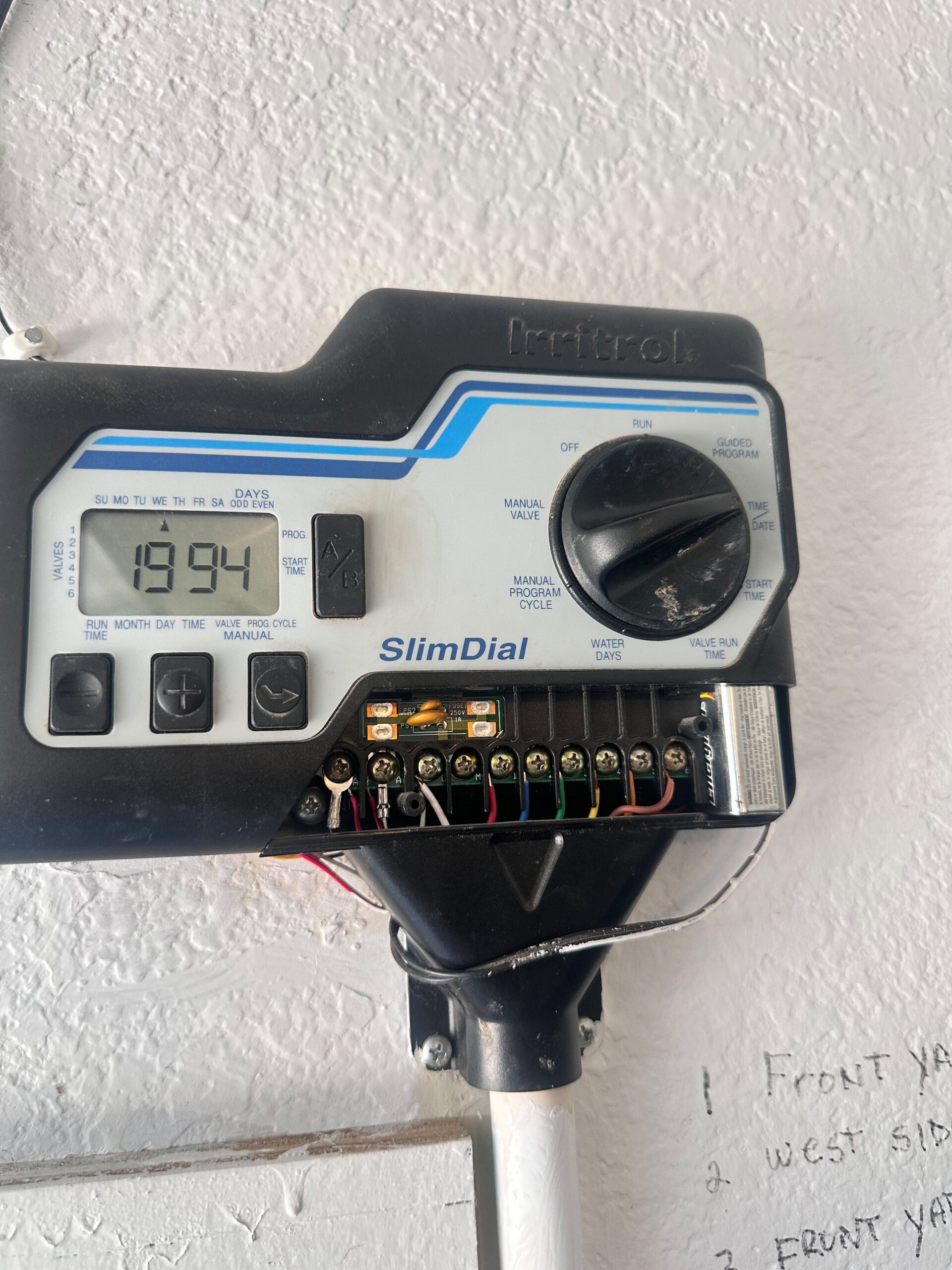
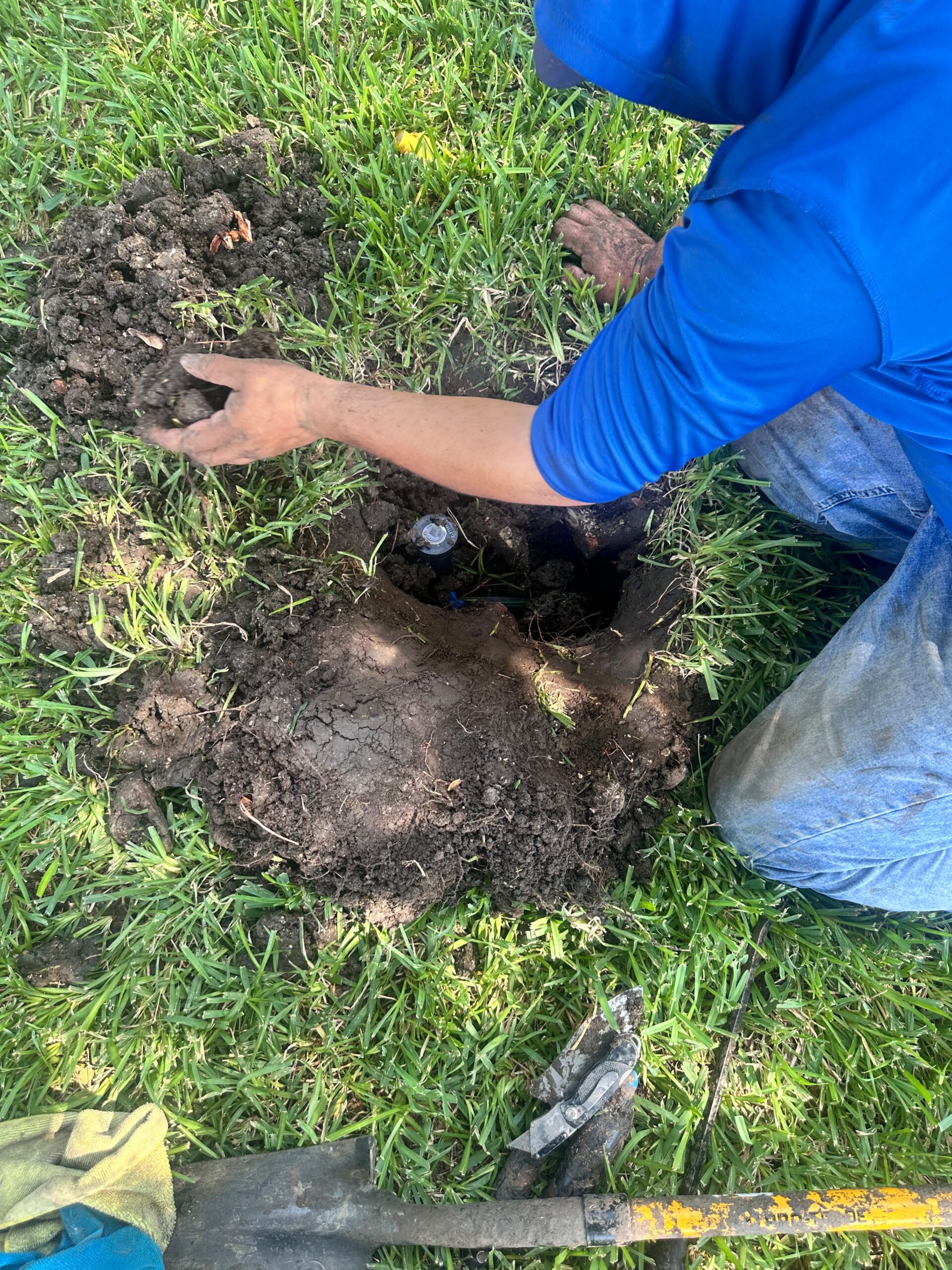
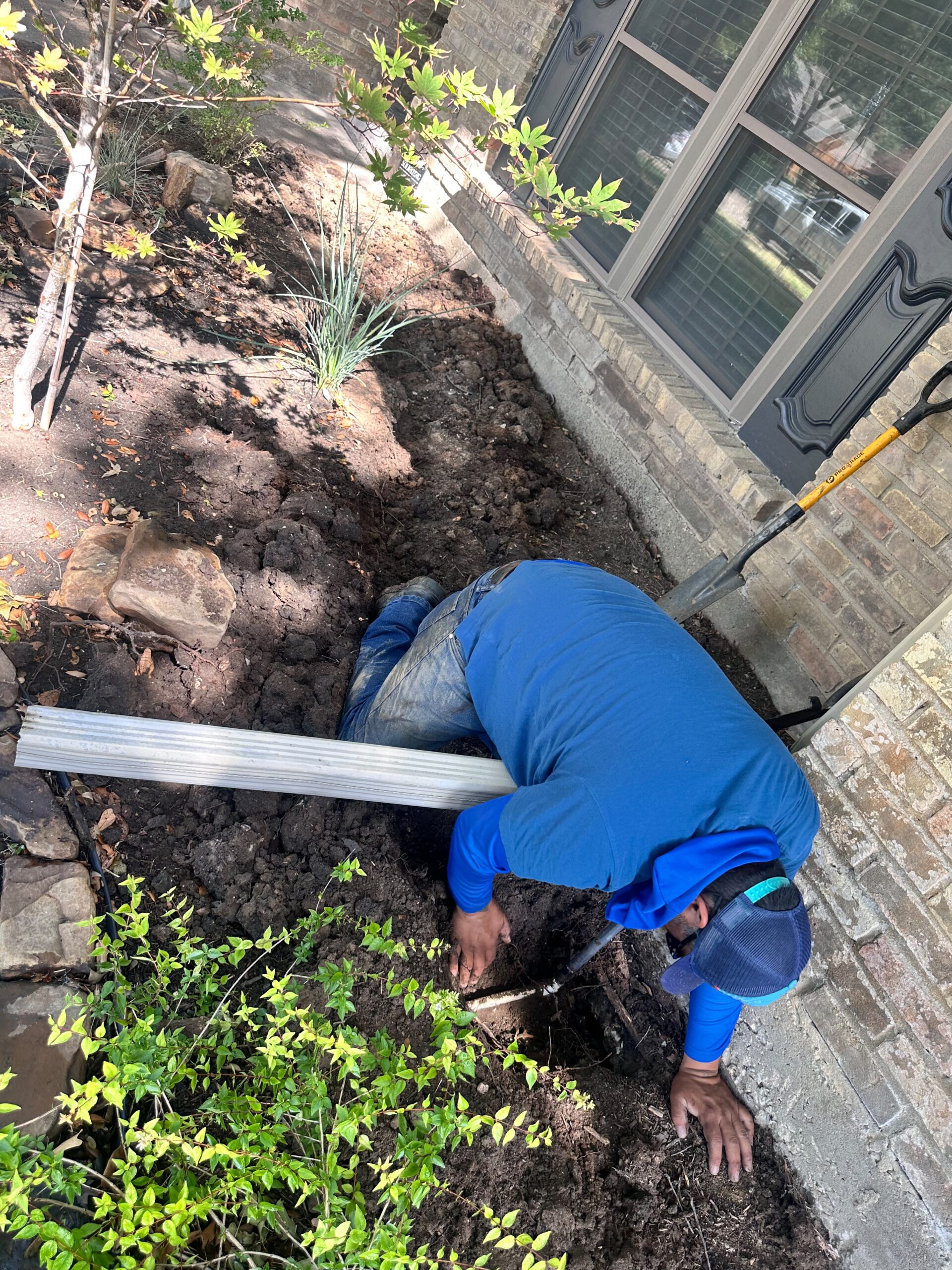
You should adjust sprinkler run times in Melissa TX whenever the season changes, after a stretch of significant rainfall, when you notice runoff or dry patches, or if your lawn’s water needs shift due to new landscaping. Most homeowners in the area need at least four schedule adjustments per year, one for each season, since Melissa’s temperature swings and clay soil affect how much water the lawn actually needs at different times of year. Watching the lawn itself, rather than sticking to a fixed schedule year-round, is the most reliable way to know when a change is due.
At a Glance
- Difficulty: Easy (mostly a controller adjustment)
- Estimated Time: 10–15 minutes per schedule change
- Tools Needed: Access to your irrigation controller or app
- Works For: Matching watering to seasonal weather, rainfall, and soil conditions
- May Not Solve: Runoff or dry spots caused by equipment problems rather than scheduling
Why Sprinkler Run Times in Melissa TX Need to Change
A sprinkler schedule set for the middle of summer is almost always too much water for spring or fall, and a schedule set for cooler months is often not enough during peak heat. Grass, soil, and weather all shift throughout the year, and a fixed schedule doesn’t adjust for any of it on its own.
In Melissa, clay soil adds another layer to this. Clay holds moisture longer than sandy soil, so a schedule that seems appropriate in a drier climate can actually be overwatering here, especially in spring and fall when temperatures are milder and evaporation is slower.
It also helps to think of run time settings as a starting point rather than a permanent decision. Even a well-designed schedule made by an experienced professional is based on typical conditions for that time of year, it still benefits from small adjustments as actual weather and lawn conditions play out over the following weeks.
Signs It’s Time to Change Your Run Times
Seasonal Transitions
The clearest signal to adjust run times is the change of seasons. Watering needs in the height of summer are very different from watering needs in early spring, fall, or winter, and a schedule that isn’t updated for each season is either overwatering or underwatering for much of the year.
After Significant Rainfall
A heavy rain event can supply days’ worth of water in a single storm. Running the system on its normal schedule right after significant rainfall often means watering ground that’s already saturated, which increases the risk of runoff on Melissa’s clay soil.
When You Notice Runoff
If water is reaching the driveway, sidewalk, or street during a normal cycle, the run time for that zone may simply be too long for what the soil can absorb in one sitting. This is especially common in spring and fall when clay soil is still holding moisture from cooler, wetter conditions.
When You Notice Dry or Stressed Grass
Grass that looks dull, feels crunchy underfoot, or doesn’t spring back after being walked on can indicate the current run time isn’t providing enough water, particularly during the hottest stretches of Texas summer.
After Landscaping Changes
New sod, recently planted shrubs, or changes to a zone’s layout can all shift how much water that area actually needs. A schedule set before the change may no longer match what’s currently growing in that zone.
At the Start and End of the Watering Season
Many Melissa homeowners turn their systems off or significantly reduce run times heading into winter, then gradually increase them again as spring arrives and grass begins actively growing.
Step-by-Step: Adjusting Your Run Times
Step 1: Observe Current Conditions
Before changing anything, watch how the lawn is responding to its current schedule. Look for dry patches, runoff, or areas that seem healthier than others.
Step 2: Check Recent Weather
Note how much rain has fallen recently and what the forecast looks like for the coming week. A schedule change made right before a rainy stretch may need to be revisited quickly.
Step 3: Adjust Run Time in Small Increments
Rather than making a large change all at once, adjust run times by a few minutes per zone and observe the results over the next week or two. This makes it easier to identify what’s actually working.
Step 4: Consider Splitting Long Run Times
If a zone needs a longer total run time but shows signs of runoff, splitting that time into two or three shorter cycles with rest periods in between can deliver the same amount of water without water leaving the lawn.
Step 5: Recheck After the Adjustment
Watch the affected zones during their next scheduled cycle to confirm the change achieved the intended result, whether that’s less runoff, healthier grass, or reduced water use.
Common Mistakes Homeowners Make
- Setting a schedule once and never revisiting it. Watering needs change throughout the year, so a schedule that worked in June may be excessive by October.
- Reacting to a single hot or rainy day. One unusually warm or wet day doesn’t necessarily mean a permanent schedule change is needed; look for a pattern over a week or more.
- Increasing run time instead of splitting it. Adding more minutes to a zone that already shows runoff often makes the runoff worse rather than solving the underlying issue.
- Ignoring rain sensors or smart controller data. Many modern systems can automatically skip or shorten cycles based on rainfall, but this feature is sometimes disabled or ignored.
- Making changes without observing results. Adjusting a schedule and never checking back in makes it hard to know whether the change actually helped.
- Applying the same run time to every zone. Different zones often have different sun exposure, slope, and soil conditions, so a single run time rarely fits the whole yard equally well.
Local Considerations for Melissa, TX
Melissa’s clay soil absorbs water slowly, which means run times that work well in one part of the yard may cause runoff in another, particularly on sloped sections. This makes it worth adjusting run times zone by zone rather than applying one blanket change across the entire system.
Seasonal watering restrictions in Melissa also affect how run time adjustments should be approached, since homeowners often need to fit their week’s total watering into a limited number of allowed days. Splitting run times into shorter cycles, rather than one long session, tends to work well within these restricted schedules while still reducing runoff on clay soil.
Texas summers bring extended stretches of high heat with little rainfall, which typically calls for the longest run times of the year. By contrast, mild, wetter periods in spring and fall usually call for shorter run times or fewer watering days per week, since the combination of cooler temperatures and clay soil’s moisture retention means the lawn needs less supplemental water during those months. The EPA’s WaterSense program recommends adjusting irrigation schedules seasonally as one of the simplest ways to avoid overwatering during these milder stretches.
Related Problems That Can Look Like a Scheduling Issue
If adjusting run times doesn’t resolve dry patches or runoff, the cause may be something else:
- Uneven coverage from misaligned or damaged sprinkler heads
- Low or high water pressure, affecting how evenly water is distributed
- Valve issues, where a zone runs longer or shorter than programmed
- Underground leaks, which can make a zone appear underwatered despite a reasonable run time
If you’ve adjusted run times and the problem persists, it’s worth having a licensed sprinkler company check the zone for equipment issues rather than continuing to adjust the schedule. Guidance from the Texas A&M AgriLife Extension also notes that matching run times to soil type and season is one of the most effective ways to prevent both underwatering and unnecessary runoff.
Frequently Asked Questions
- How often should I change my sprinkler run times?
Most homeowners in Melissa adjust run times at least once per season, though additional adjustments after heavy rain or during unusually hot stretches are common.
- Should I turn my system off completely in winter?
Many homeowners in the area significantly reduce or fully pause irrigation during winter months, since grass growth slows and rainfall alone is often sufficient.
- How do I know if my run time is too long instead of too short?
Runoff reaching the driveway, sidewalk, or street is a clear sign the run time is too long for what the soil can absorb in one session.
- Does new sod need different run times than established grass?
Yes. Newly installed sod typically needs more frequent, shorter watering sessions to establish roots, compared to the less frequent, deeper watering established lawns generally need.
- Can I automate seasonal run time changes?
Many smart controllers can automatically adjust run times based on weather data and time of year, which reduces how often manual changes are needed.
Bottom Line
Adjusting sprinkler run times in Melissa TX with the seasons, after significant rainfall, and in response to how the lawn actually looks is more effective than sticking to a single schedule year-round. Melissa’s clay soil makes small, zone-specific adjustments especially useful for reducing runoff while still keeping grass healthy through hot summers and milder shoulder seasons.
Next Step
If you’ve adjusted run times and are still seeing runoff, dry patches, or uneven results, a professional evaluation can determine whether the issue is scheduling, equipment, or something else entirely.
Related Resources
- How Can I Check My Sprinkler System For Leaks In Melissa TX?
- Can Cycle-And-Soak Reduce Sprinkler Runoff In Prosper TX?
- What Should A Fall Sprinkler Inspection Include In Anna, TX?
Conclusion & Call to Action
Getting sprinkler run times in Melissa TX right means adjusting with the seasons, watching for runoff, and responding to how your lawn actually looks rather than following a fixed schedule year-round. Melissa’s clay soil rewards small, zone-specific tweaks over big blanket changes, especially during the milder spring and fall months. If you’re unsure where to start or your adjustments aren’t producing results, Whale Done can evaluate your system and help you find a schedule that actually fits your yard’s needs.