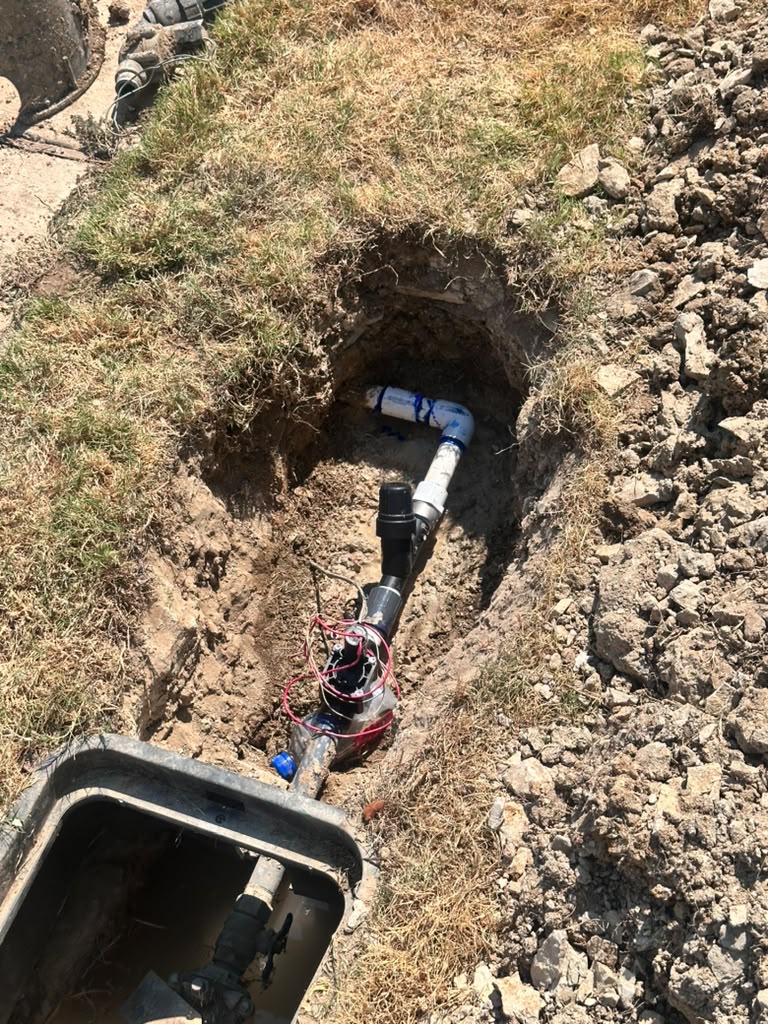
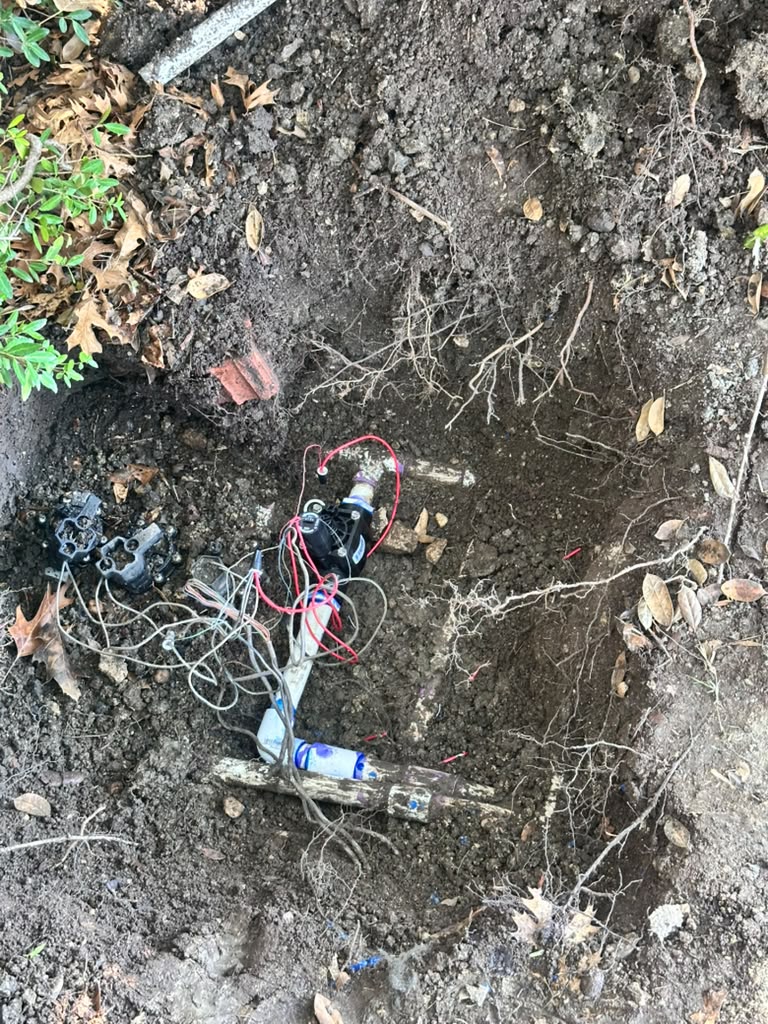
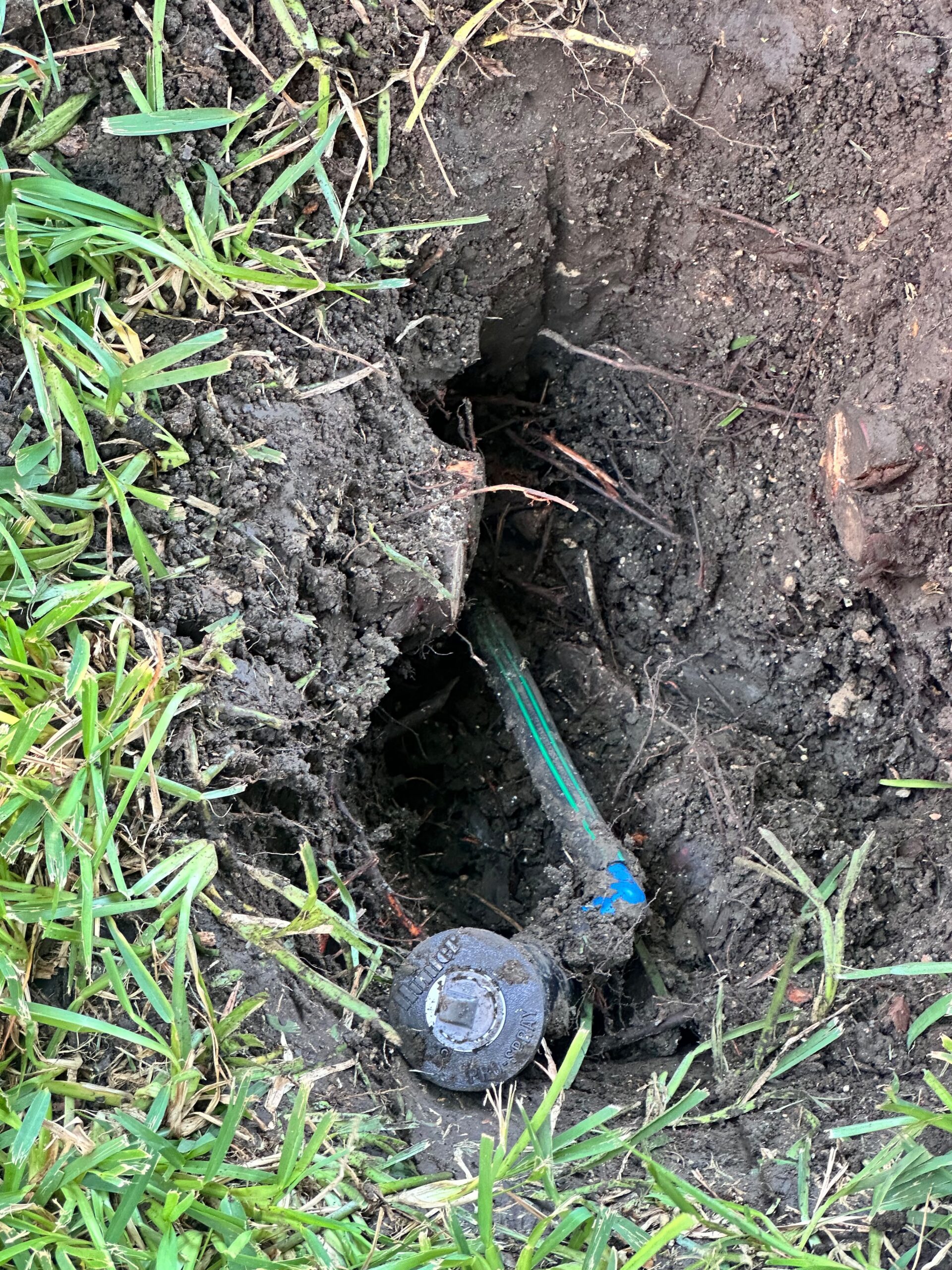
Standing water may need a drainage solution in Lucas TX when it continues collecting in the same area after irrigation stops, rainfall ends, and the soil has had time to drain. However, a drainage installation should not be the first response. Homeowners should rule out sprinkler problems, including leaking heads, damaged pipes, stuck valves, and incorrect watering schedules. If the irrigation system is working properly, the next step is to evaluate the property’s grading, soil conditions, and natural water flow. A proper assessment determines whether a drainage improvement is necessary or whether a simpler adjustment can solve the problem.
At A Glance
| Consideration | Details |
| Difficulty | Depends on the underlying cause |
| Estimated assessment time | Varies by property and problem |
| Tools needed | Flashlight, sprinkler controller, measuring tape, and observation notes |
| Works for | Identifying irrigation, grading, and soil-related water problems |
| May not solve | Severe drainage issues, underground leaks, or significant grading problems without further evaluation |
Why Does Standing Water Develop?
Standing water develops when water collects faster than soil can absorb it or when the yard lacks an effective drainage path. Several factors can contribute, including poor grading that directs water toward low areas, compacted soil that restricts water movement, and clay-heavy soil that absorbs moisture slowly.
Excessive sprinkler irrigation can also saturate the landscape, while blocked drainage paths caused by leaves, mulch, or debris prevent proper water flow. Additionally, downspouts may release roof runoff into one section of the yard. Identifying the actual water source is essential before choosing an appropriate drainage solution.
When Should You Consider a Drainage Solution in Lucas TX?
A drainage solution in Lucas TX may be necessary when standing water repeatedly returns, remains long after rainfall, or collects where the ground cannot naturally move excess moisture away. Warning signs include puddles that persist in the same low spots, soggy lawns between watering cycles, runoff moving toward the house, struggling plants, and water flowing across walkways. These conditions may indicate grading problems, poor soil absorption, or inadequate drainage paths.
However, one temporary puddle after heavy rainfall does not automatically require a drainage system. Homeowners should first rule out sprinkler leaks and excessive watering. If standing water continues despite proper irrigation, evaluating the property’s grading, soil conditions, and water flow can help determine the appropriate solution.
Rule Out Sprinkler Problems First
Before considering excavation or drainage installation, inspect the irrigation system.
A sprinkler system can create standing water even when the yard’s natural drainage is functioning properly. A damaged component may release more water than the surrounding soil can absorb.
The U.S. Environmental Protection Agency’s WaterSense sprinkler maintenance guidance recommends inspecting sprinkler heads, connections, and valves for leaks and other problems.
1. Check for Broken or Misaligned Sprinkler Heads
Walk through the yard while each irrigation zone operates.
Look for:
- Sprinkler heads spraying continuously.
- Water bubbling around the sprinkler body.
- Heads pointing toward sidewalks or driveways.
- Water spraying too close to one section of the lawn.
- Heads that remain partially extended.
A misaligned head can repeatedly saturate a small section of the landscape.
Correcting the spray direction or replacing a damaged head may resolve the problem without requiring a drainage installation.
2. Look for Underground Irrigation Leaks
An underground pipe leak can keep an area wet even when the irrigation system is not actively watering.
Warning signs include:
- A wet patch that never completely dries.
- Water collecting near sprinkler heads.
- Unusually soft ground along an irrigation line.
- Unexpected increases in water consumption.
- Reduced pressure in one or more irrigation zones.
Turn off the irrigation controller and observe the affected area.
If the wet spot continues growing, a leak or another continuous water source may be involved. A licensed sprinkler professional can inspect the system and isolate the affected section.
3. Check the Irrigation Controller
Incorrect watering schedules can contribute to runoff and saturated soil.
Check whether:
- Multiple watering cycles are scheduled too close together.
- Zones run longer than necessary.
- Rainfall has already provided sufficient moisture.
- Seasonal adjustments have been overlooked.
A useful option is cycle-and-soak watering. Instead of running a zone continuously, divide its watering time into shorter cycles with breaks between them.
This gives water more time to enter the soil before additional irrigation is applied.
What If the Sprinkler System Is Not the Problem?
If the irrigation system is operating correctly and standing water continues to return, investigate the property’s grading and soil conditions.
Grading describes the shape and slope of the ground. It determines where rainwater and surface runoff naturally travel.
When the ground slopes toward a low point, water can collect there instead of moving toward a suitable discharge area.
Soil also affects how quickly water disappears. Some soils absorb moisture slowly, making surface pooling more likely during extended rainfall.
These conditions may require a drainage improvement rather than another sprinkler adjustment.
How Lucas TX Soil and Yard Conditions Affect Drainage
Homeowners in Lucas and surrounding North Texas communities should consider how local soil and weather conditions influence water movement.
Clay Soil Can Hold Excess Moisture
Clay-rich soil contains very small particles that can restrict how quickly water moves through the ground.
After heavy rainfall, the upper soil layer may become saturated. Additional water then remains near the surface or travels toward lower sections of the property.
The Texas A&M AgriLife Extension guidance on preventing irrigation runoff explains that runoff is more common in compacted and clay soils, particularly on slopes.
This is important because a yard may experience standing water even without a broken sprinkler or obvious drainage obstruction.
Compacted Soil Slows Water Absorption
Frequent foot traffic, construction activity, heavy equipment, and repeated lawn maintenance can compact soil.
Compacted ground has fewer spaces for water and air to move through.
Signs may include:
- Hard ground that is difficult to penetrate.
- Water running across the lawn instead of soaking in.
- Thin grass in frequently wet areas.
- Puddles forming in heavily used sections.
Aeration may help certain compacted areas, but it will not correct an improperly graded yard or a property with no suitable drainage outlet.
Heavy Rainfall Can Reveal Grading Problems
Heavy rainfall can reveal drainage problems that may not appear during light showers. When incoming water exceeds the soil’s absorption capacity, puddles develop. Observe water movement around low areas, property boundaries, walkways, and foundations to identify whether poor grading, limited soil absorption, or inadequate drainage paths contribute to the problem.
Which Drainage Problems May Require a Solution?
Once sprinkler-related causes have been ruled out, the next step is identifying how water enters, moves through, and leaves the property.
Different drainage problems require different approaches.
1. Poor Yard Grading
If the ground slopes toward a low section, rainwater may naturally collect there.
A grading adjustment may help redirect surface water toward an appropriate drainage area.
The goal is to establish a suitable slope without directing runoff toward a neighboring property, sidewalk, or building foundation.
2. French Drain Installation
A French drain is an underground drainage system that collects excess groundwater and redirects it through a perforated pipe surrounded by gravel.
It may be appropriate when:
- Water repeatedly collects in saturated soil.
- A particular section of the yard remains wet.
- Groundwater needs a path toward a suitable outlet.
- Surface-level changes alone are not sufficient.
The drain must be designed with an appropriate depth, slope, and discharge location. Installing a French drain without understanding the direction of water movement can leave the original problem unresolved.
3. Channel Drains
Channel drains are surface-level systems designed to collect water flowing across hard surfaces.
They may be useful near:
- Driveways.
- Patios.
- Walkways.
- Garage entrances.
- Other paved areas where water collects.
A channel drain collects surface runoff and directs it toward an appropriate discharge point. It is not necessarily the right choice for a lawn that remains saturated because of underground water or poor soil absorption.
4. Downspout Drainage Extensions
Roof runoff can contribute to standing water when downspouts release large amounts of water into a small section of the yard.
An extension or underground downspout drainage line may help carry that water farther away from the house.
Before installing one, consider where the water will discharge. Moving water away from one problem area should not create another drainage problem elsewhere.
5. Surface Drainage Improvements
Catch basins and surface inlets collect water that flows across the landscape.
They may help when:
- Water gathers in a defined low spot.
- Surface runoff needs a collection point.
- Existing drainage paths are insufficient.
- Water needs to enter an underground drainage line.
The inlet must be positioned where water naturally collects. It also needs an appropriate outlet and regular maintenance to prevent leaves, soil, and debris from blocking the system.
How to Determine Which Solution Your Yard Needs
A drainage assessment should begin with observations rather than selecting a product or installation method immediately.
Here is what homeowners and drainage professionals should evaluate.
Step 1: Identify where water collects.
Mark the areas where puddles repeatedly appear. Note whether they are near the house, along a fence, beside a driveway, or in the middle of the lawn.
Step 2: Observe when standing water develops.
Determine whether the water appears after irrigation, rainfall, or both. Check whether the affected area stays wet during dry periods.
Step 3: Inspect the sprinkler system.
Run each irrigation zone and check for broken heads, leaking connections, damaged pipes, and incorrect spray patterns.
Step 4: Evaluate the ground slope.
Observe whether water flows toward a low section or remains trapped because of an elevation change.
Step 5: Examine soil conditions.
Look for signs of compaction, saturated clay, and areas where water takes longer to absorb.
Step 6: Identify a suitable discharge location.
A drainage system needs somewhere appropriate for collected water to go. The outlet must be considered before selecting the installation method.
Step 7: Match the solution to the cause.
The assessment should determine whether the property needs irrigation repair, grading adjustments, a surface drain, an underground drainage system, or a combination of improvements.
This process prevents homeowners from paying for drainage work when a simpler correction could address the problem.
Common Drainage Mistakes Homeowners Should Avoid
Standing water can encourage homeowners to look for immediate fixes. However, an incorrect approach may make the problem worse.
Avoid these common mistakes:
- Installing a French drain without an assessment: The actual problem may involve sprinkler leaks or surface runoff.
- Adding soil to every low spot: Filling an area without considering the surrounding slope can redirect water toward the house.
- Ignoring sprinkler leaks: A drainage system will not correct an irrigation leak that continuously introduces water.
- Directing water toward neighboring properties: Drainage improvements should account for surrounding properties and applicable local requirements.
- Blocking natural drainage paths: Landscaping materials, mulch, and yard debris can interfere with water movement.
- Ignoring maintenance: Catch basins and drain inlets need periodic cleaning to remain functional.
The best approach is to correct the underlying cause rather than repeatedly treating the visible puddle.
When Is Professional Drainage Assessment Worth Considering?
A professional evaluation may be beneficial when standing water repeatedly returns after rainfall, the same yard area remains saturated, or water collects near the home’s foundation. If sprinkler repairs do not resolve the wet area, grading or soil conditions may be contributing to the problem. An assessment helps identify why water accumulates, which drainage options may be appropriate, and whether installation is necessary. Some properties may only need irrigation adjustments or changes to watering schedules, while others may require grading improvements or a properly designed drainage system. The recommended solution should always be based on the assessment findings, not guesswork.
Frequently Asked Questions
1. How long should standing water remain in a yard after rainfall?
Standing water that repeatedly remains after rainfall may indicate poor drainage, compacted soil, or grading problems requiring further investigation.
2. Can a sprinkler system cause standing water even when it is turned off?
Yes. Underground leaks, damaged connections, or faulty valves can release water continuously, creating wet areas even when irrigation is off.
3. Does clay soil require a French drain?
Not always. Clay soil drains slowly, but grading adjustments, soil improvements, or other drainage methods may provide better solutions.
4. What is the difference between a French drain and a channel drain?
A French drain redirects underground water through perforated pipes, while a channel drain collects surface runoff from paved areas.
5. Should I install a drainage system if water collects near my foundation?
Not immediately. Check sprinkler leaks, downspouts, and grading first. A professional assessment can identify the appropriate drainage correction.
Bottom Line
Standing water does not always mean your Lucas property needs a new drain. First, rule out sprinkler leaks, damaged heads, stuck valves, and excessive watering. If irrigation is working properly, grading, soil compaction, and water flow may explain why puddles keep returning. A drainage solution in Lucas TX should be recommended only after the cause and a suitable discharge route are identified. For an informed assessment, contact Whale Done Sprinklers & Irrigation at +1 (469) 384-7767 or clientsupport@callwhaledone.com before choosing an installation method or repair.
Related Resources
- Sprinkler Leak Detection – Learn how underground irrigation leaks can contribute to wet areas.
- Sprinkler Repair Services – Explore common sprinkler problems that may cause excess water.