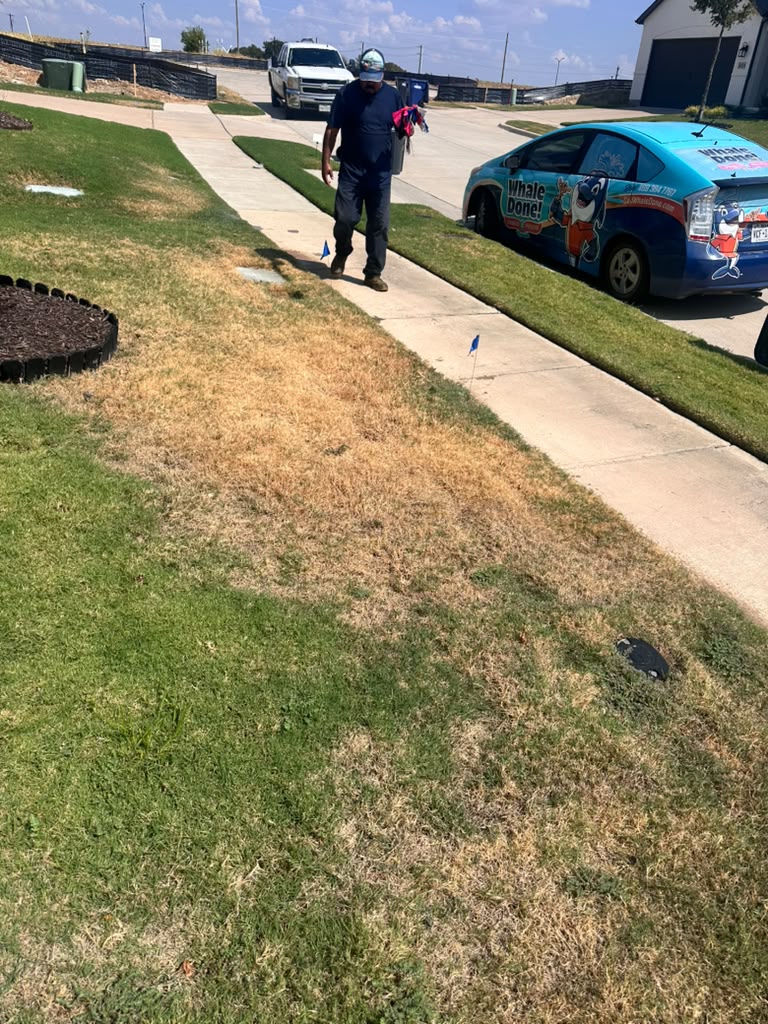
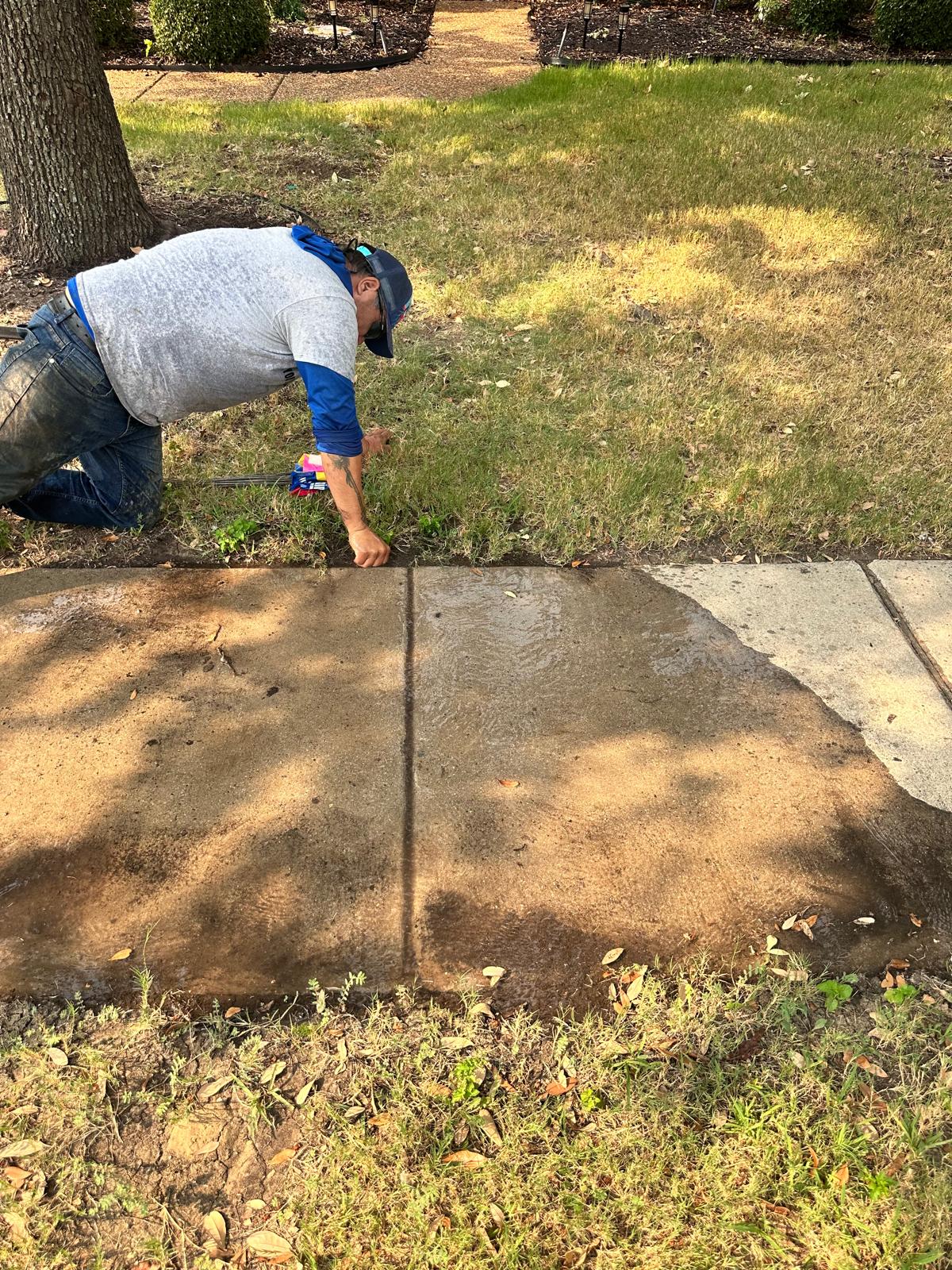
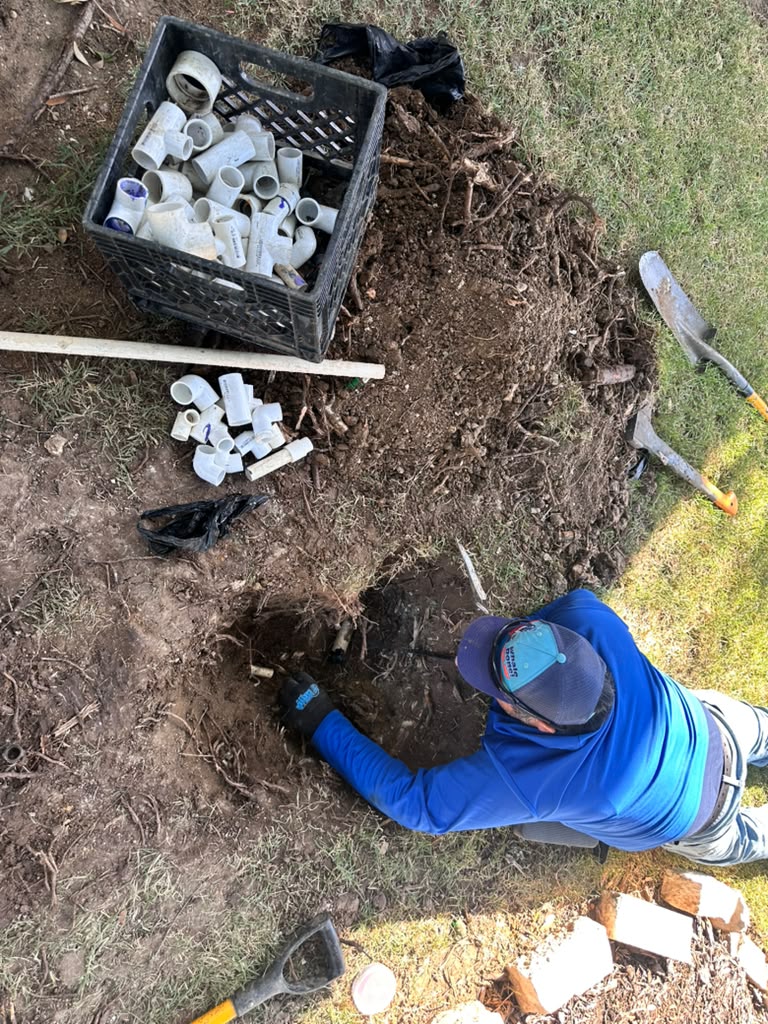
Finding a drip irrigation leak in Melissa TX usually starts by running the zone manually and walking the full length of tubing, looking for pooling water, unusually wet soil, or a noticeable drop in pressure at the emitters furthest from the valve. Leaks often show up as a section of tubing that’s spraying instead of dripping, a cracked fitting, or a chewed line from lawn equipment or animals. Once the general area is identified, the exact leak is usually easy to spot with a closer visual inspection.
At a Glance
- Difficulty: Easy to moderate, depending on how much tubing needs to be inspected.
- Estimated Time: About 15 to 30 minutes to inspect a typical drip zone.
- Tools Needed: None required for basic inspection; a repair coupling and tubing cutter if a leak is found.
- Works For: Identifying cracked tubing, damaged emitters, loose fittings, or lines cut by yard tools.
- May Not Solve: Pressure issues originating from the main irrigation line or valve, rather than the drip tubing itself.
Why Drip Irrigation Leak In Melissa TX Happen
Drip irrigation tubing is thinner and more flexible than the rigid pipe used for traditional sprinkler lines, which makes it easier to install around plants but also more vulnerable to physical damage. A leak can develop from something as simple as a fitting that was never fully seated, or from something external, like a shovel, trimmer, or even a curious animal damaging the tubing.
Because drip systems operate at very low pressure and low flow, even a small leak can noticeably affect performance. A single damaged emitter or a small crack in the tubing can reduce pressure enough that plants further down the line receive significantly less water than intended, even though the system still appears to be running normally.
This is why locating a drip irrigation leak in Melissa TX often starts with pressure and flow observations before any visual inspection begins. A zone that seems to be running weaker than usual, or that shows soggy soil in an unexpected spot, is often the first clue that a leak exists somewhere along the line.
It also helps to remember that drip leaks rarely announce themselves the way a broken sprinkler head does. There’s no obvious geyser or spray shooting into the air. Instead, the signs tend to be subtle, a patch of soil that stays damp longer than expected, or plants at the far end of a line that seem to be underperforming compared to the rest of the bed.
Step-By-Step: How To Find A Drip Irrigation Leak
Step 1: Run The Zone Manually
Turn on the drip zone by itself and let it run for a few minutes so any leak has time to become visible.
Step 2: Check Pressure At The Valve
If pressure feels unusually low right at the source, the issue may be closer to the valve rather than somewhere along the tubing itself.
Step 3: Walk The Full Length Of Tubing
Slowly walk the entire run of tubing, looking for pooling water, unusually wet soil, or spray patterns instead of the expected slow drip.
Step 4: Inspect Fittings And Connectors
Check every connection point, since fittings that aren’t fully seated are one of the most common sources of small leaks.
Step 5: Look For Physical Damage
Examine the tubing for cracks, punctures, or chew marks, which are common causes of leaks in areas accessible to lawn equipment or animals.
Step 6: Check Emitters Individually
A damaged or popped-out emitter can create a small leak that’s easy to miss unless each one is checked directly.
Step 7: Confirm The Repair Solved The Issue
After making a repair, run the zone again to confirm pressure and flow look normal throughout the rest of the line.
Step 8: Recheck A Few Days Later
Checking the repaired section again after a few more watering cycles helps confirm the fix holds up rather than developing a new leak at the same spot, especially if the original damage was caused by ongoing exposure like sun or foot traffic.
Common Mistakes Homeowners Make
- Only checking the beginning of the tubing run. Leaks are often located further down the line, closer to where pressure has already dropped.
- Assuming a weak zone means a valve problem. A leak somewhere along the tubing can create the same symptom as a valve issue.
- Overlooking small emitter leaks. These are often mistaken for normal drip output unless compared closely to nearby emitters.
- Repairing a leak without checking the rest of the line. If one section was damaged by equipment or animals, nearby sections may have similar unnoticed damage.
- Using the wrong size repair coupling. Drip tubing comes in different diameters, and using a mismatched coupling can create a new leak at the repair point.
- Not marking where a repair was made. Without a quick note or marker, it’s easy to forget which section was fixed the next time the zone is inspected.
Local Considerations In Melissa, TX
North Texas conditions can make drip irrigation leaks more likely or harder to spot.
- Clay soil common in Melissa can hide small leaks longer, since the soil absorbs and holds moisture rather than letting it visibly pool right away.
- Summer heat can cause tubing to become more brittle over time, especially in areas with direct sun exposure, increasing the chance of cracking.
- Wind has little direct effect on drip leaks, though it can make small leaks harder to visually confirm if debris shifts around the tubing.
- Water restrictions in many North Texas municipalities make it worth fixing leaks quickly, since wasted water from a leak counts against limited watering days.
- Seasonal changes, including freezing temperatures in winter, can sometimes crack tubing or fittings if water was left in the lines going into a freeze.
Draining or insulating exposed tubing before the first hard freeze each year is a simple step that can prevent this type of seasonal leak from developing in the first place.
Homeowners can review water-efficient landscaping guidance through the EPA’s WaterSense program or the Texas A&M AgriLife Extension for regional irrigation information.
What Else Could Cause Similar Symptoms
If a visual inspection doesn’t reveal an obvious leak, a few other issues may be involved:
- A clogged filter, which can reduce flow throughout the entire zone and mimic the symptoms of a leak
- Low pressure at the main valve, which affects the whole system rather than just one section of tubing
- A damaged pressure regulator, which can cause inconsistent flow even without a visible leak
- Root intrusion into buried fittings, which can create small leaks that aren’t visible from the surface
- A leak in the main irrigation line, feeding into the drip zone, rather than in the drip tubing itself
- A cracked or improperly seated backflow preventer, which can create a leak point before water even reaches the drip zone
A licensed sprinkler company can help pinpoint which of these may be involved if a leak isn’t visually obvious.
Frequently Asked Questions
How do I know if my drip irrigation system has a leak? Signs include unusually wet soil in unexpected areas, a weaker flow at emitters further down the line, or visible spraying instead of the normal slow drip.
Can a drip irrigation leak be repaired without replacing the whole line? Yes, most leaks can be fixed with a simple repair coupling cut into the damaged section of tubing.
What commonly causes drip tubing to crack? Sun exposure, age, and physical damage from yard tools or animals are among the most common causes of cracked tubing.
How often should I check my drip system for leaks? A seasonal check, especially before and after extreme heat or freezing temperatures, helps catch leaks before they waste significant water.
Can freezing temperatures cause a drip irrigation leak? Yes, water left in tubing during a hard freeze can expand and crack fittings or the tubing itself.
Bottom Line
Finding a drip irrigation leak in Melissa TX usually comes down to running the zone manually and carefully walking the full length of tubing to spot pooling water, damaged fittings, or unusual spray patterns. Most leaks are relatively easy to identify once the general area is narrowed down through observation.
Small leaks may seem minor, but because drip systems run on low pressure and flow, even a small issue can meaningfully affect how well water reaches plants further down the line. Catching a leak early usually means a simpler, less costly repair than waiting until it affects plant health.
Next Step
Inspecting a drip zone for leaks is something most homeowners can do without special tools, and many repairs only require a basic coupling kit. If a leak can’t be located visually, or the issue seems related to pressure at the valve or main line, a professional evaluation can help identify what’s happening beyond the visible tubing.
Related Resources
- How Does Drip Irrigation Work In Anna TX?
- Should I Repair Or Replace My Sprinkler Controller In McKinney TX?
- Is A Smart Sprinkler Controller Worth It In Prosper TX?
- How Do I Know If My Rain Sensor Works In Celina TX?
- Signs of Low Water Pressure in a Sprinkler System
Visit Whale Done to learn more about sprinkler system care in North Texas.
Conclusion
Locating a drip irrigation leak in Melissa TX is usually a matter of running the zone and carefully checking tubing, fittings, and emitters for visible signs of damage. Most leaks are manageable to repair once found. If you can’t pinpoint the source or suspect a deeper pressure issue, Whale Done offers professional evaluations to help identify and fix the problem.