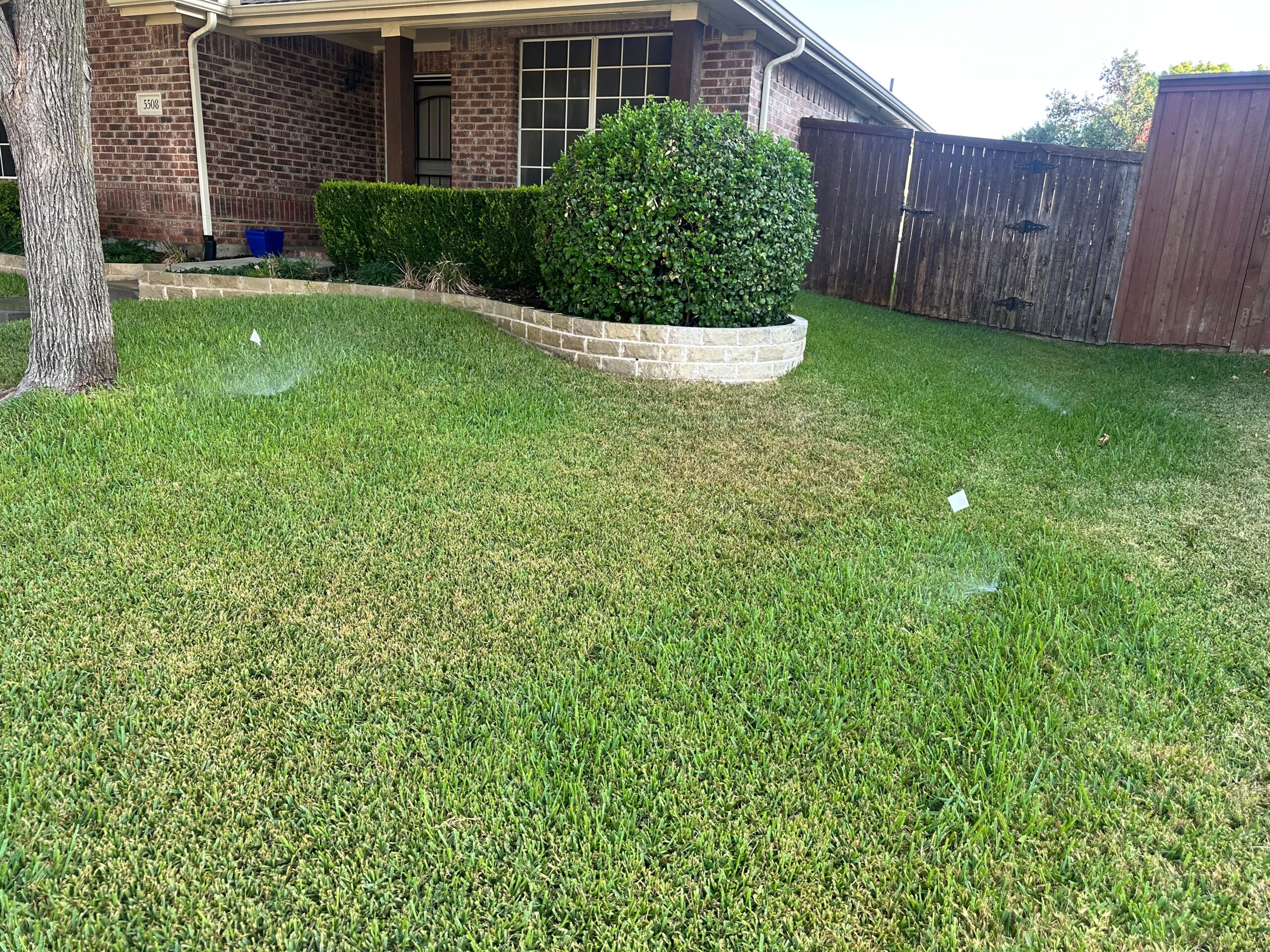
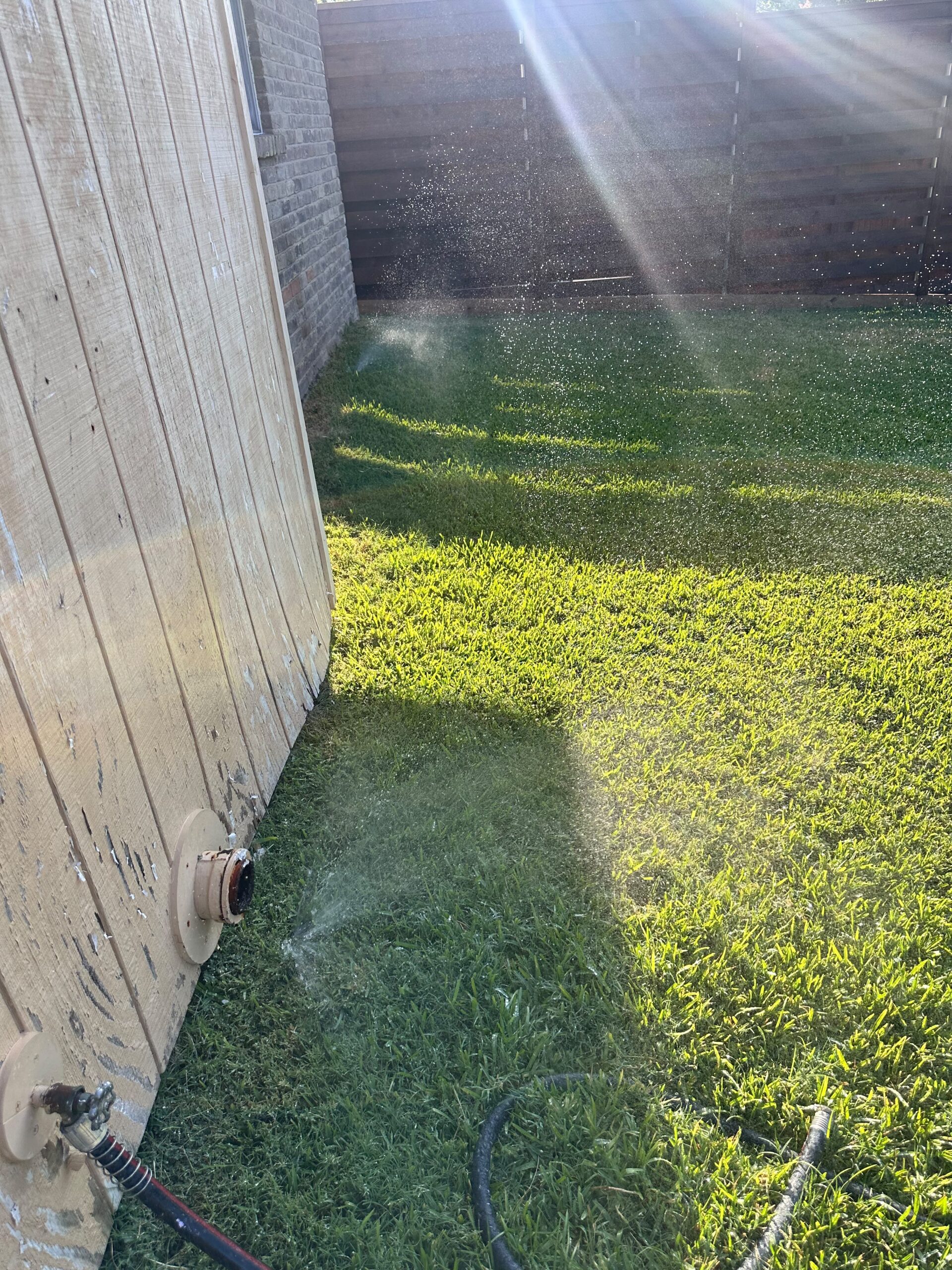
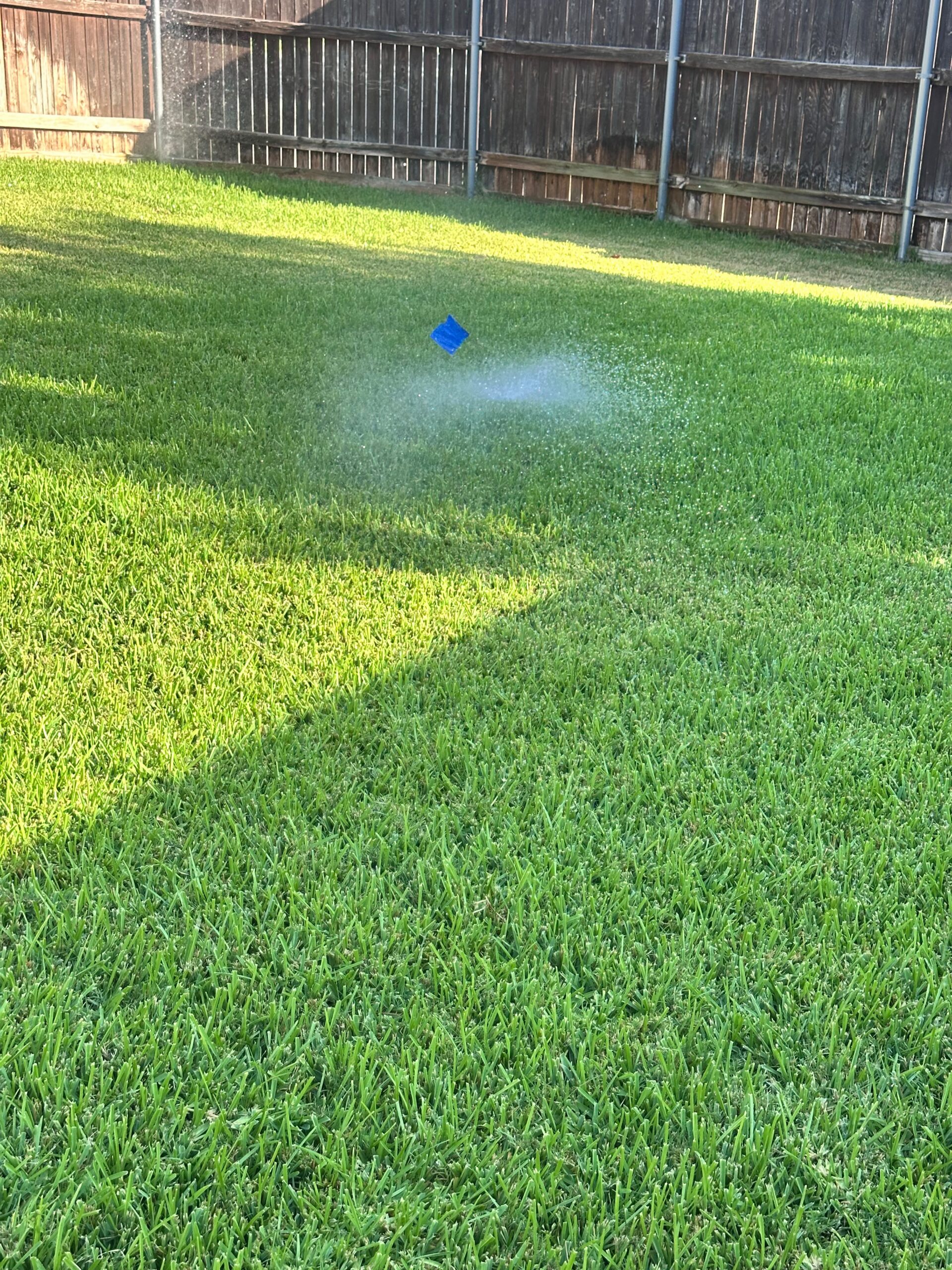
Possibly. A sprinkler system in Lucas TX is likely running too long if you notice standing water, soggy patches, runoff onto the driveway or street, or a water bill that’s climbed without a clear reason. Most residential lawns need far less watering time per zone than homeowners assume, especially when the controller was never adjusted after installation. Checking your run times against your soil type, grass type, and current season is the fastest way to know if the schedule needs to change.
At a Glance
- Difficulty: Easy to check, moderate to adjust properly
- Estimated Time: 10–20 minutes to review and update controller settings
- Tools Needed: None; access to your irrigation controller
- Works For: Overwatering from outdated schedules, wrong run times, too-frequent cycles
- May Not Solve: Leaks, valve issues, or a controller that’s malfunctioning rather than misprogrammed
Why Sprinkler Systems End Up Running Too Long
Most irrigation controllers are programmed once, at installation, and rarely revisited. A schedule set for a newly sodded lawn in the middle of summer is very different from what a mature, established lawn needs the following spring. Without updates, the system keeps running on outdated settings long after the lawn’s actual needs have changed.
Run times are also commonly set higher than necessary simply to be safe. It’s common for installers or previous owners to lean toward more water rather than risk under-watering, which leaves a buffer that often goes unused and unnoticed.
Soil type plays a role too. Clay soil, common throughout Lucas, absorbs water slowly. If a zone runs continuously for too long, water doesn’t soak in, it pools on the surface and eventually runs off before it ever reaches the root zone.
Zone size and nozzle output add another layer. A zone with several rotor heads pushing out a few gallons per minute each will reach saturation much faster than a zone with a couple of low-flow drip lines. A single run time applied evenly across every zone almost never matches what each individual zone actually needs.
Signs Your System May Be Running Too Long
A few patterns tend to show up before a homeowner ever checks the controller directly.
- Water pooling in the same low spots after every cycle
- Grass that stays spongy or squishy underfoot well after watering
- Runoff reaching the curb, street, or storm drain
- A lawn that looks patchy despite frequent watering
- A water bill that’s noticeably higher than the same month last year
Any one of these on its own could have another explanation, but two or more together are a strong signal that run times are longer than the lawn actually needs.
How to Check If Your Sprinkler System in Lucas TX Is Running Too Long
1. Do a Visual Check During a Cycle
Watch a zone run from start to finish. If water is pooling, running down a driveway, or reaching the street before the cycle ends, the zone is running longer than the soil can absorb.
2. Check Your Controller’s Run Times
Compare your current run times per zone against general guidelines: most lawns need roughly one inch of water per week, split across two or three watering days, not a single long cycle.
3. Use the Screwdriver Test
Push a screwdriver into the lawn after a cycle. It should go in easily to about six inches. If the soil is soaked well beyond that depth, or still bone dry, your run time needs adjusting.
4. Watch for Runoff Timing
Note how many minutes into a cycle runoff begins. If water starts running off the lawn after five minutes but the zone runs for fifteen, the cycle is roughly three times longer than the soil can handle in one pass.
5. Compare Zones to Each Other
Some zones may need more time than others depending on sun exposure, slope, or soil compaction. A single run time applied to every zone often overwaters some areas while underwatering others.
6. Review Your Seasonal Adjustment Settings
Many controllers have a seasonal adjustment or “water budget” feature that scales run times up or down by a percentage without reprogramming every zone individually. If this feature is set to 100% year-round, or was never touched, it’s a common reason a system keeps running on a summer schedule long after temperatures drop.
Common Mistakes Homeowners Make
- Watering daily instead of two or three times a week. Frequent shallow watering encourages shallow roots and wastes more water overall than fewer, deeper cycles.
- Running one long cycle instead of splitting it. Cycle-and-soak, running a zone in shorter intervals with breaks between, lets water absorb into clay soil instead of running off.
- Never adjusting for the season. A summer schedule left in place through fall and winter significantly overwaters the lawn during cooler months.
- Assuming more water means a healthier lawn. Overwatering can actually weaken grass, encourage fungus, and promote shallow root systems that struggle during heat.
- Setting run times once and never revisiting them. A schedule that made sense during a hot, dry stretch is often left in place for months, well past when conditions have changed.
- Ignoring the seasonal adjustment feature. Many controllers can scale watering up or down automatically by season, but this setting is frequently left at its default and never used.
Local Considerations for Lucas, TX
A few conditions specific to this area affect how long a sprinkler system in Lucas TX should realistically run.
- Clay soil absorbs water slowly, which means shorter, split cycles usually work better than one long continuous run.
- Summer heat increases evaporation, but it doesn’t necessarily mean longer run times; early morning watering makes a bigger difference than extending cycle length.
- Water restrictions in Collin County limit watering days, which makes it more important that each cycle is efficient rather than compensating with longer run times.
- Foundation movement, common in this region, can actually be worsened by inconsistent watering, either overwatering near the slab or letting soil dry out and shift.
- Larger lot sizes, common in Lucas compared to more urban areas nearby, often mean more zones and more variation in sun exposure, which makes a single uniform run time less effective across the whole property.
Related Problems That Cause Similar Symptoms
If adjusting run times doesn’t fully solve the issue, a few other problems can look similar to a system that’s simply running too long:
- Valve issues, where a valve doesn’t fully close and continues to let water through after the cycle ends
- A malfunctioning controller that runs zones longer than programmed or repeats a cycle unexpectedly
- Low water pressure, which can make a zone seem like it needs more time when the real issue is water not reaching the far end of the zone efficiently
- Underground leaks, which increase overall water usage separately from how long the system is programmed to run
Ruling out the schedule first is usually the fastest step, since it requires no tools and no digging, before assuming a mechanical issue is involved. In most cases, a homeowner can work through this checklist in a single evening and know within a week or two, after watching how the lawn responds, whether the schedule change actually solved the problem.
Frequently Asked Questions
- How long should a sprinkler zone run each cycle?
It depends on the nozzle type and soil, but many residential zones need somewhere between 10 and 20 minutes per cycle, often split into shorter intervals rather than one continuous run.
- How many days a week should I water my lawn?
Most established lawns do well with two to three watering days per week rather than daily watering, which encourages deeper, healthier root growth.
- Can overwatering actually damage my lawn?
Yes. Overwatering can lead to shallow roots, fungus, and grass that struggles more during heat and drought because it never had to grow deep roots in the first place.
- Does watering longer make up for skipping a day due to restrictions?
Not effectively. Longer single cycles usually just increase runoff on clay soil rather than delivering meaningfully more water to the root zone, so it’s better to stay within recommended per-cycle times.
- How do I know if it’s my schedule or a mechanical problem?
Start by reviewing and adjusting your run times. If runoff, pooling, or high bills continue after making those changes, a valve or controller issue is more likely and worth having checked, especially if the excess water shows up on a zone you have already adjusted.
Bottom Line
A sprinkler system in Lucas TX is often running too long simply because the schedule was never updated after installation or as the seasons changed. Checking run times against soil type, watching for runoff, and adjusting toward shorter, split cycles solves the issue in most cases without any repairs needed.
Next Step
If you’ve adjusted your run times and are still seeing pooling, runoff, or an unexplained high water bill, a licensed sprinkler company can check your valves, controller, and water pressure to rule out a mechanical cause. This is especially useful if adjustments haven’t changed the results after a full watering cycle.
Related Resources
- How to Adjust Sprinkler Heads in Melissa, TX
- Can a Small Sprinkler Leak Increase My Water Bill?
- How Can I Stop Sprinkler Overspray in Frisco, TX?
- Signs of a Broken Sprinkler Valve
- Understanding Your Irrigation Controller Settings
Conclusion
If your sprinkler system in Lucas TX is running too long, the fix is usually as simple as reviewing your controller settings and adjusting toward shorter, split cycles suited to clay soil. If pooling or runoff continues after adjusting your schedule, a licensed sprinkler company can check for a valve or controller issue behind the scenes.