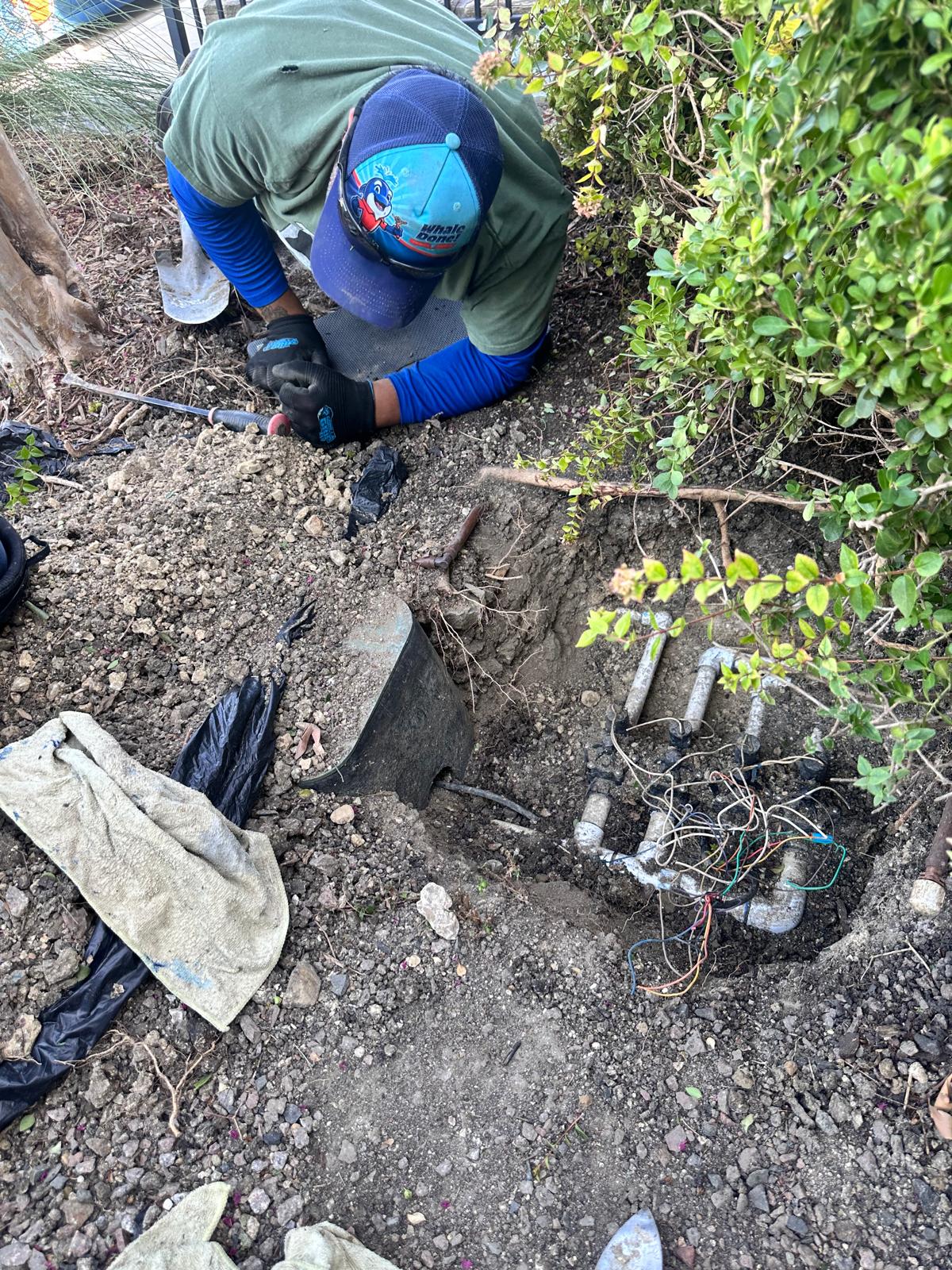
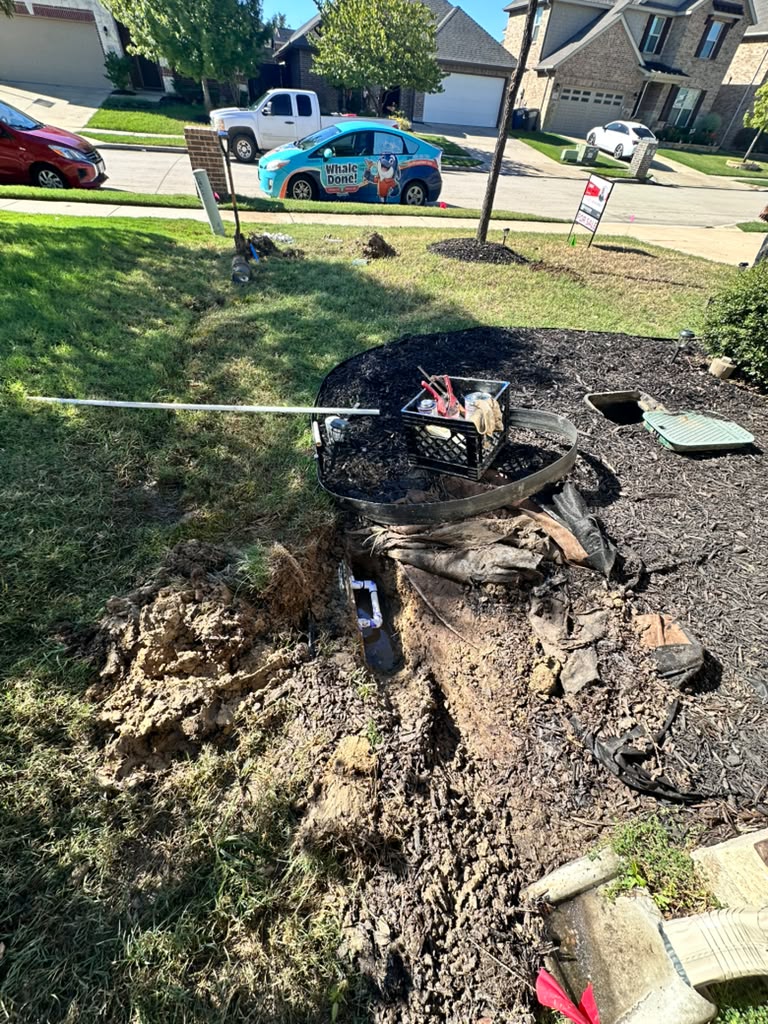
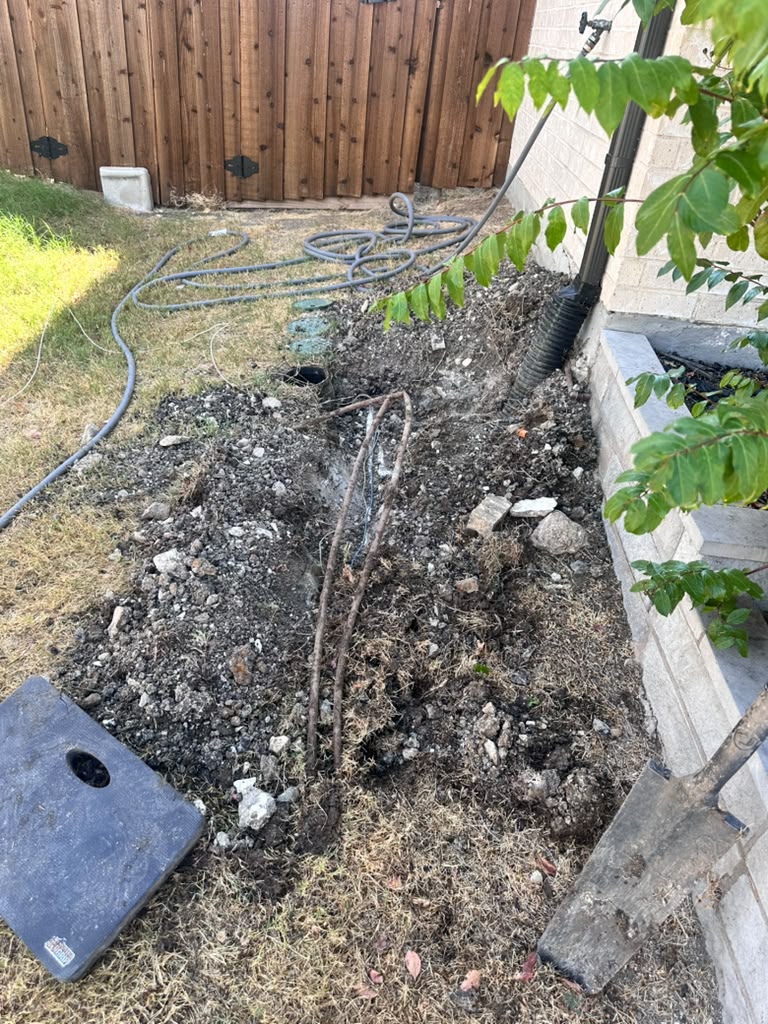
Sprinkler leak repair in Allen TX addresses underground leaks that are most often caused by cracked pipes, damaged fittings, root intrusion, or high water pressure putting stress on the system. These leaks usually stay hidden below the surface until they cause a soggy patch, an unusually green area of grass, or a noticeable jump in the water bill. Because the damage isn’t visible right away, underground leaks often go unnoticed longer than other sprinkler problems, which is why timely repair matters. A professional repair typically involves locating the leak, exposing the affected pipe section, and replacing the damaged part without disturbing the rest of the system.
At A Glance
- Difficulty: Moderate to advanced (locating and repairing underground leaks often requires professional tools)
- Estimated Time: 1–3 hours depending on the leak’s location and depth
- Tools Needed: Pipe locator, shovel, PVC cutters and fittings, moisture meter (professional equipment)
- Works For: In-ground sprinkler systems with buried PVC or poly piping
- May Not Solve: Leaks originating from the municipal water line rather than the irrigation system itself
What Causes Underground Sprinkler Leaks
Underground leaks don’t usually happen without a reason. Understanding the common causes makes it easier to spot warning signs early and avoid repeat problems after a repair.
Because these pipes sit out of sight, a leak often develops gradually over weeks or even months before it becomes noticeable at the surface. Knowing what typically causes them helps homeowners recognize the early warning signs sooner.
1. Cracked Or Damaged Pipes
PVC pipe can crack from ground shifting, freezing temperatures, or age-related brittleness. Once a crack forms, water escapes continuously, even when the system isn’t actively running a cycle.
Even a hairline crack can release a surprising amount of water over time, since it’s under pressure any time the main water supply to the system is on.
2. Loose Or Failed Fittings
The joints connecting sections of pipe are common failure points. A fitting that wasn’t glued properly during installation, or one that’s simply reached the end of its lifespan, can slowly leak at the connection point.
These leaks are sometimes harder to spot than a cracked pipe, since water can seep out slowly at a joint for a long time before enough of it reaches the surface to notice.
3. Root Intrusion
Tree and shrub roots are drawn to the moisture around irrigation lines and can grow into small cracks or joints over time, gradually widening them into a full leak.
This is especially common near mature trees, where root systems have had years to spread toward buried pipes in search of a reliable water source.
4. High Water Pressure
Consistently high water pressure puts extra stress on pipes and fittings, increasing the likelihood of a crack or blowout, especially in older sections of piping.
A pressure regulator can help reduce this risk, but it’s worth confirming pressure levels are actually within a safe range rather than assuming the system is fine.
5. Ground Shifting And Settling
North Texas clay soil expands and contracts significantly with moisture changes, which can stress buried pipes and eventually cause a crack or separate a joint.
This process happens gradually across many wet-dry cycles throughout the year, meaning the effects often build up long before a leak becomes noticeable.
6. Accidental Damage
Digging for landscaping, fence posts, or other yard projects can nick or crack a pipe without anyone realizing it until a leak appears days or weeks later.
Marking known sprinkler line locations before starting any digging project can help avoid this type of accidental damage in the first place.
How Sprinkler Leak Repair In Allen TX Typically Works
A proper leak repair follows a clear process to fix the issue without unnecessary digging or disruption to the yard.
- Leak detection: A technician uses pressure testing and, if needed, specialized equipment to narrow down the leak’s general location before digging.
- Careful excavation: Only the section of yard directly above the suspected leak is opened up, minimizing disruption to landscaping.
- Pipe or fitting replacement: The damaged section is cut out and replaced with new pipe or fittings, then tested under pressure to confirm the leak is resolved.
- Backfilling and cleanup: The area is filled back in and, where possible, restored to its original condition.
Common Mistakes Homeowners Make
- Ignoring a soggy spot that “isn’t that bad.” Small leaks tend to get worse over time, not better, especially under constant water pressure.
- Assuming a leak will fix itself. Pipes don’t self-repair, and a small crack often widens gradually until it becomes a larger problem.
- Digging without locating the leak first. Digging blindly can damage additional pipe sections and turn a small repair into a bigger one.
- Overlooking a rising water bill. A sudden or gradual increase in water usage without a clear explanation is one of the most reliable signs of an underground leak.
- Not checking for leaks after nearby landscaping work. New plantings, fence installations, or hardscaping projects can accidentally damage buried irrigation lines.
Local Considerations For Allen TX
Allen’s climate and soil conditions play a direct role in how underground leaks develop:
- Clay soil, common throughout Allen, expands and contracts with moisture changes, putting ongoing stress on buried pipes and fittings.
- Mature landscaping in many established Allen neighborhoods increases the likelihood of root intrusion into older irrigation lines.
- Summer heat and dry conditions can cause the ground to shift more dramatically, sometimes revealing leaks that were less noticeable during wetter months.
- Water restrictions set by the City of Allen make it especially important to fix leaks quickly, since ongoing water loss can affect compliance with allowed watering days.
- Freeze risk in winter can crack pipes that were already weakened, meaning leaks sometimes surface for the first time in early spring after a hard freeze.
- Foundation movement, a known concern in North Texas clay soil, can be worsened by an undetected leak saturating soil unevenly near the home.
Homeowners can review current outdoor watering guidance through the City of Allen’s water conservation page and general irrigation efficiency standards from the EPA WaterSense program.
Given how established many Allen neighborhoods have become, with mature trees and landscaping now well beyond their original planting size, root-related leaks are worth watching for even on systems that have otherwise performed reliably for years.
Related Problems That Can Look Like A Leak
Some issues resemble an underground leak but have a different cause, including:
- A stuck valve that won’t fully close
- Low municipal water pressure affecting multiple zones
- A backflow preventer that’s failing and releasing water
- Overwatering from outdated controller programming
Learn more in Whale Done’s guide to common sprinkler system problems.
Frequently Asked Questions
- How can I tell if I have an underground sprinkler leak?
Common signs include a soggy area that never dries out, unusually green or lush grass in one spot, or a water bill that’s noticeably higher than usual without an obvious reason.
- Can an underground leak be fixed without digging up the whole yard?
In most cases, yes. Leak detection equipment allows a technician to narrow down the location before digging, so only a small section of yard needs to be opened.
- How much water can an undetected leak waste?
Depending on the size and how long it goes unnoticed, an underground leak can waste hundreds to thousands of gallons over the course of a season.
- Do tree roots really cause sprinkler leaks?
Yes. Roots are drawn to the moisture around irrigation lines and can grow into small cracks or loose joints, gradually turning a minor weak point into a full leak.
- Is sprinkler leak repair in Allen TX different from other North Texas cities?
The repair process is similar throughout the region, but Allen’s mature landscaping and clay soil make root intrusion and ground-shifting leaks especially common causes locally.
Bottom Line
Underground sprinkler leaks are usually caused by cracked pipes, failed fittings, root intrusion, or pressure and soil-related stress. Sprinkler leak repair in Allen TX addresses these issues directly, locating the source and repairing only the affected section rather than disturbing the whole system. Catching a leak early keeps repairs simple and prevents unnecessary water waste or yard damage.
When Professional Help May Be Beneficial
Locating an underground leak without the right tools often means digging blindly, which can waste time and cause unnecessary yard damage. A licensed sprinkler company can pinpoint the exact location using proper equipment, repair the affected section efficiently, and confirm the fix holds under pressure before finishing the job.
Related Resources
Conclusion & Next Step
Underground leaks are usually caused by cracked pipes, root intrusion, or pressure and soil stress, and they rarely fix themselves. Sprinkler leak repair in Allen TX locates the exact source and fixes it without unnecessary digging, saving water and preventing further yard damage. If a soggy spot or a rising water bill has you wondering what’s going on, a licensed sprinkler company can find and fix the leak quickly.