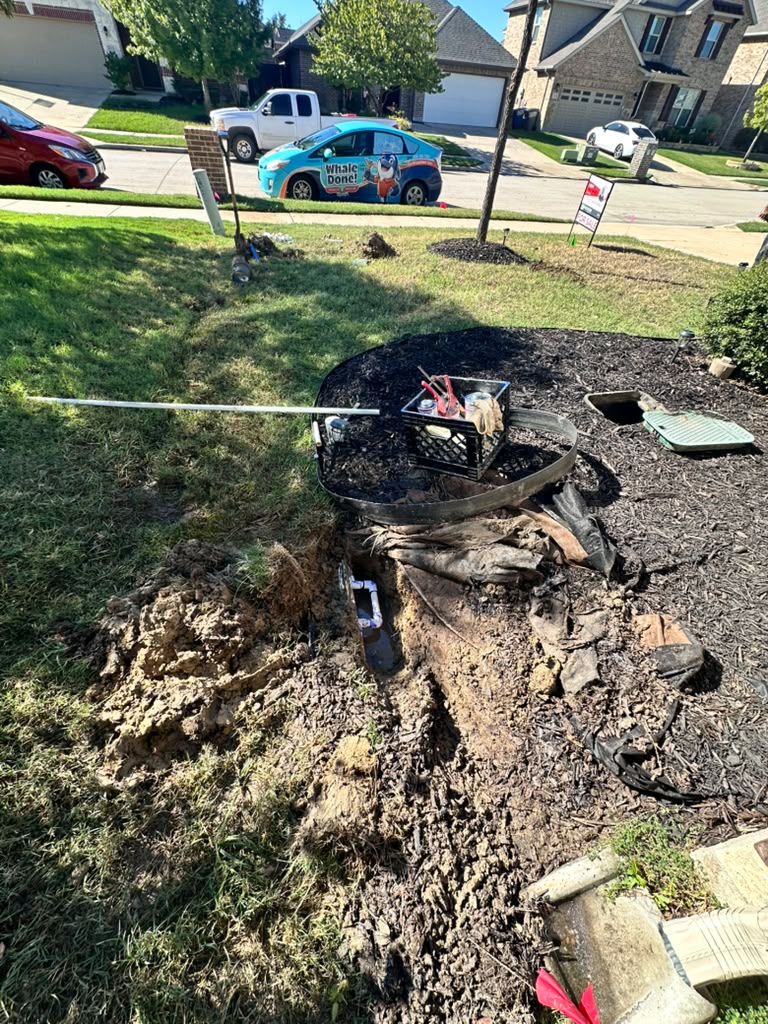
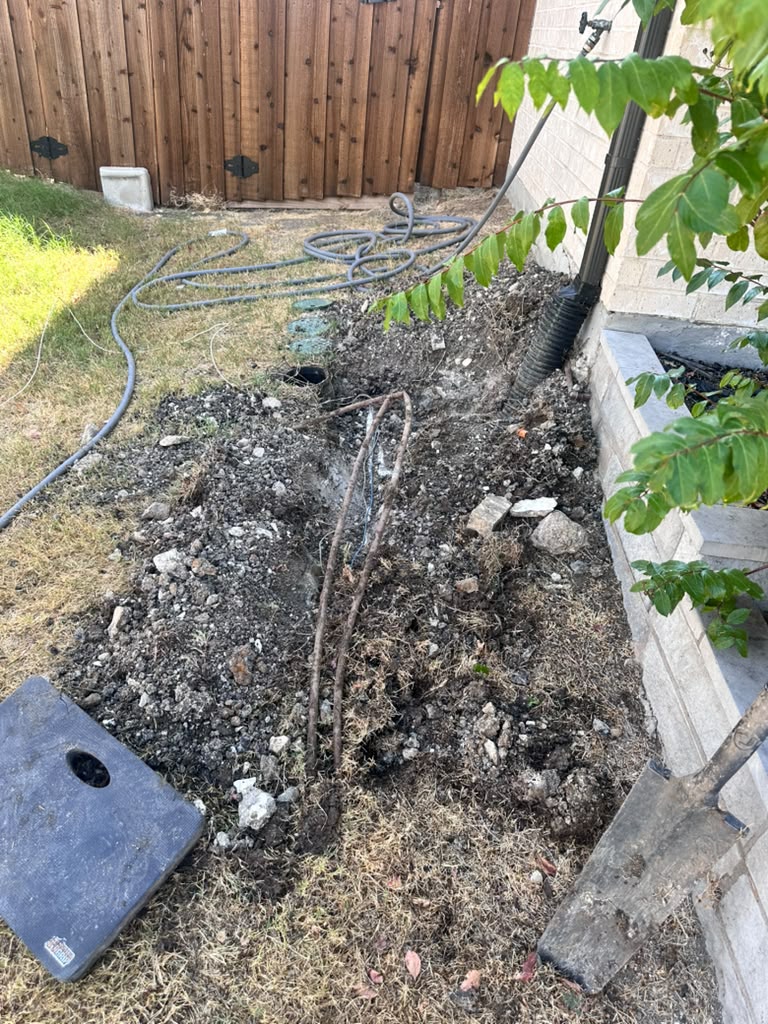
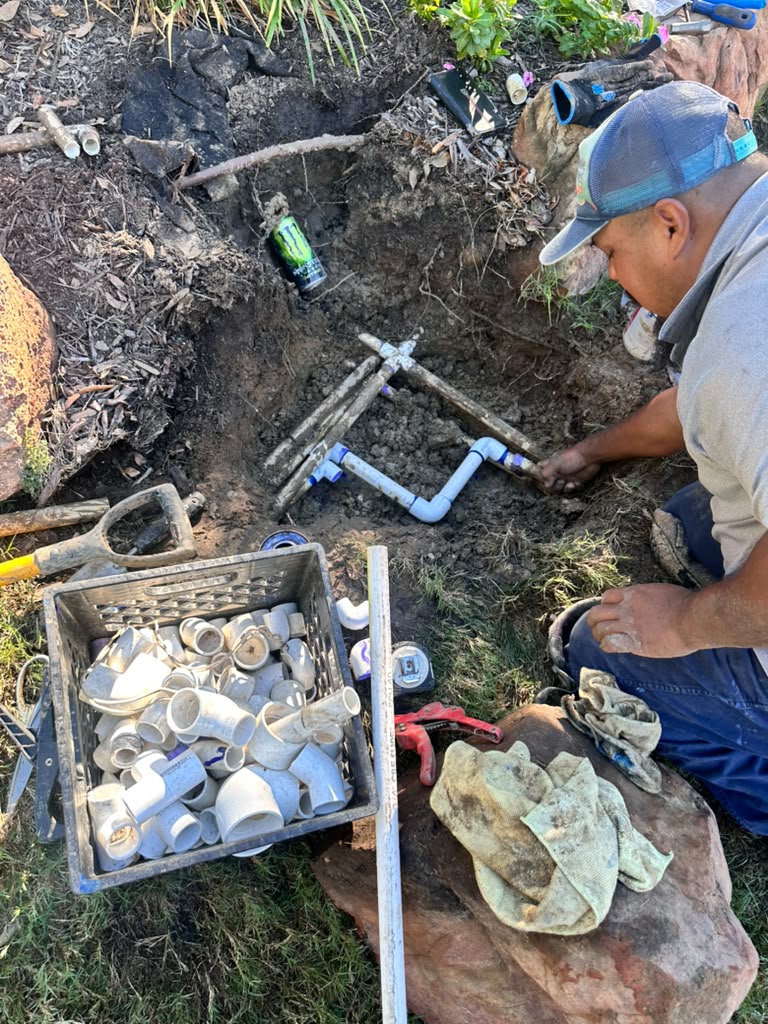
Drip irrigation conversion in Lucas TX means replacing the spray heads in a landscape bed zone with drip tubing or emitters that water plants at the roots. It also requires a filter and a pressure regulator, because drip runs at much lower pressure than spray heads. The work includes checking the zone’s condition, confirming water pressure, and adjusting the piping at the valve.
Not every zone is a good fit. Beds with shrubs, trees, and perennials usually convert well, while lawn zones usually do not.
At a Glance
- Difficulty: Moderate to advanced, depending on the zone
- Estimated time: Varies with bed size and zone condition
- Tools needed: Pressure gauge, drip tubing and emitters, filter, pressure regulator, fittings
- Works for: Shrub beds, foundation plantings, trees, and flower beds
- May not solve: Lawn watering, zones with leaks, or zones with unreliable valves
Why Homeowners Consider Drip
Spray heads throw water into the air, where wind and heat can carry some of it away. In planting beds, spray can also hit leaves, mulch, and walkways instead of the root zone. Drip delivers water slowly at ground level, close to where plants take it up.
Common reasons to consider conversion:
- Less overspray: Water stays in the bed instead of hitting the fence or driveway.
- Targeted watering: Each plant gets water at its base.
- Better fit for beds: Shrubs and perennials often prefer slower, deeper watering.
- Wind tolerance: Drip is less affected by wind than spray.
These benefits depend on a system that is set up correctly. A poorly planned conversion can create new problems.
When Converting a Bed Zone Makes Sense
A zone is usually a good candidate when several of these are true:
- It only waters beds: Shrubs, trees, and perennials with no lawn mixed in.
- The plants are established: Their water needs are fairly predictable.
- The existing zone is in good shape: No active leaks, no valve problems, and heads that work properly.
- The plant spacing is stable: You don’t plan to rearrange the bed often.
- Pressure can be managed: You can regulate it down to what drip needs.
If your answer to most of these is yes, drip is worth considering. If not, it may be better to wait or choose a different approach.
When a Zone May Not Be a Good Fit
Drip is not the right answer for every part of a yard. These situations call for caution:
- Lawn zones: Turf needs even coverage across a wide area, which drip doesn’t provide well.
- Mixed zones: A zone with both lawn and beds can’t usually be converted without being split first.
- Zones with existing leaks: A leak should be fixed before anything is changed.
- Unreliable valves: A valve that doesn’t close fully can send too much pressure into drip tubing.
- Newly planted beds: Plant needs may change as roots develop.
- Beds that change often: Frequent replanting means frequent adjustments to the tubing.
Saying “no” to a conversion is sometimes the most helpful answer. A licensed company may recommend adjusting spray heads or leaving a zone alone.
What Drip Needs to Work Properly
Drip systems have different requirements from spray zones. Three items matter most: pressure, filtration, and regulation.
Water Pressure
Spray heads typically run at higher pressure than drip components can handle. Drip tubing and emitters are designed for lower pressure, so most conversions need a way to reduce it. Check the specifications on the parts you plan to use, since requirements differ between products.
A pressure gauge on a hose bib or the system can show what you’re starting with. If your pressure is very high or varies a lot, mention it to a licensed company.
A Filter
Drip emitters have very small openings. Dirt, sand, and mineral particles can clog them. A filter at the zone protects the emitters from debris.
Filters need occasional cleaning. If they’re never checked, flow can drop and plants can suffer.
A Pressure Regulator
A pressure regulator limits the pressure that reaches the drip line. Without one, high pressure can pop fittings off tubing or damage emitters. Most conversions install the regulator and filter together near the zone valve.
Make sure the parts you choose are rated for your zone’s flow. A licensed company can help match them.
What a Drip Irrigation Conversion in Lucas TX Involves
Here is the general process. Details vary by system, so use this as an overview rather than a how-to for every property.
Step 1: Evaluate the Zone
Run the zone and look for leaks, weak spray, and broken heads. Note what the zone waters and whether the lawn is mixed in.
Step 2: Check Water Pressure
Measure pressure at the zone or the nearest connection. Write the number down so you can compare it with your drip components.
Step 3: Repair Existing Problems First
Fix leaks, broken heads, and valve problems before converting. Converting a zone with hidden problems can make them harder to find.
Step 4: Plan the Layout
Map the plants in the bed and decide where tubing and emitters will go. Different plants may need different amounts of water.
Step 5: Install the Filter and Regulator
Place them downstream from the zone valve, following the product instructions. Keep them accessible for future cleaning.
Step 6: Remove or Cap the Spray Heads
The old heads are removed and the openings capped or connected to drip fittings. Open lines left uncapped can let dirt in.
Step 7: Run Tubing and Add Emitters
Lay the tubing through the bed and attach emitters near each plant. Secure the tubing so it doesn’t shift.
Step 8: Flush and Test
Flush the lines to clear debris, then run the zone. Look for leaks, pops, and dry areas.
Step 9: Adjust the Schedule
Drip needs a different run time than spray. Change the controller settings after the conversion and watch the plants for a few weeks.
Common Mistakes Homeowners Make
- Converting a lawn zone. Drip doesn’t cover turf evenly.
- Skipping the regulator. High pressure can damage drip parts.
- Leaving out the filter. Clogged emitters are a common drip problem.
- Not changing run times. Spray schedules overwater or underwater drip zones.
- Converting before repairs. Leaks and valve problems should be fixed first.
- Forgetting maintenance. Filters and emitters need occasional checks. See our guide on sprinkler repair in Lucas TX.
North Texas Considerations
Local conditions affect how drip performs here.
- Clay soil: Lucas soil holds water and drains slowly, so drip run times should be short and checked often.
- Heat: Summer heat can dry beds quickly, and drip may need adjusting during peak months.
- Wind: Drip is less affected by wind than spray heads.
- Foundation movement: Soil near the house shifts, so tubing near the slab should be checked for movement.
- Freezes: Exposed drip tubing and fittings can be damaged by hard freezes, so winter protection still matters.
- Seasonal watering: Beds need less water in fall and winter, so schedules should change.
- Water restrictions: Check current rules with the City of Lucas and your water provider.
Texas regulates irrigation work, and the TCEQ irrigation program explains licensing rules for modifying systems. For general guidance on efficient outdoor watering, the EPA’s WaterSense outdoor resources are a useful reference.
Related Problems to Watch For
If you’re considering drip because of a problem, the cause might be something else:
- Poor coverage: See our guide on sprinkler coverage problems.
- A failing valve: Learn more about sprinkler valve repair.
- Underground leaks: Read about sprinkler leak detection.
- High pressure: Misting and leaks at the heads may point to a pressure issue.
- Controller schedules: Overwatering can come from the schedule, not the heads.
Frequently Asked Questions
Can I convert any sprinkler zone to drip?
No. Bed zones with shrubs, trees, and perennials are usually good candidates. Lawn zones and mixed zones usually are not.
Does drip irrigation need a filter and pressure regulator?
Yes. A filter protects the small emitters from clogging, and a regulator lowers the pressure to what drip parts can handle. Check the specifications for your parts.
Should I fix leaks before converting to drip?
Yes. Repair leaks, broken heads, and valve problems first. That way you know the zone is in good shape before changing it.
Will drip use less water than spray heads?
Often it can, because less water is lost to wind and overspray. Results depend on the setup and the schedule, so adjust run times after converting.
Do I need a licensed irrigator to convert a zone?
Texas regulates irrigation work, and modifications may require a licensed irrigator. Check TCEQ rules or ask a licensed company before starting.
Conclusion
Drip irrigation conversion in Lucas TX makes sense for some bed zones, not all. Check the zone’s condition, confirm your pressure, and plan for a filter and pressure regulator before changing anything. Zones that already leak or have unreliable valves may need repairs first. A licensed sprinkler company can evaluate your beds and explain whether conversion fits. Our goal is to help you decide what makes sense for your landscape, even if that means leaving a zone as it is.
Related Resources
- Sprinkler Valve Repair
- Sprinkler Leak Detection
- Sprinkler Repair
- Sprinkler System Not Working: What to Check First