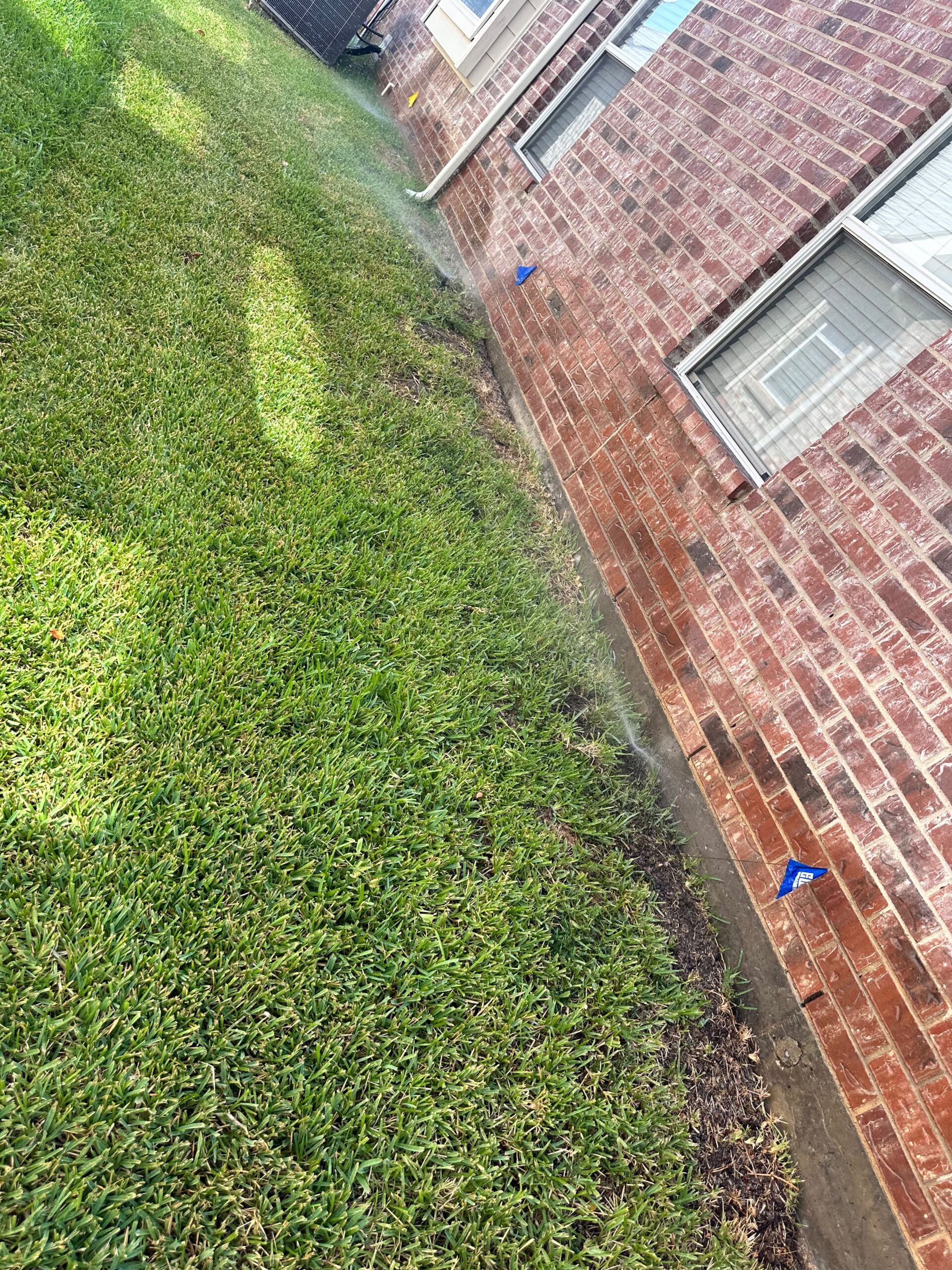
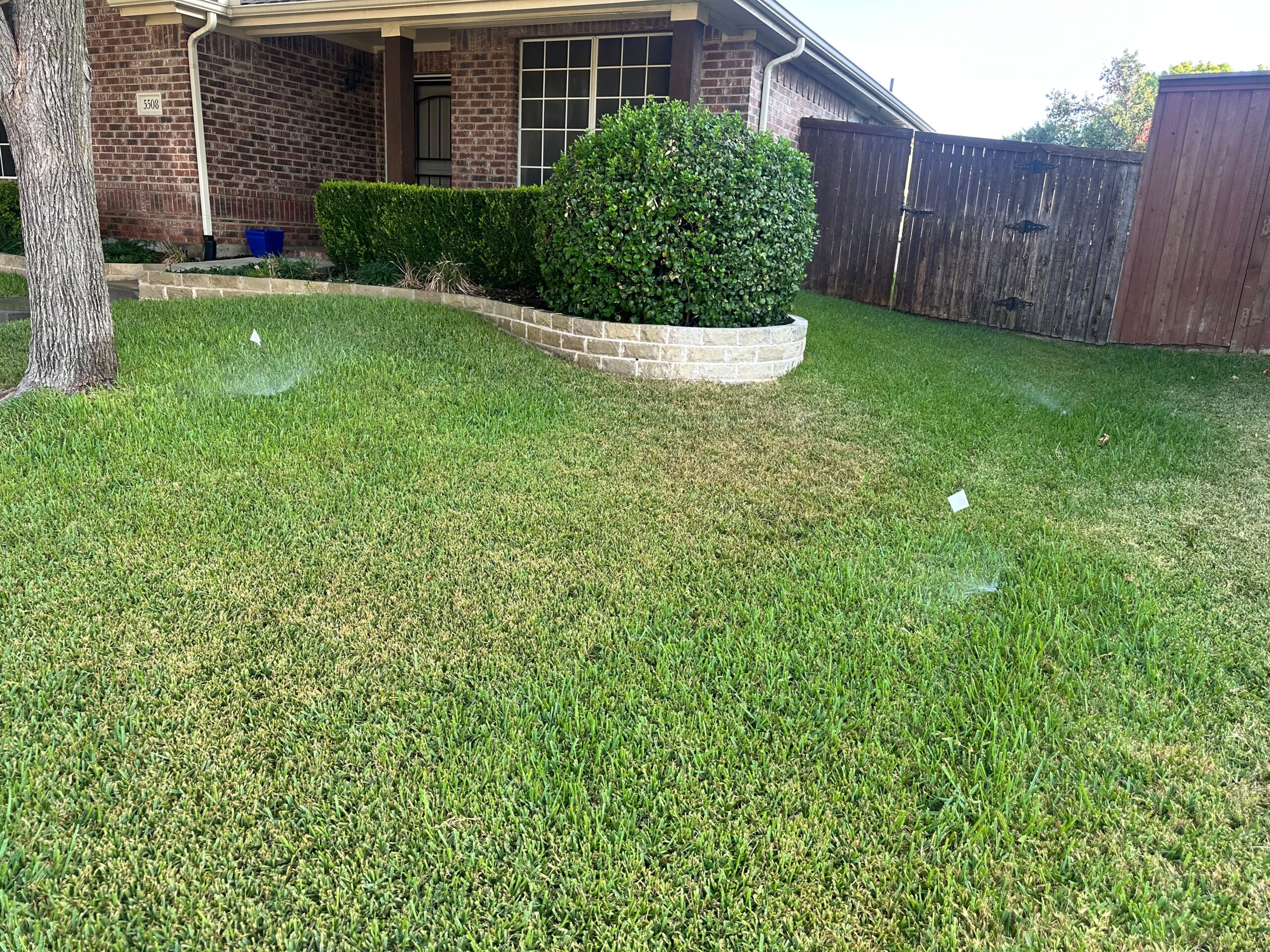
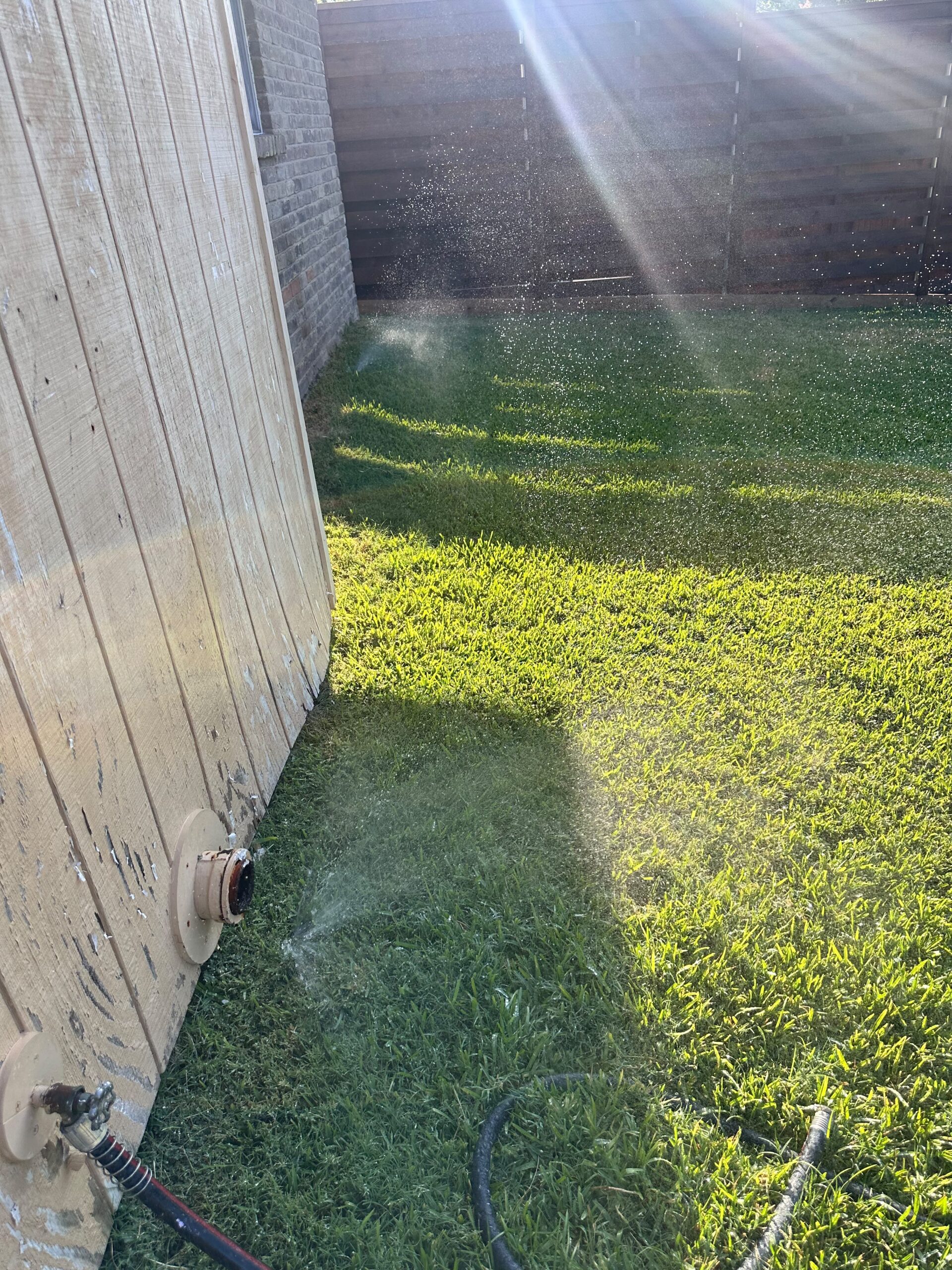
Head-to-head coverage in Parker TX means every sprinkler head sprays far enough to reach the head next to it, so the water patterns overlap instead of leaving gaps. This overlap is what keeps a lawn watered evenly. Without it, some areas get soaked while others stay dry, even if the system runs on a normal schedule.
At a Glance
- Difficulty: Easy to check, moderate to fix
- Estimated Time: 15–30 minutes to inspect a zone
- Tools Needed: None for inspection; adjustment tools or replacement heads if repairs are needed
- Works For: Diagnosing uneven watering, brown patches, or soggy spots
- May Not Solve: Problems caused by low water pressure, clogged nozzles, or sprinkler valve issues
Why Head-To-Head Coverage Matters
Sprinkler heads are not designed to water an entire area by themselves. Each head is built to throw water a certain distance, and the system is designed so that distance reaches the neighboring head. When that happens correctly, the outer edge of one spray pattern meets the outer edge of the next, and the two overlapping patterns combine to water the ground evenly.
If a head doesn’t reach the next one, the middle ground between them gets less water than the areas closer to each head. Over time, that shows up as a stripe or patch of grass that looks thinner, drier, or more stressed than the grass around it. This is one of the most common reasons homeowners in Parker see uneven results even when their controller settings look correct.
This concept applies to spray heads, rotors, and even drip zones, though it looks slightly different depending on the head type. Spray heads throw a fan-shaped pattern over a shorter distance, so they need to be spaced closer together to achieve overlap. Rotors cover more ground but take longer to complete a full pass, which means gaps in rotor coverage can be harder to notice during a quick visual check. Either way, the underlying principle is the same: the system was designed around a specific spacing, and anything that changes that spacing, such as a shifted head, a blocked nozzle, or a repair that uses the wrong head type, can break the overlap the design depends on.
It’s also worth understanding that head-to-head coverage isn’t about watering every single blade of grass with equal intensity. It’s about making sure no area is left outside the reach of every nearby head. A small amount of overlap is expected and normal. The goal is simply to avoid a zone where the sprinkler patterns stop just short of meeting in the middle.
How To Check For Head-To-Head Coverage in Parker TX
Run Each Zone Manually
Turn on one zone at a time and watch it run for a minute or two. Manually running zones, rather than relying on the automatic schedule, makes it easier to observe the full pattern without rushing.
Watch Where The Water Lands
Look at where the spray from each head actually reaches. The water should visibly reach the base of the neighboring head, not stop short of it.
Look For Dry Gaps
Walk the zone after it has run and look for any area between two heads that stayed dry or only got light misting. That gap is a sign the heads aren’t reaching each other.
Check Different Times Of Day
Wind affects spray patterns, especially with spray heads and rotors. Checking coverage on a calm morning gives a more accurate picture than checking on a windy afternoon.
Note Any Blocked Heads
Heads that are sunken, tilted, or blocked by grass, mulch, or landscaping edging often look fine on paper but underperform in practice. A quick visual check during the manual run can catch this.
Compare Opposite Sides Of The Zone
Standing at one head and watching whether it reaches the head across from it, then repeating that from the opposite side, helps confirm whether the gap is a one-way problem, such as a single weak head, or a broader spacing issue affecting the whole zone.
Keep A Simple Record
Jotting down which heads reach their neighbors and which fall short makes it much easier to explain the issue to a professional later, and it helps track whether an adjustment actually solved the problem the next time the zone is checked.
Common Mistakes Homeowners Make
- Assuming a full lawn is watered just because the system runs. A system can run on schedule every day and still leave dry gaps if coverage isn’t head-to-head.
- Only check the system when grass is already brown. By the time stress is visible, the grass has already been under strain for a while.
- Adjusting spray distance without checking the whole zone. Turning up one head to fix a dry spot can sometimes overwater an area near a different head.
- Ignoring wind conditions during inspection. A pattern that looks uneven on a windy day may actually be fine under calm conditions.
- Mixing head types in the same zone. Spray heads and rotors throw water at very different rates and distances, which can throw off head-to-head coverage even if each head works correctly on its own.
Local Considerations In Parker, TX
North Texas conditions can make head-to-head coverage issues more noticeable than they might be elsewhere.
- Clay soil doesn’t absorb water quickly, so uneven coverage can show up as puddling in some spots and dry cracking in others within the same zone.
- Summer heat increases how fast grass shows stress in under-watered areas, so coverage gaps tend to appear faster in July and August.
- Wind is common in open areas of Parker and can distort spray patterns enough to create temporary gaps even when the system is set up correctly.
- Seasonal watering restrictions in many North Texas municipalities limit how many days per week a system can run, which makes it more important that every run counts. Coverage gaps waste part of each limited watering day.
- Foundation movement in clay-heavy soil is sometimes linked back to inconsistent watering around the perimeter of a home, which is another reason even coverage matters beyond just lawn appearance.
Homeowners in Parker can review local watering guidance through the Texas A&M AgriLife Extension or check current municipal watering schedules where applicable.
What Else Could Cause Similar Symptoms
If checking for head-to-head coverage doesn’t explain the dry or uneven areas, a few other issues are worth ruling out:
- Low water pressure, which can shorten spray distance across an entire zone
- Clogged or dirty nozzles, which distort the pattern even if the head itself is undamaged
- Valve issues, which can cause a zone to run weaker than expected
- Underground leaks, which reduce pressure to everything downstream of the leak
- Controller programming errors, where run times are too short for the soil type
A licensed sprinkler company can help pinpoint which of these is actually behind the symptoms if a visual inspection doesn’t make the cause clear.
Frequently Asked Questions
What does head-to-head coverage actually mean?
It means each sprinkler head’s spray reaches the base of the neighboring head, so the watering patterns overlap and no area is left under-watered.
How do I know if my system has head-to-head coverage?
Run each zone manually and watch where the water lands. If the spray from one head visibly reaches the next head, coverage is likely good.
Can I fix head-to-head coverage myself?
Many adjustments, like changing spray distance or arc, can be done by a homeowner. If the issue involves pressure, valves, or system design, it may require a professional evaluation.
Does head-to-head coverage matter for both spray heads and rotors?
Yes. Both head types rely on overlapping patterns, though rotors typically cover more distance and take longer to complete a full cycle.
Why does my lawn have dry patches even though the sprinklers run every day?
Frequent runtime doesn’t fix a coverage gap. If the pattern itself doesn’t reach far enough, that same gap goes unwatered every time the system runs.
Is head-to-head coverage more important in Parker’s climate than elsewhere?
It matters everywhere, but clay soil and summer heat in North Texas tend to make coverage gaps show up faster and more visibly.
Can wind be the only cause of a coverage gap?
Sometimes. Checking the same zone again on a calm day can help determine whether wind was the main factor.
Should I replace a head or just adjust it?
If the head is functioning but aimed or set incorrectly, adjustment is usually enough. If it’s damaged, sunken, or the wrong type for the zone, replacement may be the better option.
How often should coverage be checked?
A seasonal check, especially at the start of summer, helps catch gaps before they cause visible lawn stress.
Does head-to-head coverage affect water bills?
It can. Gaps often lead homeowners to run zones longer or more frequently to compensate, which increases water use without actually fixing the uneven pattern.
Bottom Line
Head-to-head coverage in Parker TX means each sprinkler head sprays far enough to overlap with the one next to it, which is what keeps water distribution even across the lawn. When that overlap is missing, dry patches and uneven growth are the result, even if the system runs on a normal schedule.
Next Step
Checking coverage during a manual zone run is something most homeowners can do on their own. If gaps persist after adjustments, or if the cause seems related to pressure, valves, or system design, a professional evaluation can help identify what’s happening below the surface.
Related Resources
- How to Adjust Sprinkler Heads in Melissa, TX
- Why Are My Sprinkler Leaks While The System Is Off?
- Sprinkler Controller Programming Basics for North Texas Lawns
Visit Whale Done to learn more about sprinkler system care in North Texas.
Conclusion
Head-to-head coverage in Parker TX is the difference between a lawn that greens up evenly and one with stubborn dry patches no matter how often it runs. Checking each zone manually is a simple first step any homeowner can take. If gaps remain after basic adjustments, Whale Done offers professional evaluations to pinpoint the cause and restore even, reliable coverage across your yard.