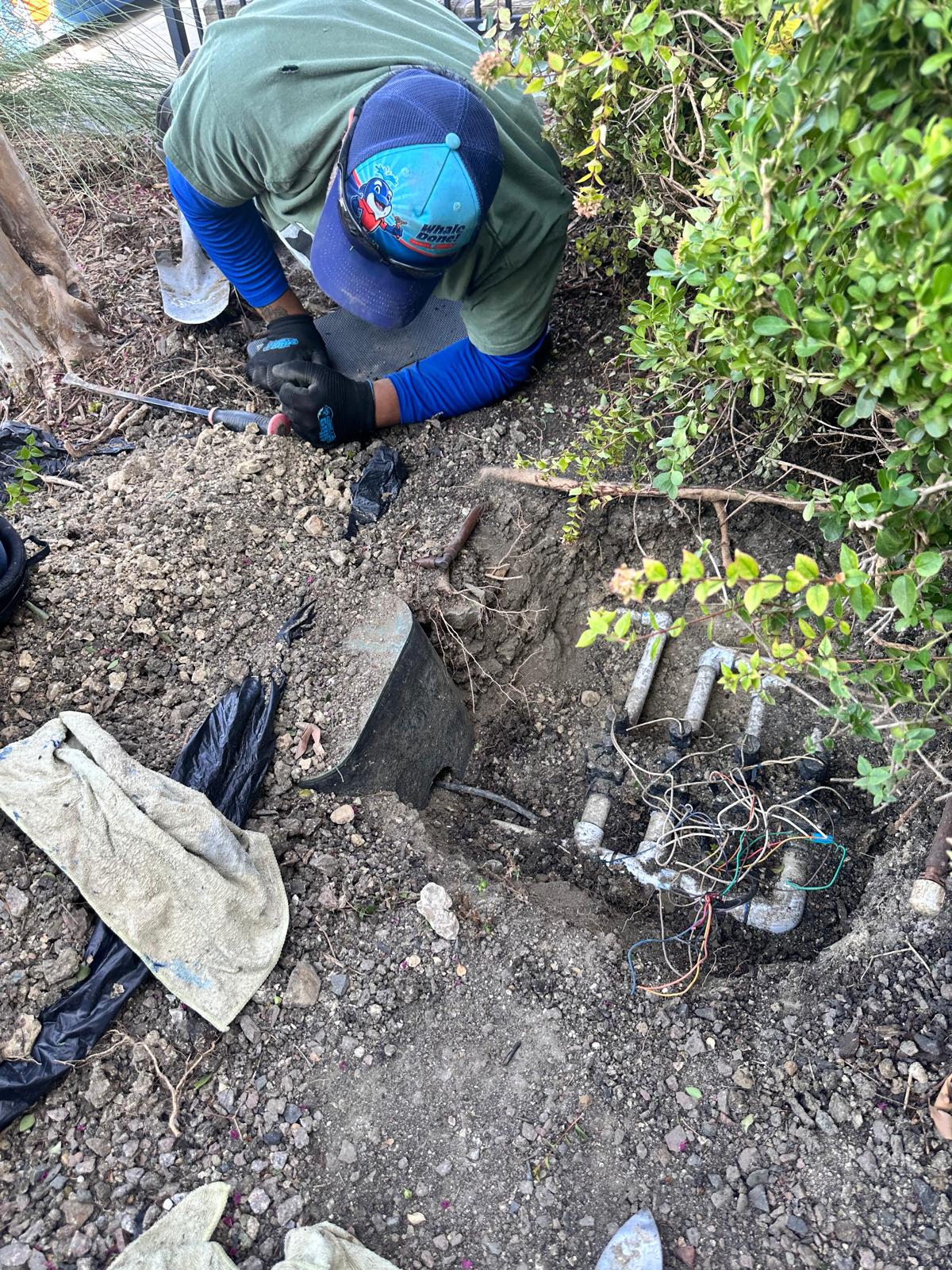
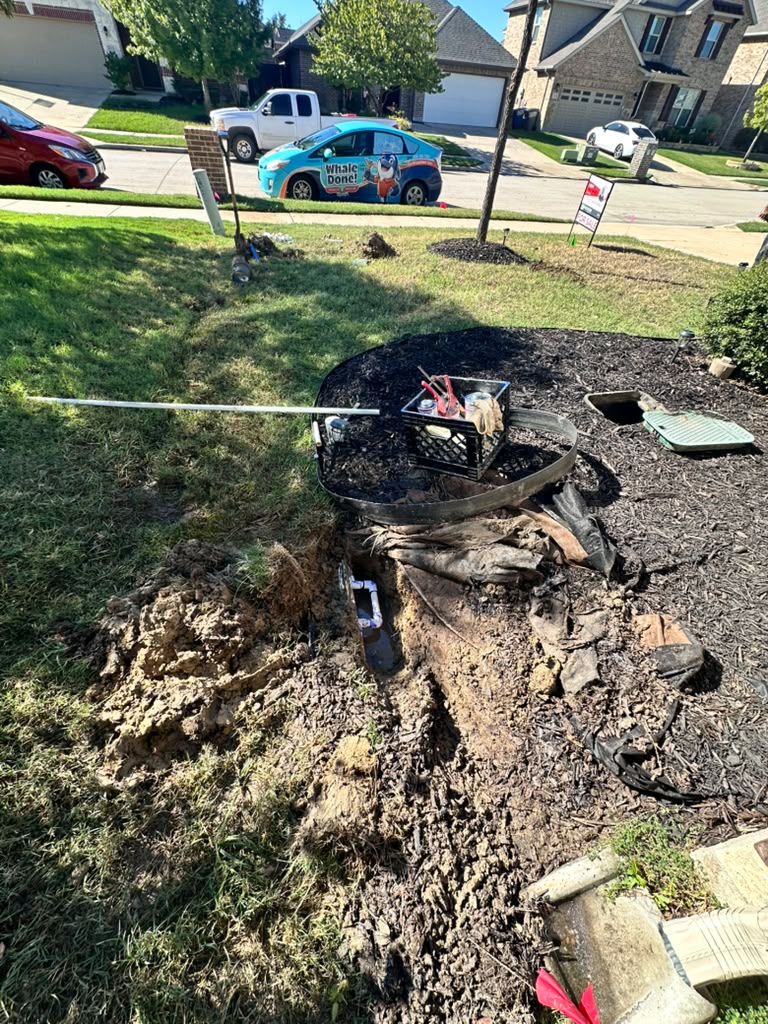
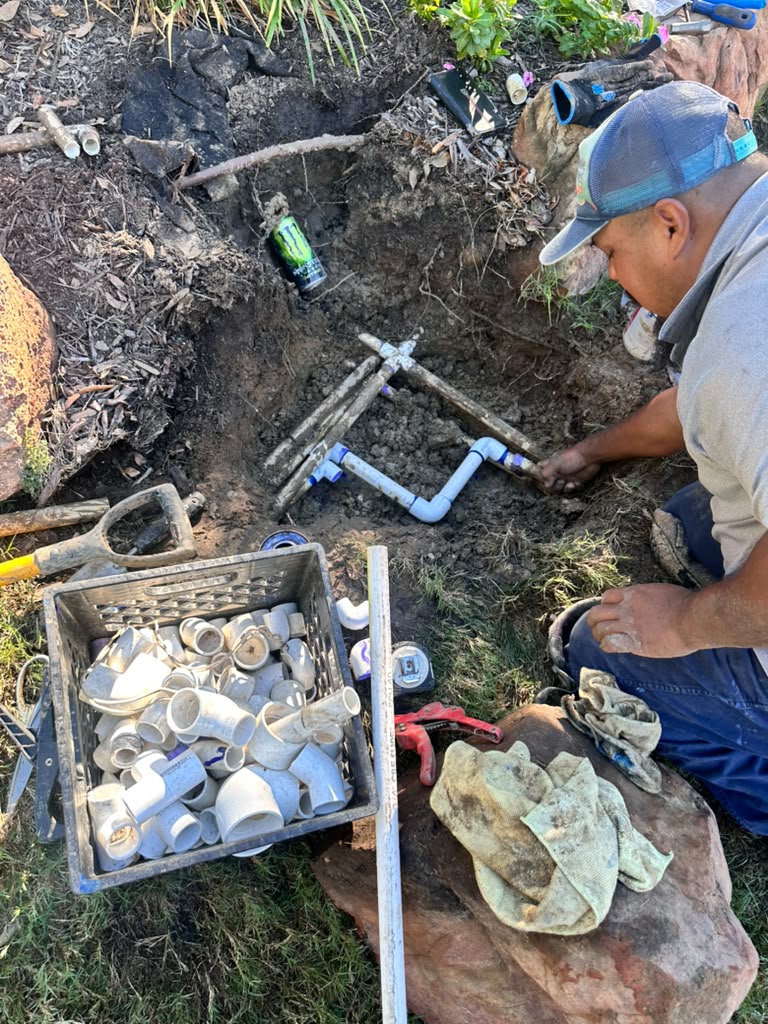
A drip irrigation system in Frisco TX usually leaves some plants dry because of a clogged emitter, a cut or disconnected line, or a pressure problem. Fall cleanup is a common trigger, since trimmers, shovels, and mulch work can nick or pull apart tubing. Soggy spots next to dry plants often point to a break in the line.
Diagnose the cause before replacing parts. A few simple checks, like flushing the lines and watching the system run, usually show where the water is going.
At a Glance
- Difficulty: Easy to moderate
- Estimated time: 30-60 minutes
- Tools needed: Flashlight, phone camera, replacement emitters or couplings (optional), a bucket
- Works for: Dry plants, soggy spots, weak or uneven dripping, and lines damaged by yard work
- May not solve: Low supply pressure, failed valves, or damaged buried main lines
Why Drip Systems Go Uneven
Drip irrigation delivers water slowly to each plant through small emitters. That slow flow is what makes it efficient, and it’s also what makes it easy to disrupt. Even a small clog or a tiny hole can change how much water each plant gets.
Most drip systems also run at much lower pressure than spray zones. They rely on a filter and a pressure regulator to protect the tubing and emitters. When either one clogs or fails, the whole zone can behave differently.
The result is usually a pattern. Some plants get plenty, some get little, and a few areas end up soggy.
Common Causes of Dry Plants
Here are the causes homeowners run into most often:
- Clogged emitters: Minerals and debris block the small openings.
- Dirty filter: A clogged filter reduces flow to the entire zone.
- Cut or nicked tubing: Trimmers, shovels, and rodents can damage lines.
- Disconnected fittings: Couplings can pull apart during cleanup or soil movement.
- Low or high pressure: Low pressure starves the ends of the line. High pressure can pop fittings.
- Wrong emitter size: Emitters that put out too little water for the plant.
- Shifted tubing: Emitters end up too far from the plant roots.
- Run time that is too short: The zone doesn’t run long enough to soak the root area.
Several of these can happen in one zone, so fixing one item may not solve everything.
How to Diagnose a Drip Irrigation System in Frisco TX
A few checks can narrow down the cause before you buy a single part. This takes about 45 minutes.
Step 1: Map the Problem
Walk the zone and note which plants are dry, which are fine, and where the soil is soggy. Take photos so you have something to compare later.
Step 2: Run the Zone and Watch
Turn on the zone and look at each emitter. Note any that don’t drip, drip weakly, or spray instead. Look for water pooling or hissing along the tubing.
Step 3: Check the Filter
Turn off the zone and locate the filter near the valve. Unscrew the cap and rinse out the screen. A dirty filter is one of the most common causes of weak flow.
Step 4: Flush the Lines
Open the end cap of each line and run the zone for a minute or two. This clears dirt and debris. Close the end caps when the water runs clear.
Step 5: Look for Cuts and Pulled Fittings
Follow the tubing by hand and look for nicks, kinks, and loose connections. Fall cleanup is a likely time for damage, especially near beds where mulch or plants were moved.
Step 6: Test Individual Emitters
If an emitter is still dry, remove it and run water through the tubing. If water flows freely, the emitter is likely clogged. If not, the line may be blocked or cut upstream.
Step 7: Check Pressure Parts
Look at the pressure regulator near the valve. If it’s cracked, leaking, or clogged, the zone may get too little or too much pressure. Replacing it is usually a simple repair.
Step 8: Retest and Note the Results
Run the zone again and compare with your first notes. If dry plants now get water, you found the cause. If not, move on to the related problems below.
Reading Dry and Soggy Patterns
The pattern of dry and wet areas can point to the cause. Use this as a rough guide.
Dry plants at the end of a line:
- Often low pressure, a clogged filter, or a leak upstream
One dry plant in a healthy row:
- Often a clogged emitter or a shifted emitter
Soggy spot next to dry plants:
- Often a cut line, pulled fitting, or a broken emitter
Whole zone weak:
- Often a dirty filter, a failed regulator, or a valve issue
Dry plants after fall cleanup:
- Often damaged tubing or fittings that were moved
This isn’t a diagnosis, but it helps you know where to look first.
Why Fall Cleanup Causes Problems
Fall cleanup moves a lot of soil, mulch, and plants. Drip tubing often sits just under the mulch, so it’s easy to hit by accident.
Common cleanup problems include:
- Tubing nicked by trimmers or edgers
- Fittings pulled loose when plants are removed
- Emitters stepped on or knocked out
- Lines moved away from roots
- Mulch piled on top of emitters
After cleanup, it’s worth running each drip zone and checking it. A quick look can catch a break before it wastes water all winter.
Diagnose Before You Replace Parts
It’s tempting to swap out emitters or tubing as soon as a plant looks dry. That can waste time and money if the real problem is a clogged filter or a cut upstream.
Work in this order:
- Start with the free fixes: Clean the filter and flush the lines.
- Check for physical damage: Look for cuts, kinks, and loose fittings.
- Test the emitters: Replace only the ones that fail.
- Check the pressure parts: Look at the regulator and filter.
- Review run times: Make sure the zone runs long enough for the plants.
If the problem remains, it may be time to have a licensed company take a look.
When Repairs Are Needed
Some problems are simple enough for most homeowners. Others are easier with experience.
Usually manageable at home:
- Cleaning the filter
- Flushing the lines
- Replacing a single emitter
- Reconnecting a pulled fitting
- Patching a small cut with a repair coupling
May need a licensed professional:
- Low pressure across the whole zone
- A valve that doesn’t open or close properly
- Soggy ground that doesn’t dry out
- Buried line breaks you can’t find
- Redesigning a zone with poor coverage
If you aren’t sure which category fits, start with the basics and see what changes.
How Unresolved Problems Are Recorded
Sometimes a repair has to wait. A part may be on order, or you may choose to wait until spring. Either way, write it down.
A useful note includes:
- What was found: A short description
- Where: Zone number and plant bed
- What was done: For example, the zone was shut off
- What is still open: The repair that hasn’t happened yet
- What to check next: The first test to run when you return to it
Many licensed companies list open items in their service notes. It’s reasonable to ask for those in writing.
Common Mistakes Homeowners Make
- Replacing emitters before checking the filter. A dirty filter can starve an entire zone.
- Adding run time to fix dry spots. This can drown plants near a leak while others stay dry.
- Burying emitters under mulch. Mulch can block flow and hide leaks.
- Digging without knowing where tubing runs. You can cut a line while planting.
- Mixing spray heads and drip on one zone. They need very different flow and pressure.
- Assuming dry plants always mean a system problem. Plant health, soil, and shade also matter. See our guide on sprinkler coverage problems.
North Texas Considerations
Local conditions affect how a drip system performs.
- Clay soil: Frisco’s clay absorbs water slowly, so water can pool near emitters while roots a few inches away stay dry.
- Foundation movement: Soil near the house shifts, which can pull fittings apart or move tubing.
- Heat: Summer heat dries beds quickly, so gaps in coverage show up fast.
- Wind: Wind can dry exposed tubing and mulch, hiding small leaks.
- Seasonal watering: Plants need less water in fall and winter, so problems may not show until spring.
- Freezes: Water left in drip lines and fittings can freeze and crack them during a hard freeze.
- Water restrictions: Check current watering rules with the City of Frisco and your water provider.
For plant and landscape watering guidance, Texas A&M AgriLife Extension is a helpful Texas-based resource. The EPA’s WaterSense outdoor resources also explain how efficient irrigation reduces waste.
Related Problems That Look Like Drip Issues
If the checks above don’t solve it, the cause could be:
- Low water pressure: Weak flow across the zone may point to a pressure problem. See our guide on low sprinkler water pressure.
- Valve problems: A valve that doesn’t open fully can starve the zone. Learn more about sprinkler valve repair.
- Underground leaks: A buried break can cause dry plants and soggy ground. Read about sprinkler leak detection.
- Controller settings: Short run times or wrong start times can affect underwater plants.
- Plant or soil issues: Root problems, disease, and compacted soil can look like dry plants.
Frequently Asked Questions
Why are some plants dry while others on the same drip line are fine?
The most common causes are a clogged emitter, an emitter that has shifted away from the roots, or a leak or clog upstream. Run the zone and watch each emitter to see which ones aren’t dripping.
Why is there a soggy spot next to a dry plant?
A soggy spot often means water is escaping from a cut line, pulled fitting, or broken emitter. The water never reaches the plants farther down the line. Look for damage near the wet area.
How do I know if an emitter is clogged?
Run the zone and watch it. A clogged emitter drips weakly or not at all. Remove it, run water through the tubing, and if water flows freely, the emitter is likely the problem.
How often should I clean the filter on a drip system?
Checking it at least twice a year, in spring and fall, is a good habit. Check it again if you notice weak flow or after any work that could stir up dirt in the lines.
Can fall cleanup damage a drip irrigation system?
Yes. Trimmers, shovels, and moving plants can nick tubing or pull fittings loose. Run each zone after cleanup to check for leaks and dry spots.
Conclusion
A drip irrigation system in Frisco TX usually dries out plants because of a clog, a cut line, or a pressure problem, not a failed part. Check the filter, flush the lines, and look for cuts from fall cleanup before replacing anything. Note which plants stay dry or soggy. If the pattern doesn’t improve, a licensed sprinkler company can test pressure and trace the line. Our goal is to help you find the cause first, then decide what repair makes sense.