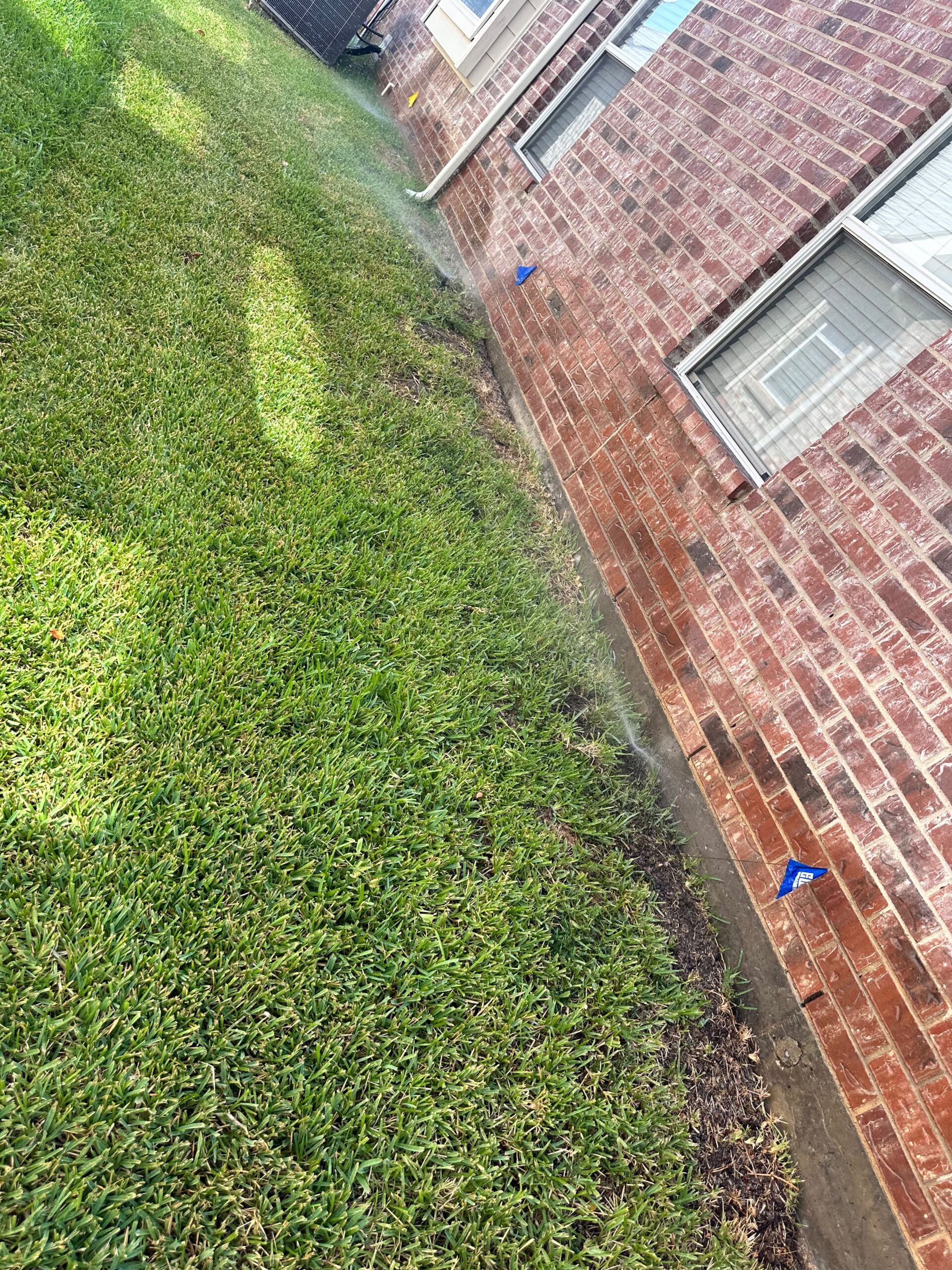
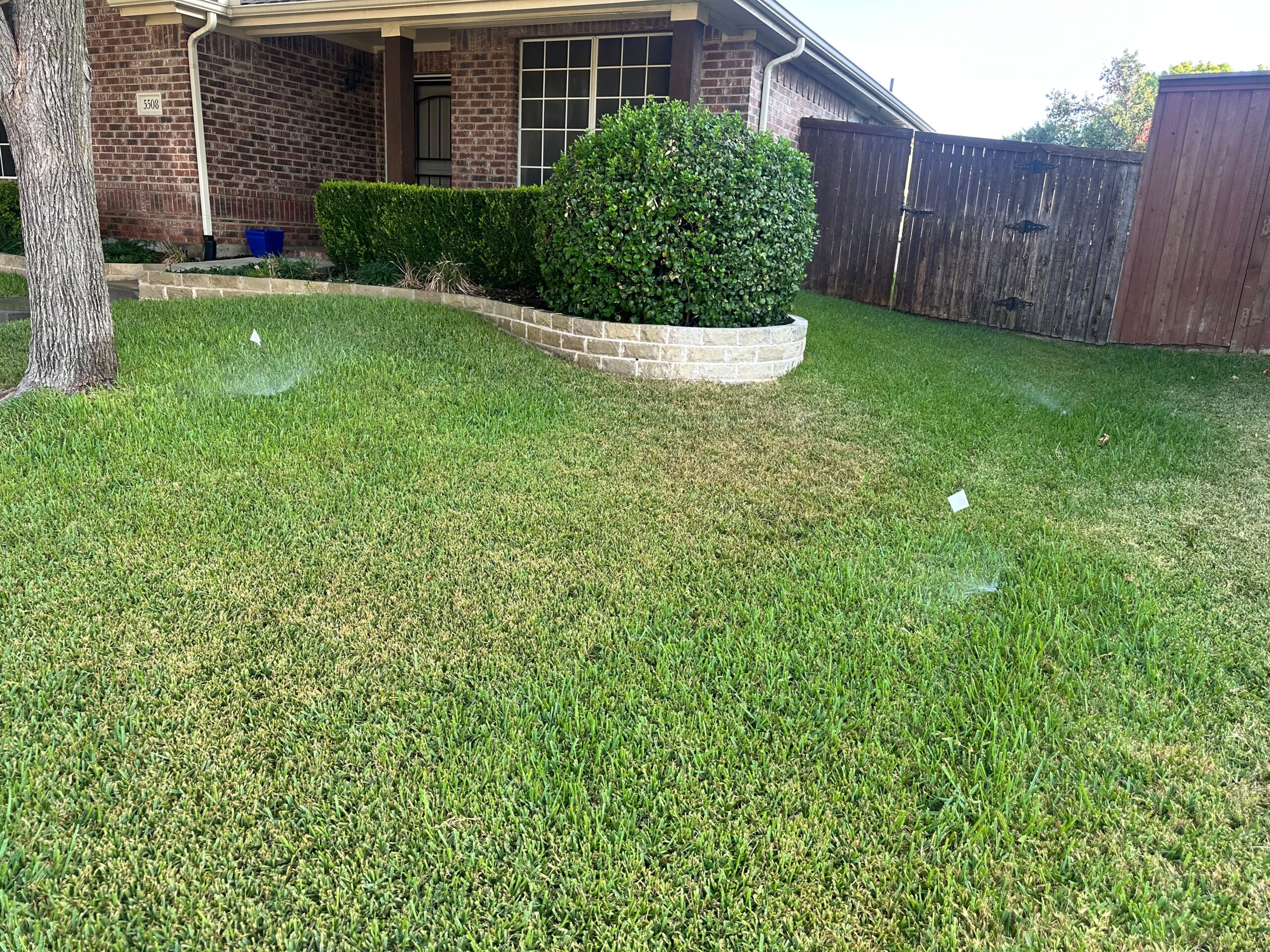
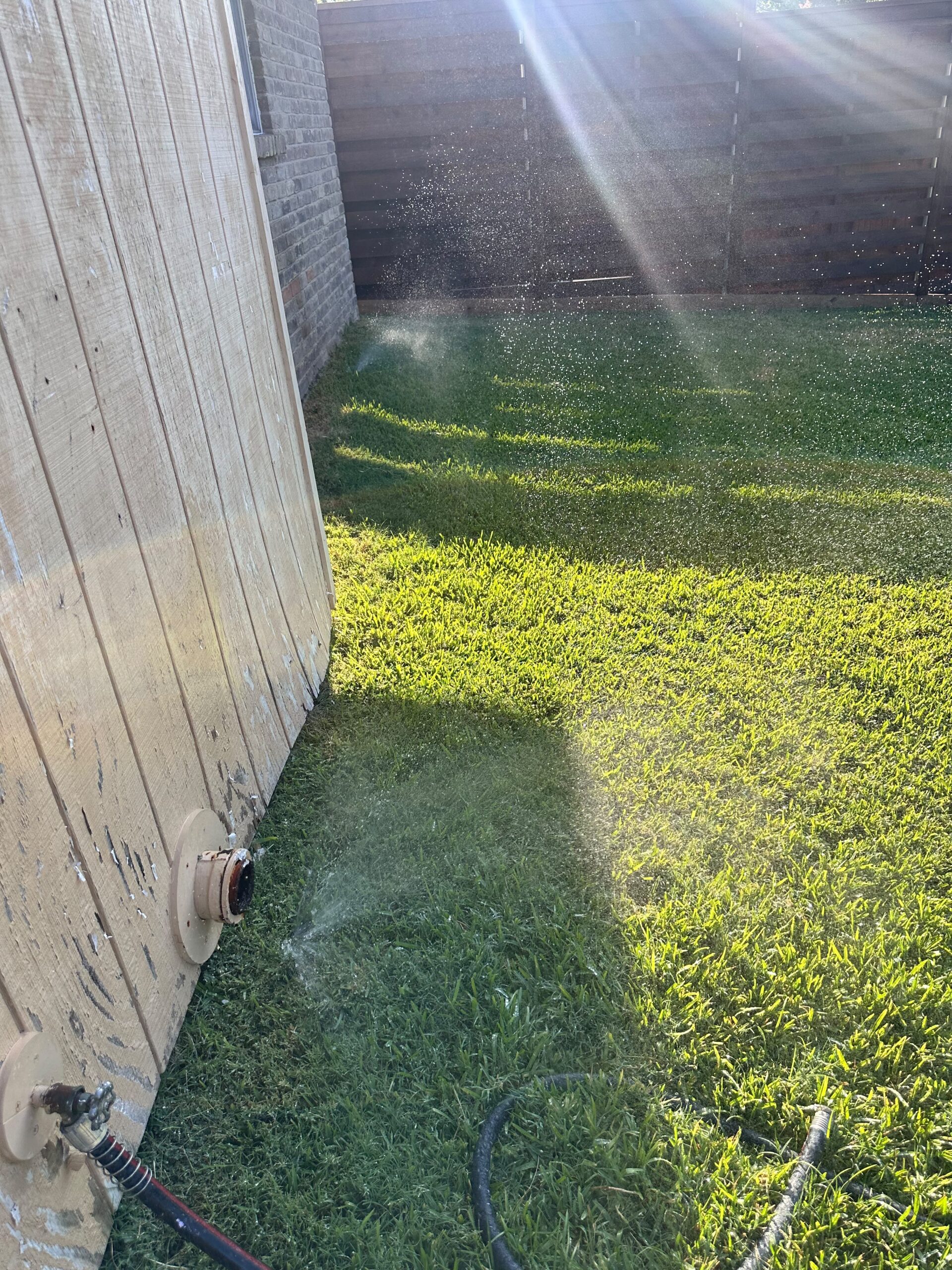
If you’re checking your sprinkler system in Melissa TX for leaks, start by watching your water meter, walking your yard for soggy or unusually green patches, and running each zone manually to look for pooling water, low pressure, or spraying from unexpected places. Most leaks show up as either a spike in your water bill, wet spots between watering cycles, or valves that won’t fully shut off. If you find one of these signs, the issue is usually a broken pipe, a cracked fitting, or a valve that isn’t seating properly — all of which a licensed irrigation technician can diagnose quickly.
At a Glance
- Difficulty: Easy to moderate (depending on where the leak is)
- Estimated Time: 20–40 minutes for a full system check
- Tools Needed: Water meter access, notepad or phone, flashlight (optional)
- Works For: Identifying that a leak exists and roughly where it is
- May Not Solve: Pinpointing underground leaks or repairing valve and pipe damage
Why Sprinkler System in Melissa TX Develop Leaks
Irrigation systems are made up of dozens of connections — pipes, fittings, valves, and sprinkler heads — buried underground or exposed to the elements. Over time, any one of these connections can fail.
In Melissa and the surrounding North Texas area, a few local factors make leaks more common:
- Clay soil shifts with moisture changes, putting pressure on buried PVC pipe
- Freeze-thaw cycles in winter can crack pipes and fittings
- Root intrusion from trees and shrubs can crush or separate pipe joints
- Age and UV exposure weaken above-ground components like backflow preventers
- Accidental damage from lawn equipment, aerating, or landscaping work
None of these causes are unusual. They’re simply part of owning an irrigation system, which is why periodic leak checks are worth doing a few times a year.
It’s also worth understanding that not all leaks behave the same way. A cracked sprinkler head near the surface will usually show itself quickly, with water pooling or spraying visibly during a run cycle. A break in a main line buried several feet underground can take much longer to notice, since the water may simply seep into the surrounding soil before it ever reaches the surface. That’s part of why checking your water meter is often more reliable than a visual inspection alone — it catches leaks your eyes might miss.
Step-by-Step: How to Check Your Sprinkler System For Leaks
Step 1: Check Your Water Meter
Turn off all water use inside and outside your home, including your irrigation system. Locate your water meter and note the reading. Wait 15–20 minutes without using any water, then check it again. If the number has moved, water is flowing somewhere it shouldn’t be.
Step 2: Walk the Yard for Visual Clues
Look for patches of grass that are greener, spongier, or wetter than the rest of your lawn — especially near sprinkler heads, valve boxes, or along pipe runs. Standing water, mushy soil, or sunken areas are strong indicators of an underground leak.
Step 3: Run Each Zone Manually
Using your controller, run each irrigation zone one at a time for a few minutes. Watch for:
- Water bubbling up from the ground away from a sprinkler head
- Heads that spray weakly or not at all while neighboring heads seem fine
- Water pooling at a valve box
- A hissing sound coming from underground
Step 4: Inspect the Backflow Preventer and Valve Box
Check the backflow preventer (usually a set of exposed pipes near the water source) for dripping or spraying water. Open valve box lids and look for standing water, cracked valves, or corrosion — signs that a valve isn’t sealing correctly.
Step 5: Check Water Pressure
If one zone has noticeably weaker pressure than the others, that can point to a leak between the valve and the sprinkler heads on that line. Sudden pressure drops across the whole system can also indicate a main line break.
Step 6: Note the Time and Location of Any Findings
Write down which zone, which area of the yard, and roughly what you observed. This information helps a technician diagnose the problem faster if you decide to call for a professional evaluation.
Taking a few photos on your phone at the time you notice the issue can also be useful, especially if the wet area dries out or changes appearance before a technician arrives.
Common Mistakes Homeowners Make
- Assuming a wet spot is just overwatering. Persistent wet areas, even on days the system didn’t run, usually mean a leak.
- Only checking the system while it’s running. Some leaks only show up under full water pressure, so a quick glance isn’t always enough.
- Ignoring a rising water bill. A sudden increase without a change in habits is one of the most reliable leak indicators.
- Digging before locating the leak precisely. Guessing where to dig can cause more damage to healthy pipes.
- Forgetting to check the controller settings. Sometimes what looks like a leak is actually a zone that’s scheduled to run more often than intended.
- Waiting too long to investigate a suspicious patch of grass. A small leak often gets worse over time, turning a simple fitting repair into a larger excavation project.
- Overlooking the connection between leaks and pressure changes. Homeowners sometimes chalk up weak spray at one or two heads to a clogged nozzle, when the real cause is water escaping upstream of those heads.
Local Considerations for Melissa, TX
Melissa’s clay-heavy soil and seasonal temperature swings make irrigation systems more prone to shifting and cracking than in areas with sandier soil. During Texas summers, high heat and drought stress can also mask leaks, since homeowners may not notice a soggy patch that dries out quickly in 100-degree heat.
Local water providers may also enforce seasonal watering restrictions, so a leak that goes unaddressed can waste water your system wasn’t scheduled to use in the first place. The EPA’s WaterSense program estimates that a single leaking irrigation system can waste thousands of gallons of water per year if left unrepaired, which matters both for your water bill and for regional conservation efforts during dry North Texas summers.
Wind is another factor worth mentioning. Strong spring winds common to the Melissa area can push spray patterns sideways, which sometimes gets mistaken for a leaking head when the head itself is functioning normally. Before assuming a leak, it helps to check on a calmer day or observe the same head during a couple of different cycles. Foundation movement is another consideration specific to clay-soil regions — as soil expands and contracts, pipe runs closest to the foundation can experience more stress than lines running through open yard space, making that area worth a closer look during your walkthrough.
Related Problems That Can Look Like a Leak
If you’ve checked for leaks and aren’t finding an obvious source, the issue could be something else entirely:
- Low municipal water pressure, which can mimic the symptoms of a leak
- A malfunctioning controller running zones longer or more often than programmed
- Valve problems, where a valve doesn’t fully close and allows water to seep out
- Sprinkler head damage, such as a cracked head spraying at ground level instead of in its intended pattern
If you’re unsure which of these applies, a licensed sprinkler company can walk the property and test the system zone by zone. Research from Texas A&M AgriLife Extension on irrigation efficiency notes that regular system checks are one of the most effective ways homeowners can reduce outdoor water waste.
Frequently Asked Questions
- How do I know if my sprinkler system has a leak underground?
The most common signs are a water meter that keeps moving when everything is off, wet or spongy areas of the lawn that don’t dry out, and a water bill that’s higher than usual without a clear reason.
- Can a small leak really increase my water bill that much?
Yes. Even a small, steady leak can run continuously for weeks, adding up to a noticeable increase over a billing cycle.
- Is it normal for water to pool around a valve box?
No. Some moisture from condensation is normal, but standing water in a valve box usually means a valve or fitting isn’t sealing properly.
- Can I fix the sprinkler leak myself?
Some homeowners repair small above-ground breaks with basic tools, but underground leaks, valve issues, and backflow preventer problems typically require locating equipment and irrigation experience to repair correctly.
- How often should I check my sprinkler system for leaks?
A quick check two to three times a year — especially at the start and end of the watering season — is a reasonable habit for most Melissa homeowners.
Bottom Line
Checking your sprinkler system in Melissa TX for leaks doesn’t require special equipment — just a water meter, a walk around your yard, and a few minutes running each zone. Most leaks announce themselves through wet patches, pressure changes, or a climbing water bill. If your check turns up something unclear or hard to reach, that’s a reasonable point to bring in a professional rather than guess.
Next Step
If you’ve gone through these steps and still aren’t sure whether — or where — you have a leak, a licensed irrigation technician can pressure-test the system and pinpoint the source without unnecessary digging. This is especially useful for underground leaks or valve issues that aren’t visible from the surface.
Related Resources
- How to Adjust Sprinkler Heads in Melissa, TX
- Why Is One Zone of My Sprinkler System Not Working?
- Seasonal Sprinkler Maintenance Checklist for North Texas
Conclusion & Call to Action
A leaking sprinkler system in Melissa TX wastes water and money the longer it goes unnoticed, but most leaks give clear warning signs once you know what to look for. Walk your yard, watch your meter, and run each zone. If something still doesn’t add up, Whale Done offers professional leak evaluations to pinpoint the problem accurately — no guesswork, no unnecessary digging, just an honest assessment of what your system needs.