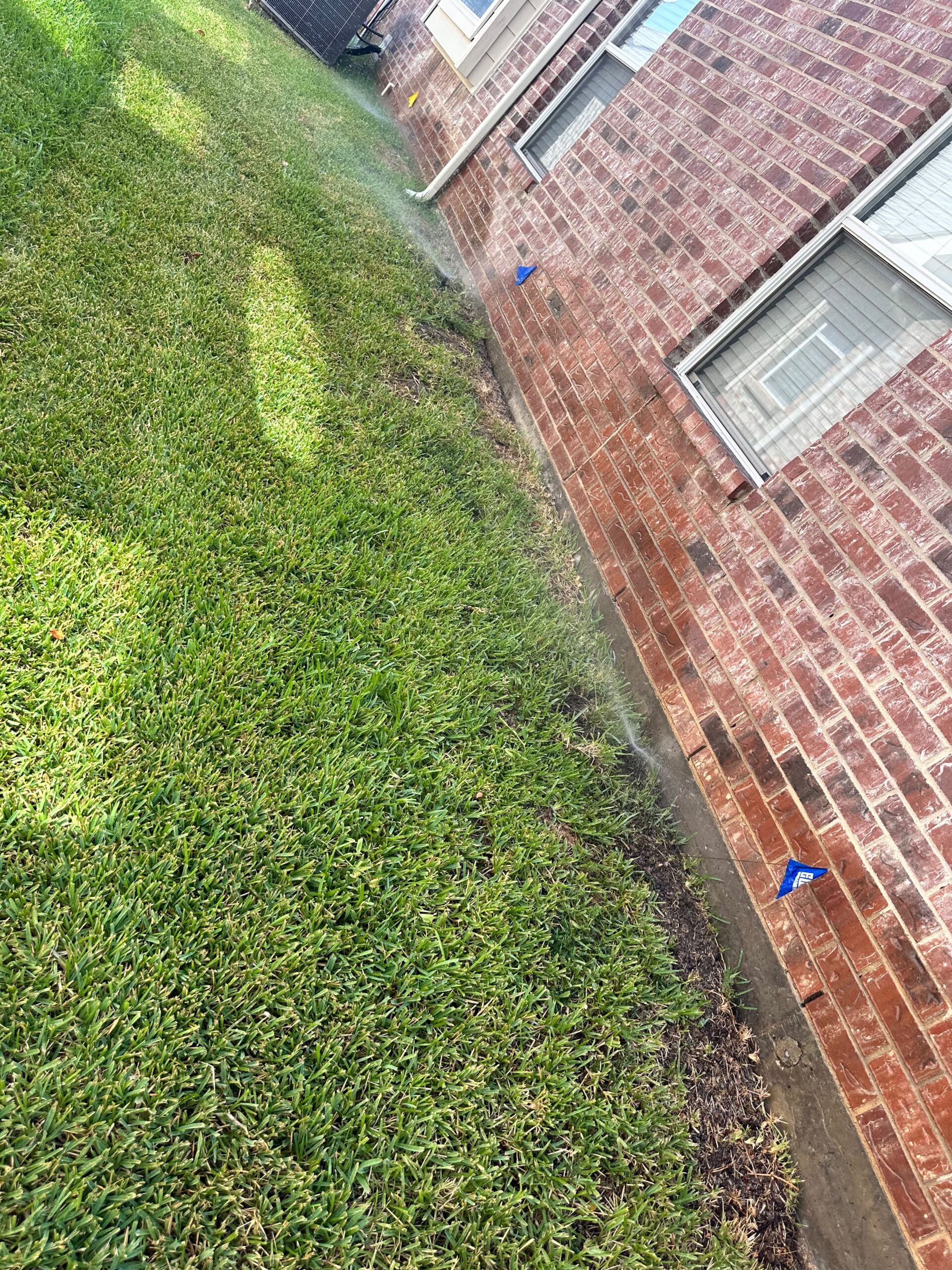
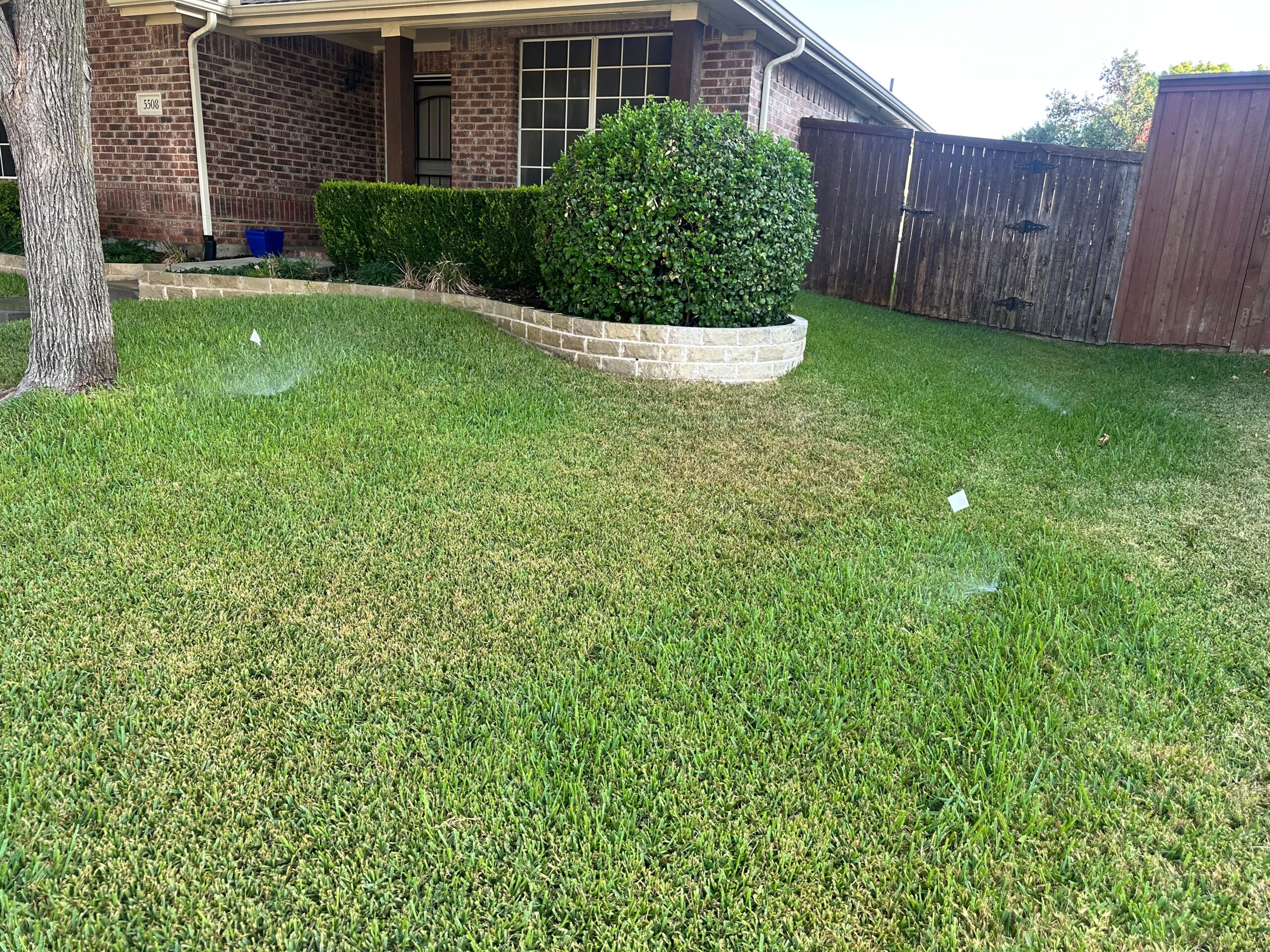
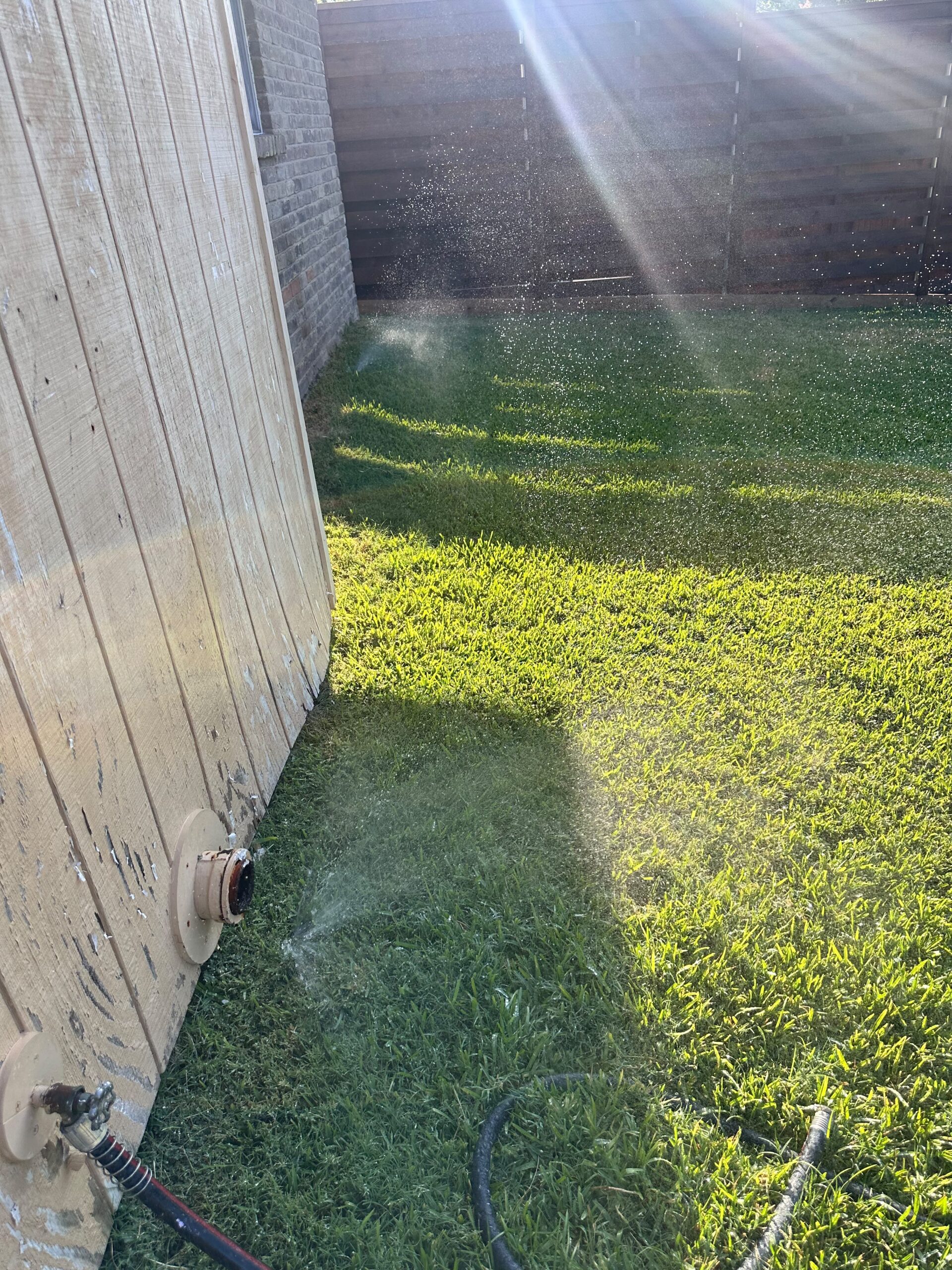
If you’re seeing sprinkler water in Celina TX flowing off your lawn and into the street, the most common causes are overspray from misaligned heads, a zone running longer than the soil can absorb, uneven terrain pushing water downhill, or a broken or clogged head that’s no longer distributing water correctly. In many cases, this is a quick fix — adjusting a head’s direction, arc, or run time. In other cases, it points to a pressure problem, a valve that won’t fully close, or a leak somewhere in the line. Watching when and where the runoff happens is the fastest way to narrow down the cause.
At a Glance
- Difficulty: Easy to moderate
- Estimated Time: 15–30 minutes to observe and diagnose
- Tools Needed: None required; a notepad or phone to record observations
- Works For: Identifying overspray, runoff, and misaligned heads
- May Not Solve: Underground leaks, valve failures, or pressure issues from the water main
Why Sprinkler Water in Celina TX Ends Up in the Street
Runoff happens when water is applied faster than the soil can absorb it, or when a head is aimed somewhere it shouldn’t be. In Celina, a few local conditions make this more common than in other parts of the country.
- Clay soil absorbs water slowly, so longer watering cycles can cause runoff before the ground has a chance to soak it in
- Sloped yards, common in newer Celina neighborhoods, let water travel downhill toward driveways and curbs
- Heads aimed too close to the property line can spray directly onto sidewalks or streets
- Broken or sunken heads sometimes spray at ground level instead of in their intended pattern
- Overlapping zones or long run times apply more water than a section of lawn actually needs
None of these are unusual, and most homeowners can identify the cause with a short walk around the yard during a watering cycle.
It also helps to understand that runoff isn’t always a sign of a malfunction. Sometimes it simply means the system was designed or programmed for a different soil condition than what’s actually present in that section of yard. A zone that works fine on flat, sandy soil can send water straight downhill and into the street when the same run time is applied to a sloped, clay-heavy section a few feet away.
Step-by-Step: How to Diagnose Water Running Into the Street
Step 1: Watch a Full Cycle From Start to Finish
Run the affected zone and watch it from beginning to end. Note exactly when runoff starts — right away, or only after several minutes.
Step 2: Check Head Direction and Arc
Look at each head near the street-facing side of the yard. If a head is spraying directly onto the sidewalk, driveway, or street, its direction or arc likely needs adjusting.
Step 3: Look for Pooling Before Runoff Begins
If water starts pooling in the yard before it reaches the street, the issue is likely the soil’s absorption rate combined with a run time that’s too long for that zone.
Step 4: Check for Uneven or Sloped Areas
Walk the zone and note any slope toward the street. Sloped areas often need shorter, more frequent watering cycles instead of one long cycle, since shorter bursts give the soil time to absorb water between applications.
Step 5: Inspect for Damaged or Sunken Heads
Look closely at each head for cracks, tilting, or heads sitting lower than the surrounding grass. A damaged head can spray water in the wrong direction or fail to build proper pressure, sending water sideways instead of in its intended pattern.
Step 6: Note the Time, Zone, and Location
Record which zone is causing the runoff and roughly how long into the cycle it begins. This information makes it much easier for a technician to pinpoint the issue if you decide to bring one in.
If possible, take a short video of the runoff on your phone. Seeing exactly where the water exits the yard and how it travels toward the street can help a technician identify the cause before they even arrive.
Common Mistakes Homeowners Make
- Assuming all runoff means a broken system. Often it’s simply a head that needs redirecting or a run time that needs shortening.
- Shortening the total watering time instead of splitting it into cycles. This can leave grass underwatered while runoff continues on sloped sections.
- Not checking heads near the curb specifically. These heads are the most likely to be misaligned since they’re closest to hard surfaces.
- Ignoring runoff because it seems minor. Consistent runoff, even if it looks small, wastes water and can contribute to erosion along the curb over time.
- Adjusting the whole system instead of the specific zone. Runoff is often isolated to one or two zones, not the entire system.
- Assuming the driveway or street edge is a fixed boundary. As grass and landscaping settle over time, the actual low point where water collects can shift, meaning a head that was properly aimed at installation may need readjusting years later.
Local Considerations for Celina, TX
Celina’s rapid growth means many yards have recently graded soil that hasn’t fully settled, which can create slopes and low points that didn’t exist when the irrigation system was first installed. Combined with Celina’s dense clay soil, this makes runoff a fairly common issue in newer developments across town.
During hot North Texas summers, some Celina residents also face seasonal watering restrictions tied to specific days and times. Running a zone for too long during a single allowed watering window increases the likelihood of runoff, since all the week’s water is being applied at once rather than spread across multiple shorter cycles. The EPA’s WaterSense program recommends cycle-and-soak watering — running a zone for a shorter period, allowing time for the water to absorb, then repeating — as an effective way to reduce runoff on clay soils and slopes.
Wind is another factor worth considering. On breezy days, spray patterns can drift further than intended, pushing water toward the street even from heads that are properly aimed on calmer days. Checking a zone on both a calm day and a windier day can help you tell the difference between a true alignment issue and one that only shows up under certain conditions.
Foundation and driveway grading are also worth a mention. In some Celina neighborhoods, driveways and foundations are graded slightly higher than the surrounding lawn to direct water away from the home, which can unintentionally funnel sprinkler runoff toward the street rather than letting it soak into the yard.
Related Problems That Can Look Similar
If adjusting head direction and run times doesn’t stop the runoff, the cause might be something else:
- High water pressure, which can cause misting and overspray beyond a head’s intended range
- A stuck or partially open valve, allowing water to flow even when the zone isn’t actively running
- An underground leak upstream of the affected zone, adding extra volume to that section of pipe
- A controller programming issue, where a zone is set to run longer or more frequently than intended
If you’ve ruled out head alignment and run time as the cause, a licensed sprinkler company can pressure-test the system and check valves for proper operation. Research from Texas A&M AgriLife Extension notes that a properly adjusted irrigation system, matched to soil type and slope, is one of the most effective ways to reduce outdoor water waste and runoff.
Frequently Asked Questions
- Is it normal for a little water to reach the street during watering?
A small amount of overspray near the edge of a zone can happen occasionally, but water flowing steadily into the street or forming a stream along the curb usually means an adjustment is needed.
- Will shortening my watering time fix the runoff?
Sometimes, but shortening the total time without splitting it into multiple shorter cycles can leave the lawn underwatered while runoff continues on sloped areas.
- Could high water pressure be causing this?
Yes. Pressure that’s too high for the sprinkler heads installed can cause misting and overspray that travels further than intended, including onto driveways and streets.
- How do I know if it’s a valve problem instead of a head problem?
If water continues flowing into the street even when the zone isn’t actively running, that points to a valve not closing fully rather than a head alignment issue.
- Can runoff waste a noticeable amount of water?
Yes. Water running down a driveway or into the street isn’t reaching your lawn’s root zone, which means that portion of every watering cycle is essentially wasted.
Bottom Line
Sprinkler water in Celina TX running into the street is usually caused by overspray, long run times on clay soil, or heads aimed too close to hard surfaces. Watching a full watering cycle and checking heads near the curb will identify the cause in most cases. If the runoff continues after adjustments, the issue may involve pressure, valves, or an underground leak that’s harder to diagnose without professional equipment.
Next Step
If you’ve checked head alignment, run times, and slope but the runoff continues, a licensed irrigation technician can test water pressure and valve function to find the underlying cause. This is especially useful when runoff happens even with heads that appear properly adjusted.
Related Resources
- How to Adjust Sprinkler Heads in Melissa, TX
- How Can I Check My Sprinkler System For Leaks In Melissa TX?
- Why Is One Zone of My Sprinkler System Not Working?
- Seasonal Sprinkler Maintenance Checklist for North Texas
Conclusion & Call to Action
Most cases of sprinkler water in Celina TX running into the street come down to head alignment, run times, or slope — all things a homeowner can check in one watering cycle. If adjustments don’t stop the runoff, it may point to a pressure or valve issue worth a closer look. Whale Done offers professional system evaluations to pinpoint the cause accurately, with no guesswork and no pressure to fix more than necessary.