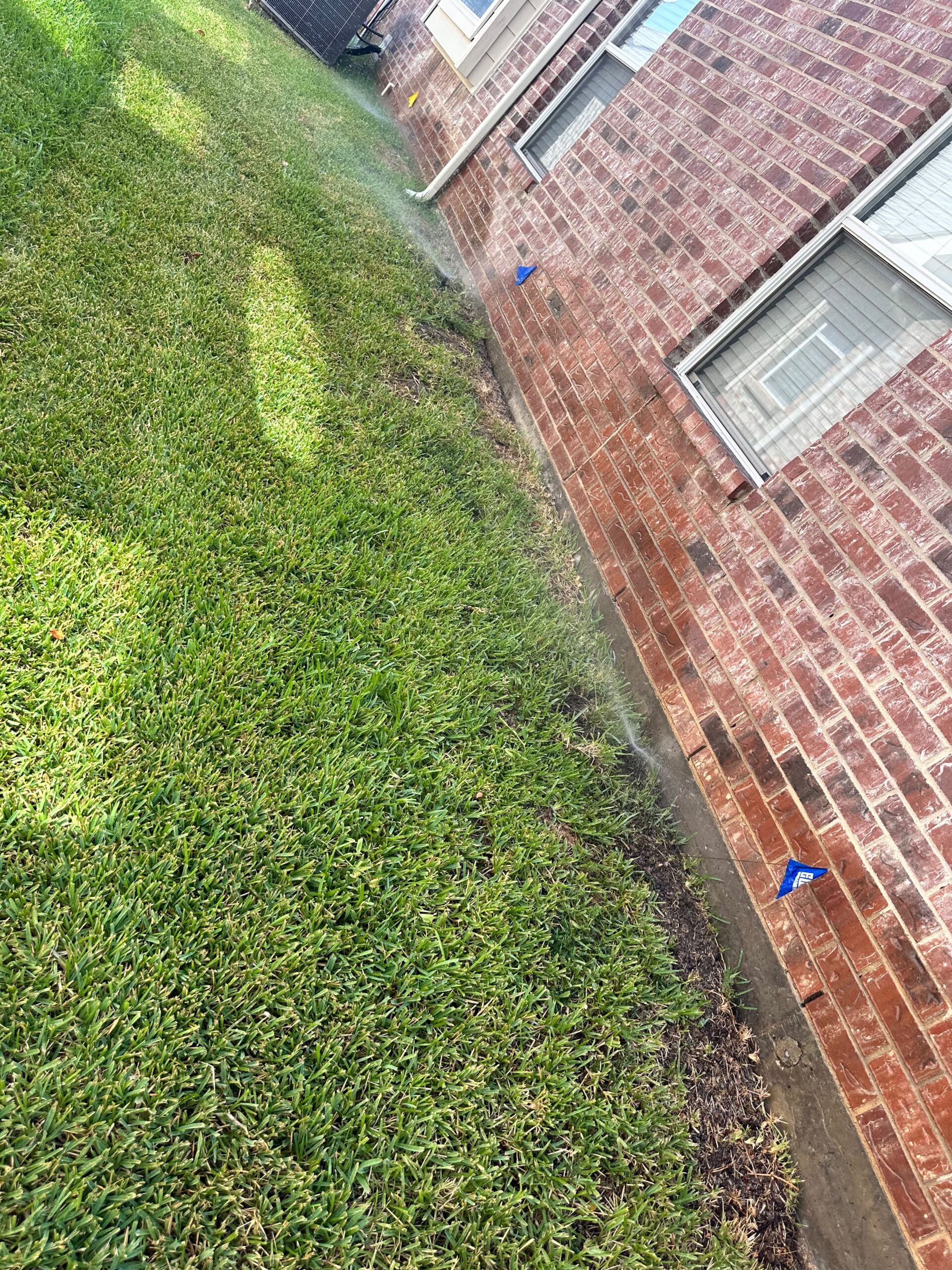
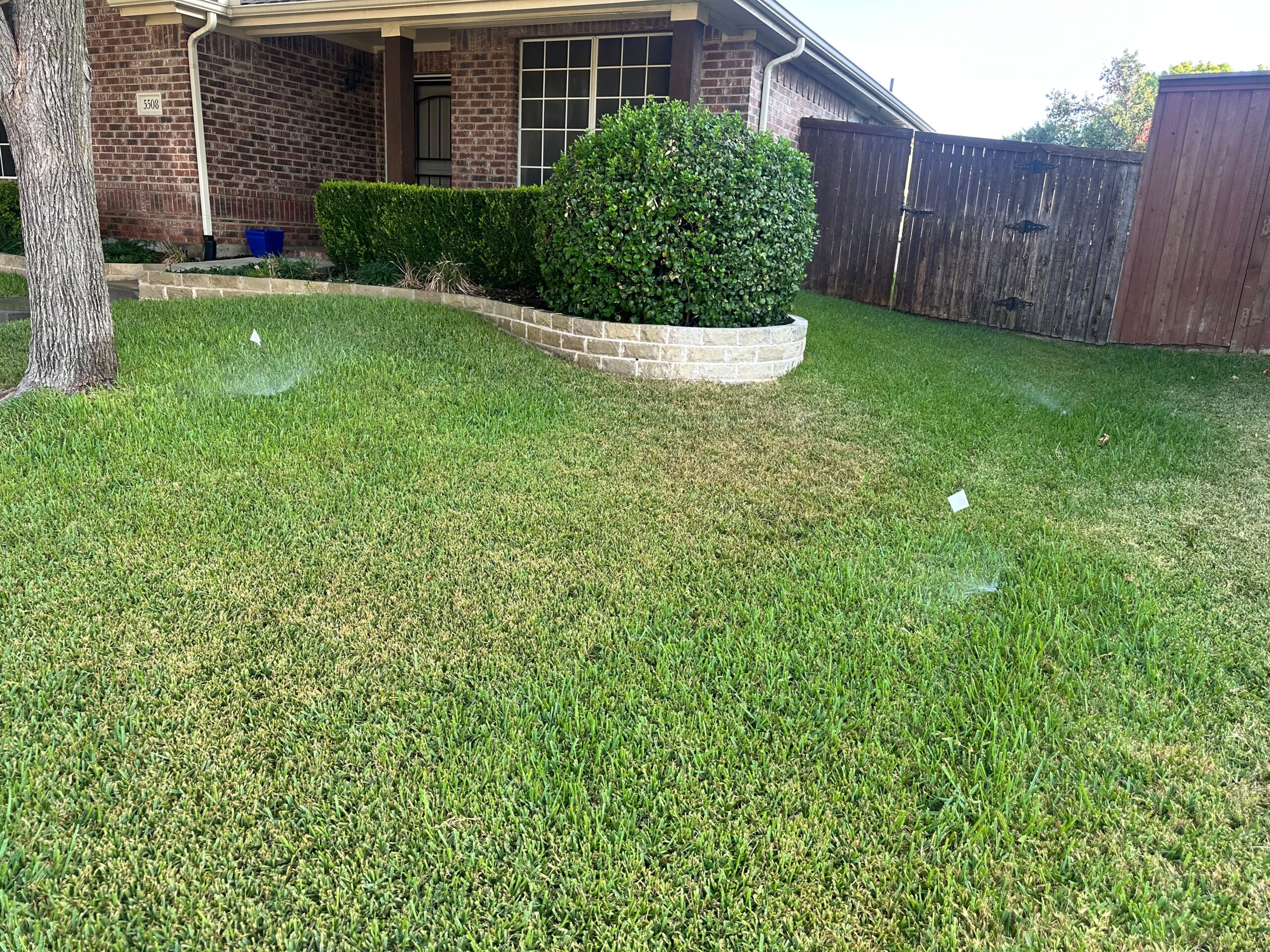
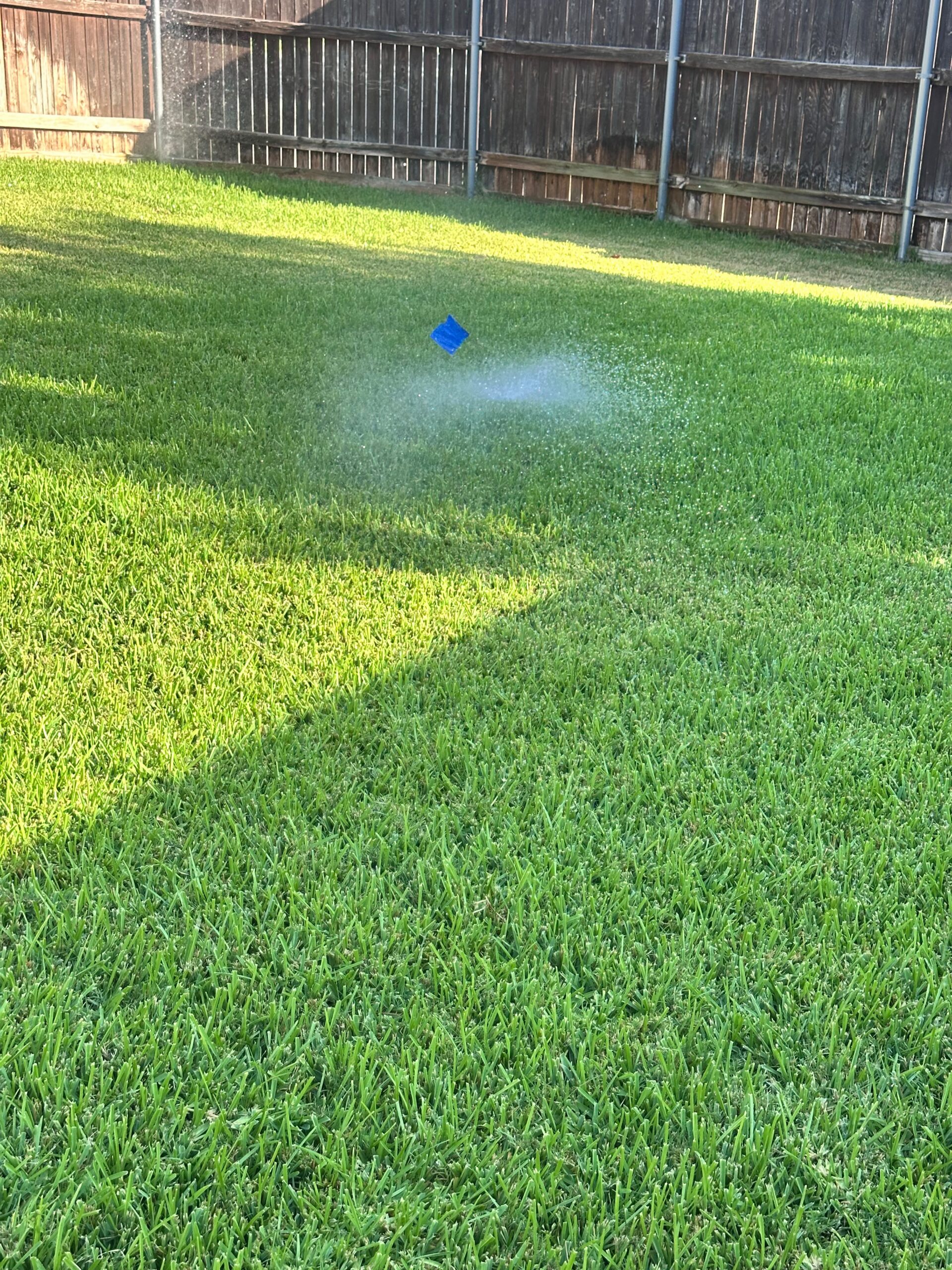
Most cases of sprinkler overspray in Frisco TX can be stopped by adjusting the spray arc, spray distance, or nozzle type on the head that’s misaimed. Overspray usually happens when a head is aimed too wide, set to throw farther than the lawn actually needs, or was never adjusted after nearby landscaping, hardscape, or fencing was installed. If adjusting the head doesn’t solve it, the nozzle itself may need to be replaced, or water pressure may be pushing the spray farther than intended.
At a Glance
- Difficulty: Easy for adjustments, moderate for nozzle replacement
- Estimated Time: 5–15 minutes per head
- Tools Needed: Small flathead screwdriver, adjustment tool (often built into the nozzle cap)
- Works For: Misaimed heads, wrong arc setting, wrong nozzle for the space
- May Not Solve: High water pressure, tilted heads, or heads placed too close to hard surfaces
Why Sprinkler Overspray in Frisco TX Happens
Sprinkler heads are set during installation to match the yard at that time. As landscaping matures, driveways get resurfaced, or fences go up, the original settings can stop matching the space. A head that once covered an open lawn may now be spraying directly onto a driveway, sidewalk, or neighbor’s fence.
Overspray also happens when the wrong nozzle is used for a narrow or oddly shaped area. A standard nozzle designed for open lawn will throw water much farther than a strip nozzle made for narrow beds along a walkway or driveway. Using the correct nozzle type for the shape of the space is one of the most common fixes a licensed sprinkler company makes on service calls.
Water pressure plays a role too. If pressure is higher than the nozzle is rated for, water can mist and drift beyond the intended pattern, even when the arc and distance are set correctly.
There’s also a simpler explanation that’s easy to overlook: sprinkler zones are designed around the assumption that heads are spaced correctly for full coverage without overlap onto hard surfaces. If a zone was originally designed for a smaller lawn, or if a section of grass was later replaced with pavers, mulch beds, or an extended patio, the spacing no longer matches reality. The heads haven’t changed, but the yard around them has.
Signs You’re Dealing with Overspray
Overspray isn’t always obvious at a glance, especially if it only happens on part of a spray cycle. A few signs to watch for:
- Wet spots on a driveway, sidewalk, or patio shortly after watering
- Mineral or white residue building up on concrete near a sprinkler zone
- Water marks or discoloration on fence boards or siding
- Grass that stays unusually dry near a head while the surrounding hardscape stays wet
- Puddles forming in the same spot on hard surfaces after every cycle
If you notice more than one of these near the same zone, it’s a good sign that a specific head, not the whole system, needs attention.
How to Fix Sprinkler Overspray
1. Identify Which Heads Are Overspraying
Run each zone and watch closely. Note which heads are spraying onto the landscape, structures, or areas outside the lawn.
2. Adjust the Spray Arc
Most heads have a small screw or dial on top. Turning it clockwise typically narrows the arc; counterclockwise widens it. Adjust until the spray pattern stays within the lawn.
3. Adjust the Spray Distance
A separate adjustment, often the same screw turned differently or a second screw, controls how far the water throws. Reduce the distance until it stops reaching the driveway, sidewalk, or fence line.
4. Check the Nozzle Type
If the head is aimed correctly but still overspraying, the nozzle itself may be too large for the space. Narrow strips along driveways and walkways typically need strip or side-strip nozzles instead of standard rotary or spray nozzles.
5. Confirm the Head Is Standing Straight
A head that leans, even slightly, throws water in the wrong direction regardless of how well the arc is adjusted. Straighten the head and repack soil around the base if it’s loose.
6. Test the Fix Across a Full Cycle
After making adjustments, run the zone through a complete cycle rather than just a quick spot check. Some rotor heads take a full rotation to reveal whether the arc is still slightly off at one edge.
Common Mistakes Homeowners Make
- Adjusting arc but not distance. Both settings usually need attention; fixing only one often leaves partial overspray.
- Using the wrong nozzle for a narrow space. Standard nozzles almost always overspray onto driveways and sidewalks in tight areas.
- Ignoring water pressure. High pressure can cause misting and drift even on a correctly aimed head.
- Assuming overspray is only a driveway issue. Overspray onto siding, windows, or wood fencing can cause water stains, mineral buildup, and long-term wood damage.
- Guessing at adjustments instead of testing them. Turning a screw slightly and assuming it’s fixed, without running a full cycle to confirm, often leaves the problem only partly solved.
- Overlooking spacing changes. If a hardscape feature was added after the system was installed, no amount of arc adjustment will fully fix overspray if the head simply wasn’t designed to water that area in the first place.
Local Considerations for Frisco, TX
A few conditions specific to this area make overspray more noticeable and more costly if left unaddressed.
- Frequent summer wind can push spray patterns further off target than they’d otherwise travel, especially with misting nozzles.
- Clay soil compacts hard-surface runoff areas, meaning overspray onto driveways and sidewalks doesn’t absorb, it pools and evaporates, wasting water outright.
- Water restrictions set by the City of Frisco limit watering days and times, so wasted water from overspray works against an already limited watering window.
- New construction and landscaping are common in growing neighborhoods, meaning original sprinkler head placement may no longer match current fences, beds, or driveways.
- Foundation-conscious homeowners should also note that overspray directly against a foundation wall, rather than onto the lawn, can contribute to uneven soil moisture near the slab.
- HOA landscaping standards, common throughout many Frisco neighborhoods, often require driveways, walkways, and shared fence lines to stay free of standing water and mineral buildup, which makes correcting overspray more than just a water-bill issue.
Related Problems That Cause Similar Symptoms
If adjusting heads and nozzles doesn’t fully resolve sprinkler overspray in Frisco TX, a few other issues could be involved:
- High water pressure, which causes misting and drift even on well-aimed heads
- Sunken or tilted heads, often caused by soil settling over time
- Valve issues, where a valve running too long increases how much water a head sprays overall
- Poor original head placement, which may require adding or relocating heads rather than just adjusting existing ones
Each of these has its own fix, and it’s worth ruling out arc, distance, and nozzle type first since those account for most overspray cases. A homeowner who works through those three checks methodically will resolve the majority of overspray complaints without needing to open a valve box or call anyone out to the property.
Frequently Asked Questions
- Can overspray damage my driveway or siding?
Yes. Repeated overspray can leave mineral deposits, contribute to algae or mold growth, and in some cases stain concrete or wood over time.
- Why does one head overspray but the others don’t?
It’s often the nozzle type, arc setting, or a head that was never adjusted after nearby landscaping changed. One misaligned head doesn’t mean the whole zone has a problem.
- Is overspray considered water waste under Frisco’s restrictions?
Water landing on hardscape or non-landscaped areas is generally considered inefficient use, so it’s worth correcting both to conserve water and stay within the spirit of local watering guidelines.
- Can I fix overspray myself, or do I need a professional?
Most arc and distance adjustments are simple enough for homeowners to handle with a screwdriver. Nozzle replacement, pressure issues, or relocating a head are usually better suited for a licensed sprinkler company, particularly if the fix involves cutting into a lateral line or moving a head to a new spot in the yard.
- How often should I check my sprinkler heads for overspray?
A quick visual check each season, especially after any landscaping, fencing, or driveway work, helps catch overspray before it becomes a habit that shows up on the water bill. This is particularly worth doing in spring, before the peak of summer watering season, so any adjustments are already in place before restrictions and heat make watering time more limited.
Bottom Line
Sprinkler overspray in Frisco TX is usually caused by an arc, distance, or nozzle setting that no longer matches the space it’s watering. Most cases can be corrected with a simple adjustment, though narrow beds and high-pressure systems may need a nozzle change or pressure check to fully resolve.
Next Step
If overspray continues after adjusting the arc, distance, and nozzle, a licensed sprinkler company can check water pressure and confirm whether the head itself needs to be replaced or relocated. This is especially helpful for narrow strips along driveways where standard nozzles rarely fit the space well.
Related Resources
- How to Adjust Sprinkler Heads in Melissa, TX
- Signs of a Broken Sprinkler Valve
- Why Is One Zone of My Sprinkler System Not Working?
- Can a Small Sprinkler Leak Increase My Water Bill?
- Understanding Your Irrigation Controller Settings
Conclusion
Sprinkler overspray in Frisco TX is usually fixable with a quick arc, distance, or nozzle adjustment, and correcting it protects your driveway, fencing, and water bill alike. If the problem continues after adjusting your heads, a licensed sprinkler company can check water pressure and nozzle fit to resolve it for good.