No. Sprinkler freeze sensor problems Mckinney TX homeowners run into often start with one assumption: that the sensor protects the whole system. A freeze sensor only tells the controller to skip a watering cycle when temperatures drop near freezing.
It does not remove water from the pipes. It also does not protect the backflow preventer, exposed pipes, or valves from a hard freeze. Think of it as a helpful pause button, not full freeze protection.
At a Glance
| Difficulty | Understanding your sensor: easy. Testing and repairing it: best left to a licensed professional |
| Estimated Time | 10 minutes to find the sensor and review your controller settings |
| Tools Needed | Your controller, a flashlight, a phone for photos |
| Works For | Preventing watering during near-freezing weather |
| May Not Solve | Water already in pipes, exposed backflow devices, or existing leaks |
What a Freeze Sensor Does
A freeze sensor is a small device connected to your sprinkler controller that monitors outdoor temperatures and sends a signal when conditions become too cold. Once the temperature reaches a preset threshold, the sensor tells the controller to temporarily suspend scheduled watering cycles until conditions improve.
This helps prevent sprinklers from spraying water onto frozen lawns, driveways, sidewalks, and other surfaces where ice could create slippery conditions. It also reduces unnecessary watering during freezing weather, helping homeowners manage their irrigation systems more efficiently.
However, a freeze sensor has limitations. Its primary function is to control when sprinklers operate, not to protect pipes, valves, or backflow preventers from freezing. Proper winterization and insulation are still necessary to reduce potential freeze damage.
What a Freeze Sensor Does Not Do
Understanding the limits matters more than understanding the features. A sensor interrupts watering, but water already sitting in your system stays there.
A freeze sensor does not:
- Drain or remove water from pipes
- Drain the backflow preventer
- Insulate or cover exposed parts
- Protect valves and fittings from expansion damage
- Check for leaks or worn parts
- Confirm that it is working correctly
Each of these is a separate task. That is why a sensor alone is not the same as winterization.
Why Water in the Pipes Is the Real Concern
Water expands when it freezes, creating pressure that can crack irrigation pipes, fittings, and valve bodies. Even small amounts of trapped water can cause damage during freezing temperatures. Understanding this risk helps homeowners recognize why sprinkler systems need more than automatic temperature monitoring.
A freeze sensor can prevent the controller from starting scheduled watering when temperatures fall below a certain level. However, it cannot remove water already trapped inside irrigation lines or protect exposed components from freezing.
The backflow preventer is particularly vulnerable because it typically sits above ground, where cold air and strong winds reach it directly. No freeze sensor setting can eliminate that exposure. Proper insulation, winter preparation, and regular system checks remain important for reducing potential freeze damage.
Common Sprinkler Freeze Sensor Problems Mckinney TX Homeowners May See
Sensors are simple, but they can still fail or be set up incorrectly. Some problems are easy to spot, and others are not.
- Sensor not wired correctly: The controller may ignore its signal.
- Bypass switch left on: The controller runs regardless of temperature.
- Sensor placed in a poor spot: Shade or heat from a wall can give wrong readings.
- Damaged or corroded wiring: The signal may not reach the controller.
- Dead battery in a wireless sensor: It may stop reporting.
- Wrong temperature setting: The sensor may trigger too late or too early.
Many of these problems give no warning. The system looks normal until a cold morning proves otherwise.
Step 1: Find Your Sensor
Not every system has a freeze sensor. Some have a rain sensor, and some have a combined device.
Look for a small unit mounted on the roofline, a fence, or an exterior wall. A wire usually runs from it to the controller.
If you can’t find one, check your controller menu for a sensor setting. A licensed sprinkler company can identify what is installed.
Step 2: Check the Controller Settings
Controller settings decide whether the sensor has any effect. Take a few minutes to review them.
Look for:
- A sensor setting that is switched on
- A bypass option that is switched off
- Any message or icon showing a freeze or rain pause
- Correct date and time
Smart controllers may add app alerts. Confirm the app reflects what the controller is doing.
Step 3: Test, If You Can Do It Safely
Some controllers have a simple test for sensors. Your manual or the manufacturer’s website will explain how.
If you’re not sure how to test it, skip this step. A technician can check the sensor and its wiring during a visit.
A passing test only shows the controller responds to the sensor. It does not show that your pipes or backflow preventer are protected.
Step 4: Look at the Parts a Sensor Can’t Protect
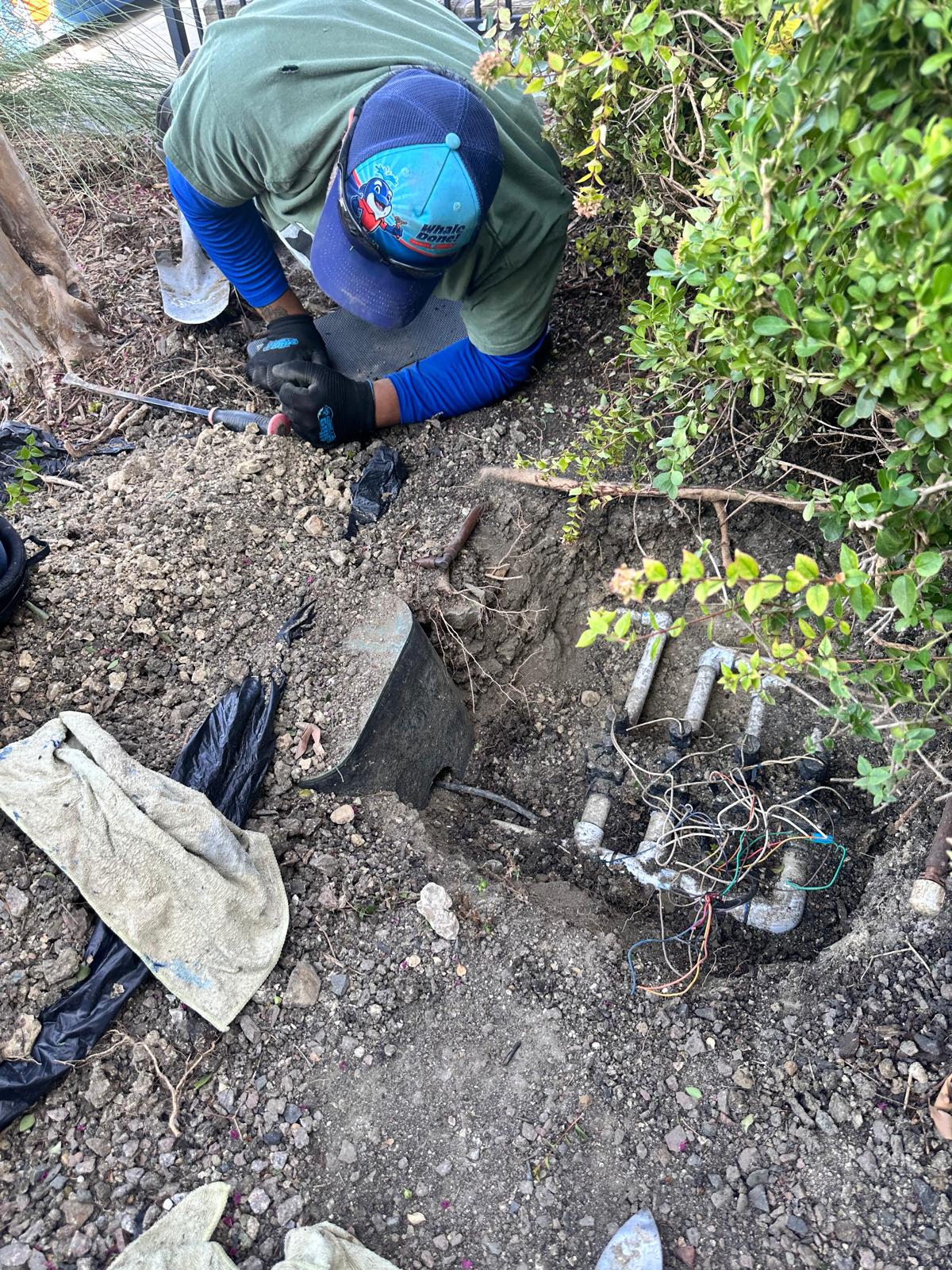
After checking the sensor, walk the yard. Look at the parts that can still be damaged.
- Backflow preventer: Check for cracks, drips, and any cover or insulation.
- Exposed pipes: Look along the house, fence, and valve area.
- Valve boxes: Look for standing water, cracks, or debris.
- Hose connections: Disconnect hoses and check for drips.
Take photos of anything unusual. They help if you later call a technician.
Sensor vs. Timer vs. Winterization
These three get confused often. Each does a different job.
- Freeze sensor: Pauses watering in cold conditions.
- Timer or controller setting: Stops scheduled watering when set to off or rain mode.
- Winterization: Addresses water in the pipes and protects exposed parts.
A system can have a working sensor and still be unprotected. Many homeowners choose to use all three together, depending on what their system needs.
Common Mistakes Homeowners Make
Most freeze problems come from trusting one device to do everything. Here are the ones that come up often.
- Assuming the sensor protects the pipes: It only pauses watering.
- Never testing the sensor: A failed sensor gives no warning.
- Leaving the bypass on: The sensor then has no effect.
- Skipping the backflow preventer: It is exposed in many systems.
- Relying on the timer alone: Pipes still hold water.
- Waiting for a freeze warning: Schedules fill quickly when cold weather is forecast.
Local Considerations for McKinney and North Texas
North Texas winters can swing from mild to freezing within a day. Local conditions affect how a system holds up.
- Clay soil: It swells and shrinks, which can stress pipes, fittings, and valve boxes.
- Heat: A long, hot summer can leave sensors, wiring, and parts worn before winter starts.
- Wind: Cold wind can chill exposed devices faster than the air temperature suggests.
- Seasonal watering: Lawns need far less water in winter, so pausing the system is often reasonable.
- Water restrictions: Check with the city or your water provider for current rules.
- Foundation movement: Shifting soil near the house can strain nearby lines.
The Texas A&M AgriLife Extension offers helpful guidance on landscape and lawn care during Texas winters.
Related Problems to Watch For
Sometimes what looks like a sensor issue is something else. If you notice any of these, the cause may be different.
- Zones running in cold weather: May be a bypass setting, wiring, or controller issue.
- Low water pressure: May point to a partly closed valve or a leak.
- A zone that won’t shut off: Often a valve problem.
- Wet spots in the yard: Could be a broken pipe or head.
The Irrigation Association offers general information on how irrigation controls and sensors work. If you suspect a leak, read our guide on finding an underground sprinkler leak. For zones that won’t behave, see our article on sprinkler valve problems.
Frequently Asked Questions
Does a freeze sensor protect my sprinkler pipes?
No. It only tells the controller to skip watering in cold weather. Water already in the pipes can still freeze.
Can a freeze sensor fail without me knowing?
Yes. Wiring issues, a bypass setting, or a dead battery can stop it from working, and there is often no visible sign.
Is a freeze sensor the same as a rain sensor?
No. A rain sensor pauses watering after rainfall. A freeze sensor pauses it in cold temperatures. Some devices combine both.
Do I still need winterization if I have a freeze sensor?
It depends on your system. A sensor does not remove water or protect exposed parts, so a licensed company can explain what your property needs.
How do I know if my freeze sensor is working?
Check the controller settings and your manual for a test option. A technician can also test the sensor and wiring during a visit.
Next Step and Bottom Line
Sprinkler freeze sensor problems McKinney TX homeowners experience often come from expecting these devices to provide more protection than they actually can. A freeze sensor helps prevent automatic watering when temperatures drop below a certain level, but it does not remove trapped water from pipes, insulate exposed components, or prevent every type of freeze damage. Proper winter preparation may still involve checking backflow preventers, exposed piping, valves, and controller settings.
Understanding these limitations helps homeowners make informed decisions about protecting their irrigation systems. If you’re unsure what your system needs, a licensed sprinkler company can inspect it and explain the available options. Whale Done is happy to answer questions or schedule a visit. Our goal is to educate homeowners first and recommend practical solutions.
Related Resources
- How to find an underground sprinkler leak
- Sprinkler valve problems and fixes
- Sprinkler system maintenance guide