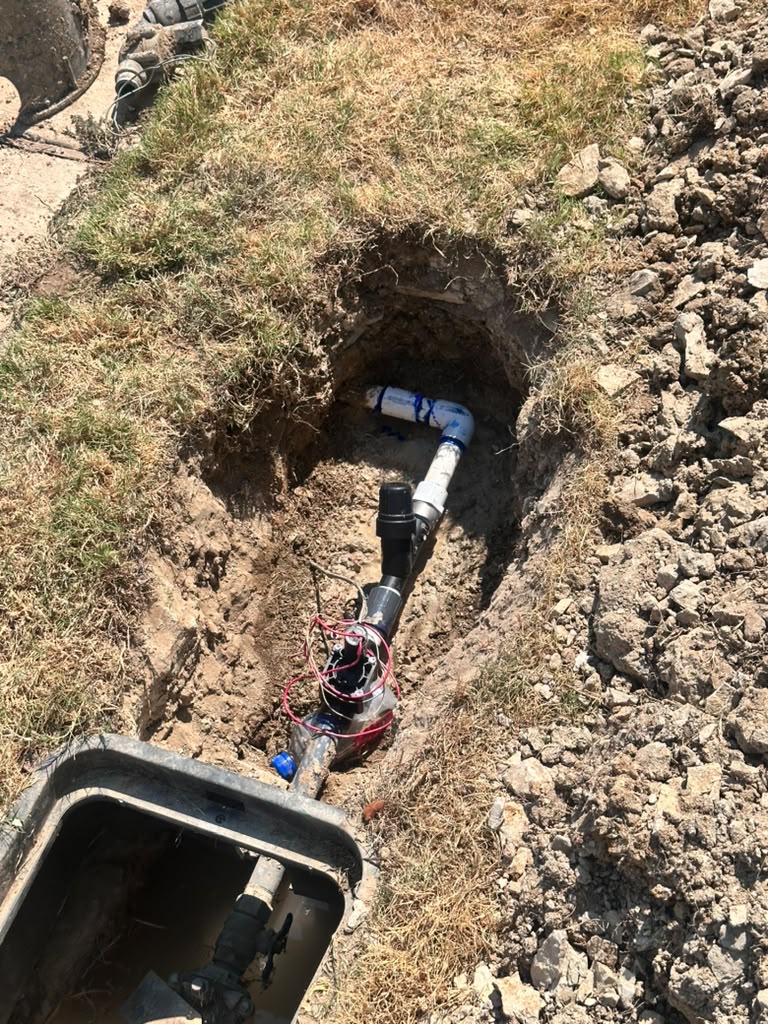
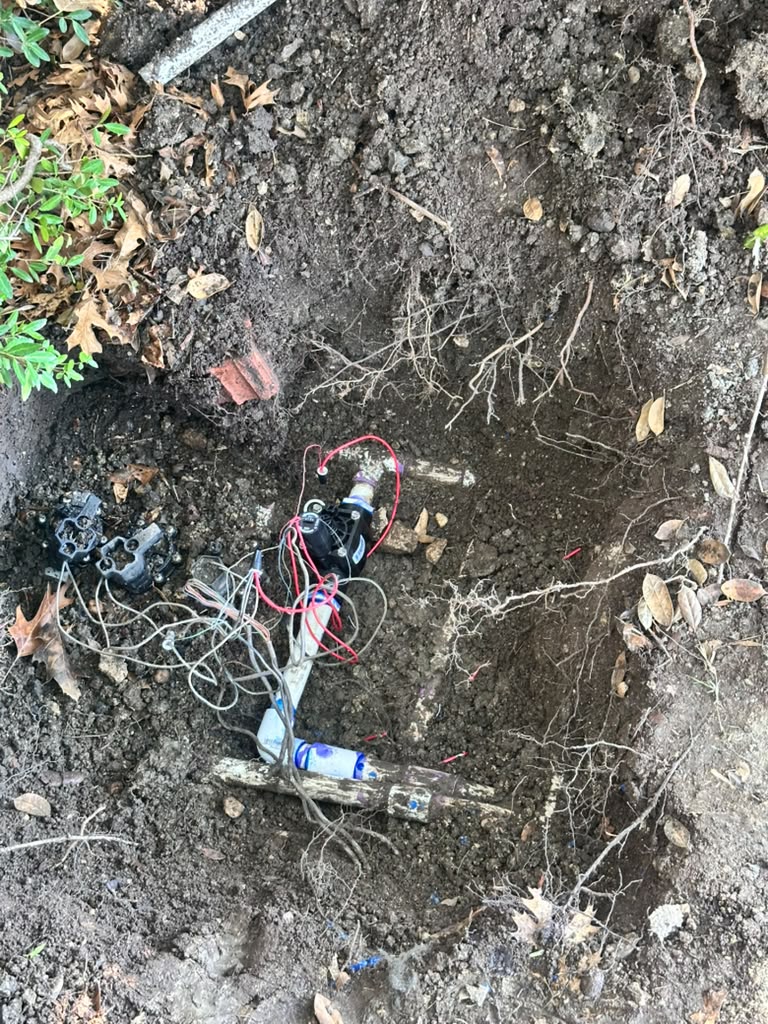
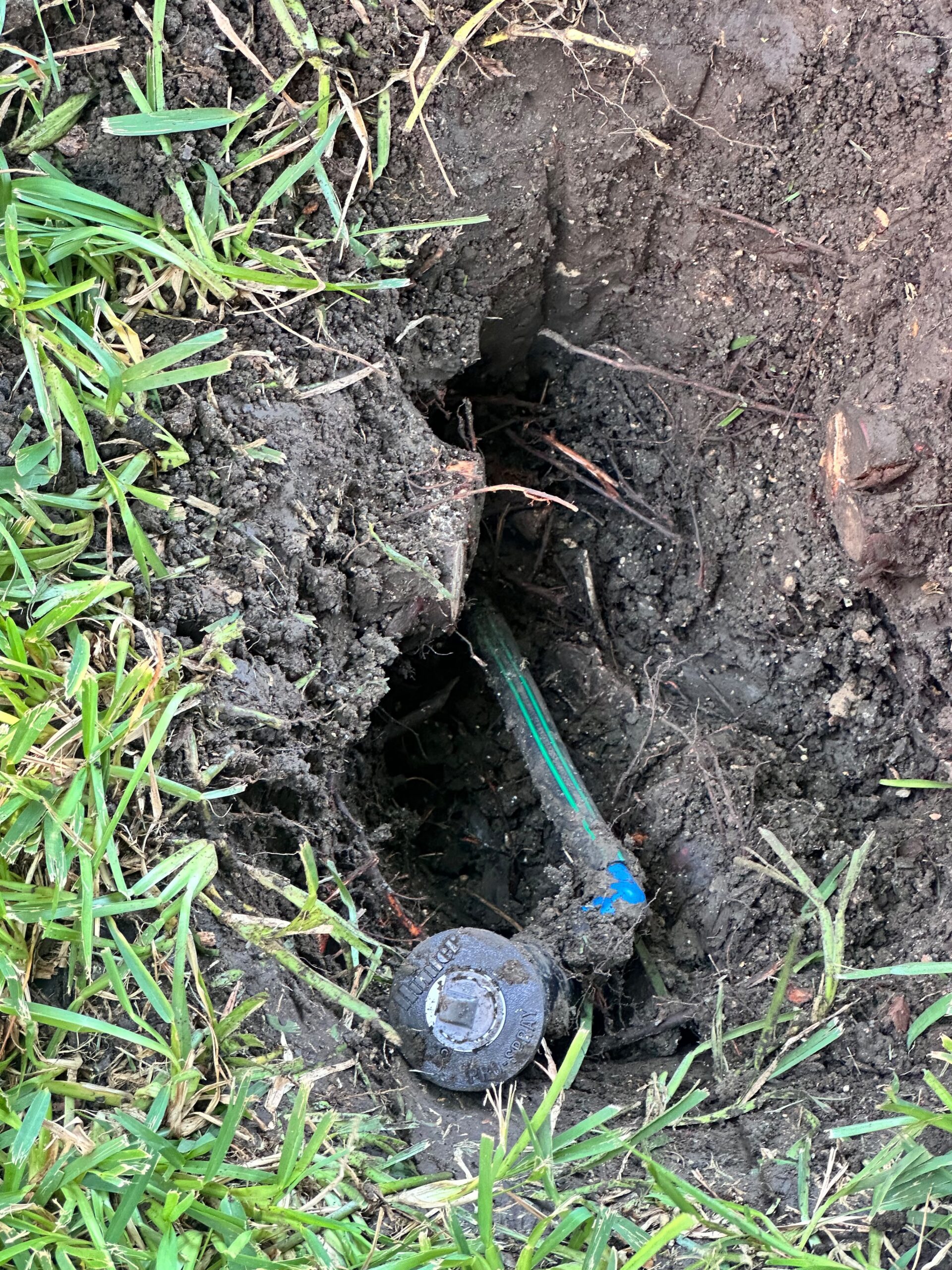
A sprinkler won’t turn off in Aubrey TX for one of two common reasons: a broken head or a valve stuck open. The easiest way to tell them apart is to stop the zone at the controller and watch what happens. If the water stops, the problem is likely a broken head that only floods while the zone runs. If the whole zone keeps running, the valve is the likely cause.
Closing the irrigation shutoff stops either problem while you sort it out. Then you can decide what needs repair.
At a Glance
- Difficulty: Easy for basic checks
- Estimated time: 20-40 minutes
- Tools needed: Flashlight, phone camera, water meter access, controller manual
- Works for: Telling a broken head from a valve that won’t close
- May not solve: Internal valve damage, wiring faults, or leaks on the main line
Why a Sprinkler Won’t Turn Off
Each zone in your system has a valve that opens to let water through and closes to stop it. The controller sends a small electrical signal to open the valve. When the signal stops, the valve should close.
A zone keeps running when something prevents that. A broken head can also look like a zone that won’t turn off, because a big geyser is hard to ignore. The two problems look similar but behave differently.
Broken Head vs. Stuck Valve
The main difference is whether the water stops when the zone is told to stop. Here is a quick comparison.
A broken head usually looks like this:
- Water shoots up from one spot, often in a geyser
- The rest of the zone sprays normally
- The water stops when the zone shuts off
- The soil around that one head gets soggy
A stuck-open valve usually looks like this:
- Heads in the zone keep spraying after the controller stops
- The spray may weaken to a trickle or dribble
- Water keeps flowing even with the system set to off
- The valve box may be full of water
Seeing one clear sign isn’t always enough. A few quick tests give a clearer answer.
What Causes a Valve to Stay Open
A valve is a simple device, but small things can keep it from closing. The most common cause is debris inside the valve, since sand or grit can stop the diaphragm from sealing. The diaphragm itself, the rubber part that seals the valve, can also wear out or tear over time. A faulty solenoid, the small electrical part on top that opens the valve, may fail to shut the valve.
A wiring problem, such as a short or stray signal, can keep the valve energized. A manual bleed screw or lever left open can also hold it open. Most of these need a licensed professional to inspect and repair, though a manual setting left open is usually easy to spot.
What Causes a Head to Gush
A broken head can flood one area fast, and the cause is usually one of a few common problems. A cracked body is one, since mowers, foot traffic, and age can all crack a head over time. A missing nozzle or cap is another, because without the nozzle, water shoots straight up. A broken riser can also cause flooding when the pipe under the head snaps or loosens.
A damaged pipe fitting beneath the head can fail as well. These problems stop when the zone shuts off, unless a valve problem is also involved. That’s why the zone test matters, since it helps you quickly tell a broken head from a stuck valve before you pay for the wrong repair.
How to Tell Whether It’s a Sprinkler Won’t Turn Off in Aubrey TX Problem
This sequence helps you sort out the cause. It takes about 20 to 40 minutes and needs no special tools.
Step 1: Note What You See
Look at where the water is coming from. Is it one head or the whole zone? Take a photo or short video for your notes.
Step 2: Stop the Zone at the Controller
Switch the controller to off, or stop the running zone from its menu. Wait a few minutes.
Step 3: Watch the Water
If one head gushes and then stops, a broken head is likely. If the heads in the zone keep spraying or dribbling, a valve problem is likely.
Step 4: Close the Irrigation Shutoff
Find the shutoff valve near the water meter or backflow preventer. Close it slowly. If the water stops, the leak is on the irrigation side.
Step 5: Check the Valve Box
Lift the lid carefully. Note standing water, hissing, or a valve that feels wet and warm. Don’t reach in if you’re unsure, and keep your hands away from wires.
Step 6: Run a Water Meter Test
Turn off all water in the house and read your meter. Wait 15 minutes and read it again. If the number changed with the irrigation shutoff closed, the leak may be elsewhere.
Step 7: Write Down What You Found
Note the zone, what you saw, and what happened at each step. These notes help a licensed company diagnose the problem faster.
What to Do Right Away
Once water is under control, take a breath. Most of these problems aren’t emergencies after the water is shut off.
- Close the irrigation shutoff: This stops the flooding.
- Set the controller to off: This prevents a restart.
- Keep people and pets away: Soggy ground and open holes can be hazardous.
- Avoid digging: You could damage a pipe or wire.
- Take photos: Notes and photos help later.
If you can’t find the shutoff, closing the main water supply to the house stops everything temporarily.
When It Might Be Something Else
Not every runaway zone comes from a broken head or valve. Some other causes are simpler.
- A long run time: The zone may be set to run longer than you realize.
- Multiple programs: A second schedule may be starting the zone again.
- Manual start left on: A manual run can stay active until it’s canceled.
- Rain sensor issues: The system may not be pausing as expected.
- A controller fault: Some controllers keep sending a signal after a glitch.
Check the controller settings before assuming a valve has failed.
When Repairs Are Needed
Some problems can wait a short time. Others shouldn’t.
Usually worth fixing soon:
- A valve that won’t close
- Water pooling near the foundation or slab
- A zone that runs on its own
- A cracked pipe or fitting under a head
- A rising water bill with no explanation
Often fine to handle in a few days:
- A broken head on a zone that’s shut off
- A missing nozzle
- Spray pattern problems
If you’re unsure, a licensed sprinkler company can inspect the zone and explain your options.
Common Mistakes Homeowners Make
- Assuming one broken head means the whole valve is bad. Test the zone before deciding.
- Ignoring a dribbling zone. A slow leak adds up on your water bill.
- Digging without knowing where the pipes are. You can cause a bigger break.
- Forcing a valve closed by hand. Over-tightening can damage it.
- Skipping the shutoff. Water keeps flowing while you troubleshoot.
- Leaving the controller on after a runaway zone. It may restart the problem. See our guide on sprinkler valve repair.
North Texas Considerations
Local conditions can affect how and why these problems happen.
- Clay soil: Aubrey’s clay swells and shrinks, which can crack fittings and shift valve boxes.
- Foundation movement: Soil near the slab moves more, so lines near the house deserve a closer look.
- Heat: Summer heat dries soil fast and can hide a slow leak until the ground is soggy.
- Wind: Wind can scatter a geyser and make it look smaller than it is.
- Seasonal watering: Heavy summer runs can make a stuck valve more costly.
- Water restrictions: Check current watering rules with your water provider before running test cycles.
Texas regulates irrigation work, and the TCEQ irrigation program explains licensing and backflow requirements. For general advice on outdoor water waste, the EPA’s WaterSense outdoor resources are a useful reference.
Related Problems to Watch For
If your tests don’t point to a clear answer, the cause could be:
- An underground leak: Read about sprinkler leak detection.
- Low or high water pressure: Pressure problems can cause misting or weak sprays.
- A controller problem: See our guide on sprinkler controller problems.
- A damaged backflow preventer: Leaks near it should be checked by a licensed professional.
- Indoor plumbing: A running toilet or leaking fixture can move your meter.
Frequently Asked Questions
Why won’t my sprinkler zone shut off?
The most common cause is a valve that isn’t closing, often from debris or a worn diaphragm. A controller setting, such as a manual start or second program, can also keep a zone running. Check the controller first, then the valve.
How can I tell if a head is broken or a valve is stuck?
Stop the zone at the controller and watch. If the water stops, the head is likely the problem. If the zone keeps running, suspect the valve.
Can a stuck sprinkler valve flood my yard?
Yes. A valve stuck open can keep water flowing all day. Closing the irrigation shutoff stops it while you arrange a repair.
Can I fix a stuck valve myself?
Some simple causes, like a manual setting, are easy to check. Internal repairs involve wiring and parts that are best left to a licensed professional. Texas regulates irrigation work, so check local rules.
Will a stuck valve raise my water bill?
It can. Water running through an open valve adds up quickly. A meter test and bill comparison can help show whether water is being wasted.
Conclusion
Sprinkler won’t turn off in Aubrey TX problems usually come from either one broken head or a valve stuck open. If water stops when the zone shuts off, look at the head. If the whole zone keeps running after the controller stops it, suspect the valve. Close the irrigation shutoff, check the valve box, and note what you see with photos and a short description. A licensed sprinkler company can confirm the cause, separate a simple head repair from a valve repair, and explain your options. Our goal is to help you decide your next steps with confidence and clarity.