Technicians find sprinkler leaks in McKinney TX by narrowing the problem down step by step, not by digging blindly. They check the water meter for unexplained flow, test each zone one at a time, watch pressure, and confirm what the controller is doing. Each step rules out part of the system until the leak has a small, specific location.
Only then is the yard opened up, and usually in just one spot. This approach protects your lawn and saves time. A licensed sprinkler company can explain which tests apply to your system.
At a Glance
| Difficulty | Basic checks: easy. Pinpointing an underground leak: best left to a licensed professional |
| Estimated Time | 10 minutes for a meter check; 30-90 minutes for a full leak assessment |
| Tools Needed | Water meter access, your controller, a phone for photos, and notes on symptoms |
| Works For | Understanding how leaks are located and what you can check first |
| May Not Solve | Leaks in the home’s plumbing, or damage that needs repair after the leak is found |
Why Underground Leaks Are Hard to Find
Most of a sprinkler system is buried. Water that escapes from a pipe or fitting soaks into the soil and can surface far from the actual break.
Clay soil makes this worse. Water can travel along the pipe trench before showing up as a wet spot. The soggy patch you see may not be where the leak is.
That is why technicians test first and dig second.
Signs You May Have Sprinkler Leaks in McKinney TX
Leaks often announce themselves in small ways. Watch for these signs:
- Wet or muddy spots when the system is off
- Areas of grass that are greener or growing faster than the rest
- Low pressure or weak spray from heads
- A higher-than-normal water bill
- Sunken soil or small sinkholes
- Water running in a valve box
- Hissing or gurgling sounds near valves
Any one of these is a reason to check, but none confirms a leak on its own.
Step 1: Check the Water Meter
The water meter is often the first stop. It shows whether water is moving through your lines when it should not be.
A basic check looks like this:
- Make sure no water is running inside or outside the home.
- Turn off the sprinkler controller.
- Look at the meter’s leak indicator, usually a small triangle or dial.
- Note whether it keeps spinning.
If the indicator moves with everything off, water is escaping somewhere. That could be the irrigation system, but it could also be a household plumbing leak, so this step only tells part of the story.
Step 2: Separate the Irrigation System From the House
To find out which side the leak is on, a technician isolates the irrigation system. This is usually done at the irrigation shutoff valve.
With irrigation water off, the meter is checked again. If it stops moving, the leak is in the sprinkler system. If it keeps moving, the leak is likely elsewhere, such as a toilet, a faucet, or a household line.
This single test can save a homeowner from searching in the wrong place.
Step 3: Test Zone by Zone
Once the leak is tied to the sprinkler system, the next step is testing each zone individually. A zone is one group of heads or drip lines controlled by a single valve.
A technician typically:
- Runs one zone at a time
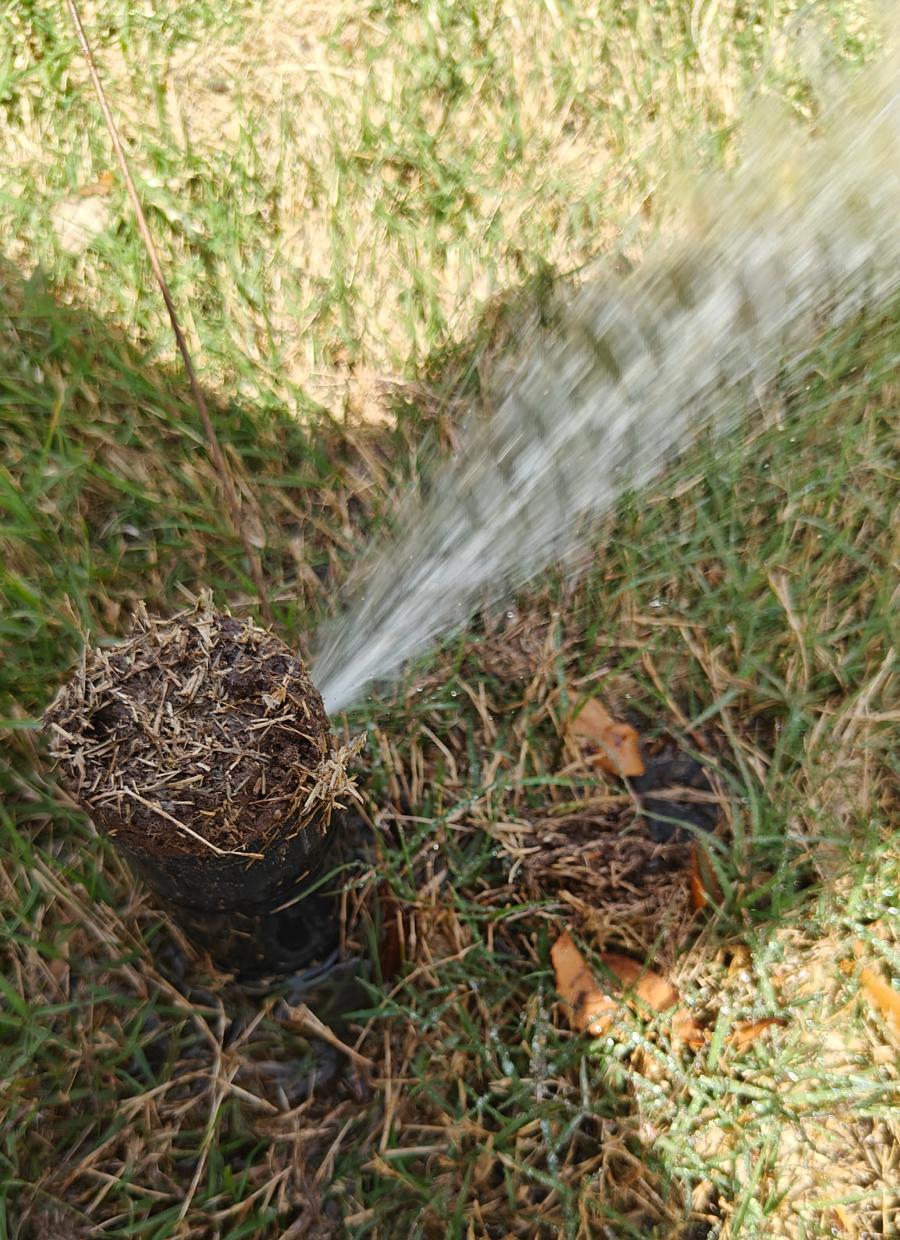
- Checks heads for weak, uneven, or missing spray
- Looks for pooling water or soft ground
- Watches the meter or flow while each zone runs
- Notes which zone behaves differently
The zone with the problem stands out. A leak in one zone’s lines will usually show up only when that zone runs.
Step 4: Watch Pressure and Flow
Pressure is one of the best clues a technician has. A sudden drop often means water is escaping before it reaches the heads.
Here is what different patterns can suggest:
- Weak spray across a whole zone: A leak in the lateral line or a fitting
- Weak spray only at the far end: Water may be lost partway down the line
- Strong spray that fades: A partial break that worsens as the zone runs
- Normal spray but a high flow reading: A leak that is not affecting the heads
Reading these patterns helps the technician decide where to focus.
Step 5: Check the Valves and Valve Boxes
Valves are a common source of leaks. A valve that does not close fully can let water seep into the zone even when the system is off.
Technicians often open valve boxes to look for:
- Standing water or constant moisture
- Cracked fittings or worn seals
- Water flowing from a valve that should be closed
- Debris or damage inside the box
A valve problem can look like a pipe leak from the surface, so this check helps avoid unnecessary digging.
Step 6: Review the Controller
The controller tells the system when to run, and a setting issue can mimic a leak. A technician reviews it to rule out simple causes.
They may check:
- Start times and run times for each zone
- Whether schedules overlap
- Whether a zone is set to run longer than intended
- Whether a rain or freeze sensor is working
- Whether another person has changed the settings
Sometimes what looks like a leak is just overwatering from a programming issue. That is good news, since it costs nothing to fix.
Step 7: Pinpoint and Confirm Before Digging
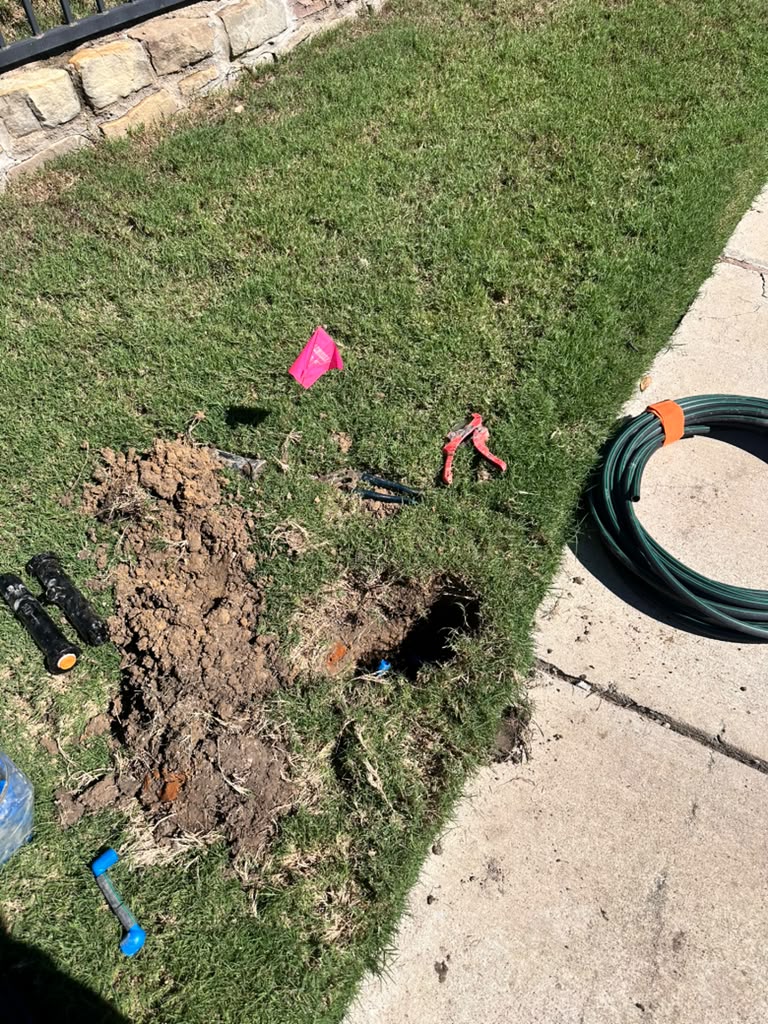
After the tests narrow the search, the technician walks the suspect area. They look at the ground, the nearby heads, and the likely path of the pipe.
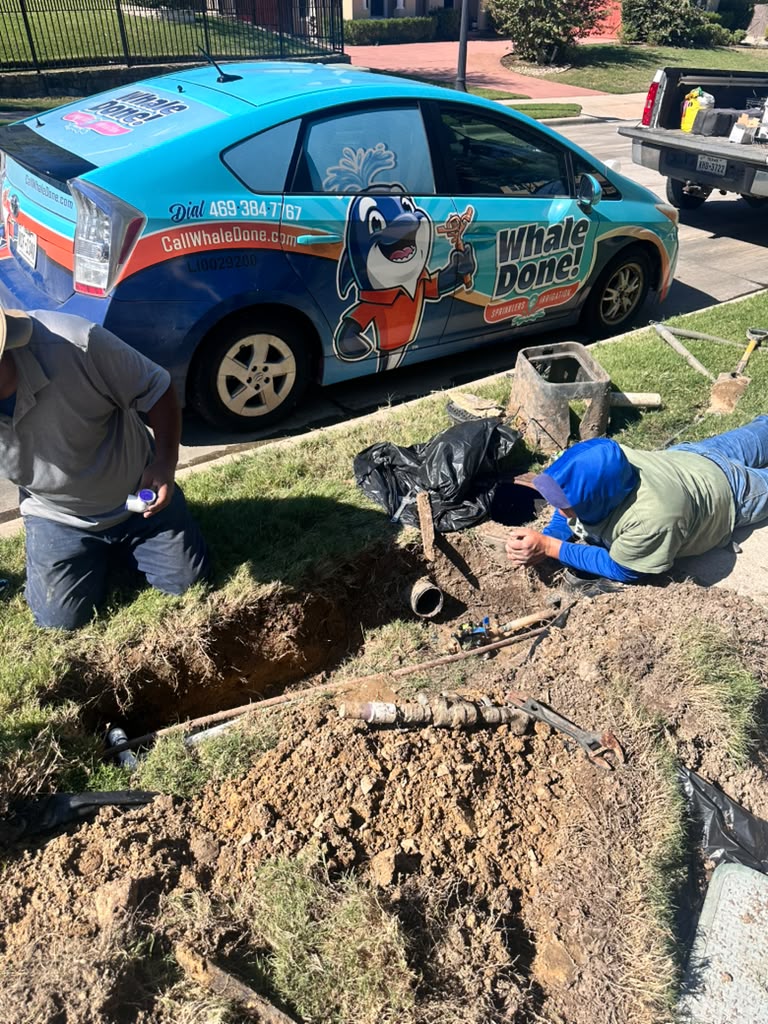
The goal is to dig in the smallest possible spot. A clean, small excavation limits damage to the lawn and speeds up the repair.
Once the pipe is exposed, the break is confirmed and the section is repaired. The zone is then tested again to make sure the problem is solved.
What Homeowners Can Do First
Some checks are simple and require no tools. Doing them first can give a technician a head start.
- Look at the meter with all water off
- Write down which zones seem affected
- Take photos of wet spots, with the date
- Note when the problem started
- Check the controller for unusual schedules
- Make sure nothing else in the house is leaking
If everything looks normal, the issue may not be a sprinkler leak at all. It is worth ruling out toilets, hose bibs, and household plumbing before calling anyone.
Common Mistakes Homeowners Make
Most leak problems get worse because of delays or guesses. Here are the mistakes that come up often.
- Digging where the water appears: The break is often somewhere else.
- Ignoring small wet spots: They can grow over time.
- Assuming a high bill means a sprinkler leak: It could be household plumbing.
- Only changing the timer: That does not fix a leak.
- Skipping the meter check: It is the easiest first test.
- Waiting too long: Leaks waste water and can weaken the soil around pipes.
Local Considerations for McKinney and North Texas
North Texas conditions affect how leaks form and how they behave.
- Clay soil: It swells and shrinks, which can crack pipes and loosen fittings.
- Heat: Long, hot summers can wear out plastic parts and seals.
- Wind: Wind can mimic leak symptoms by pushing spray off target.
- Seasonal watering: Water use climbs in summer, so a leak may go unnoticed until bills rise.
- Water restrictions: Check with the city or your water provider for current rules.
- Foundation movement: Shifting soil near the house can strain nearby lines.
The Texas A&M AgriLife Extension offers helpful guidance on watering lawns and landscapes in Texas.
Related Problems to Watch For
Not every wet spot is a sprinkler leak. If the tests above do not point to a leak, other causes are possible.
- Low water pressure: May come from a partly closed valve or a clogged nozzle.
- A zone that will not shut off: Often a valve problem.
- Soggy areas after rain: Could be a drainage issue.
- Uneven coverage: May be misaligned or damaged heads.
The EPA WaterSense program shares tips for finding leaks and using water efficiently. If your system is not turning on or off correctly, see our article on sprinkler valve problems. For routine care that helps catch problems early, read our sprinkler system maintenance guide.
Frequently Asked Questions
How can I tell if I have an underground sprinkler leak?
Look for wet spots when the system is off, weak spray, sunken soil, or a higher water bill. Checking the water meter with everything off is a good first test.
Do technicians have to dig up the whole yard?
No. Testing zone by zone and watching pressure narrows the leak to a small area. Digging is usually limited to one spot.
Can I find a sprinkler leak myself?
You can do the basics, like checking the meter and noting wet spots. Pinpointing the exact break underground usually takes more experience and equipment.
Is a high water bill always caused by a sprinkler leak?
No. Household plumbing, such as a running toilet, can also raise the bill. Isolating the irrigation system helps tell the two apart.
How long does it take to find a leak?
It depends on the system and the leak. Simple cases may take under an hour, while hidden or multiple leaks can take longer.
Next Step and Bottom Line
Sprinkler leaks in McKinney TX are found through testing, not guessing. Technicians check the meter, test each zone, watch pressure, and review the controller before digging in one small spot. If you suspect a leak, start with the meter check. If the cause is still unclear, a licensed sprinkler company can help. Whale Done is happy to answer questions, and our goal is to educate first.