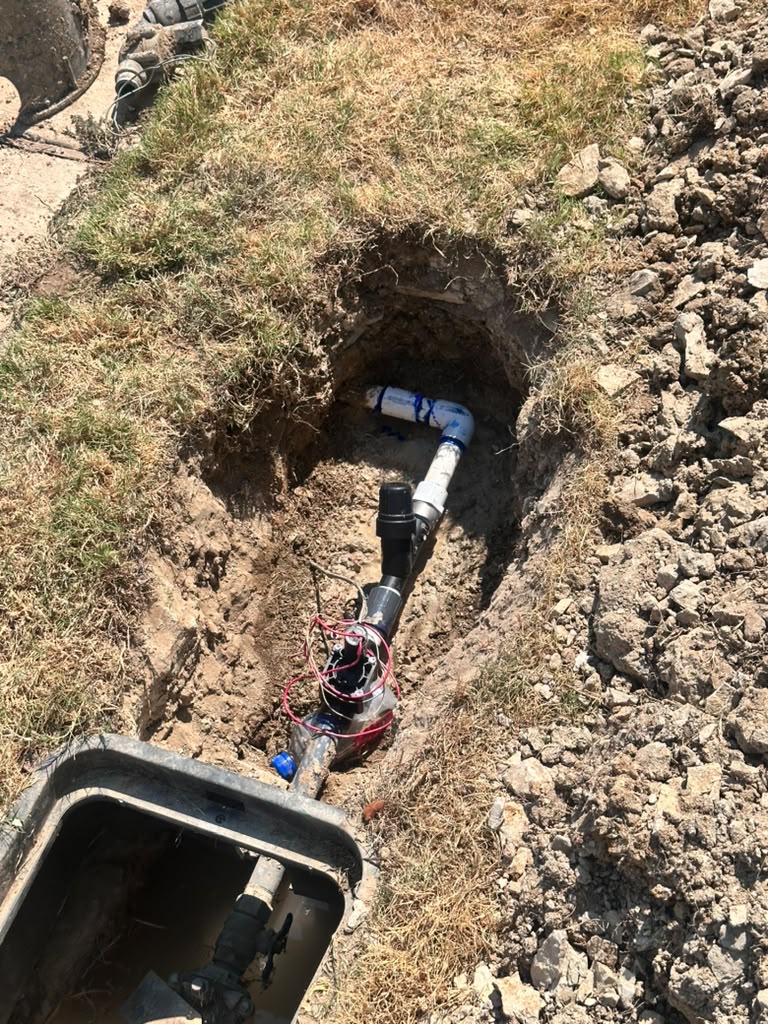
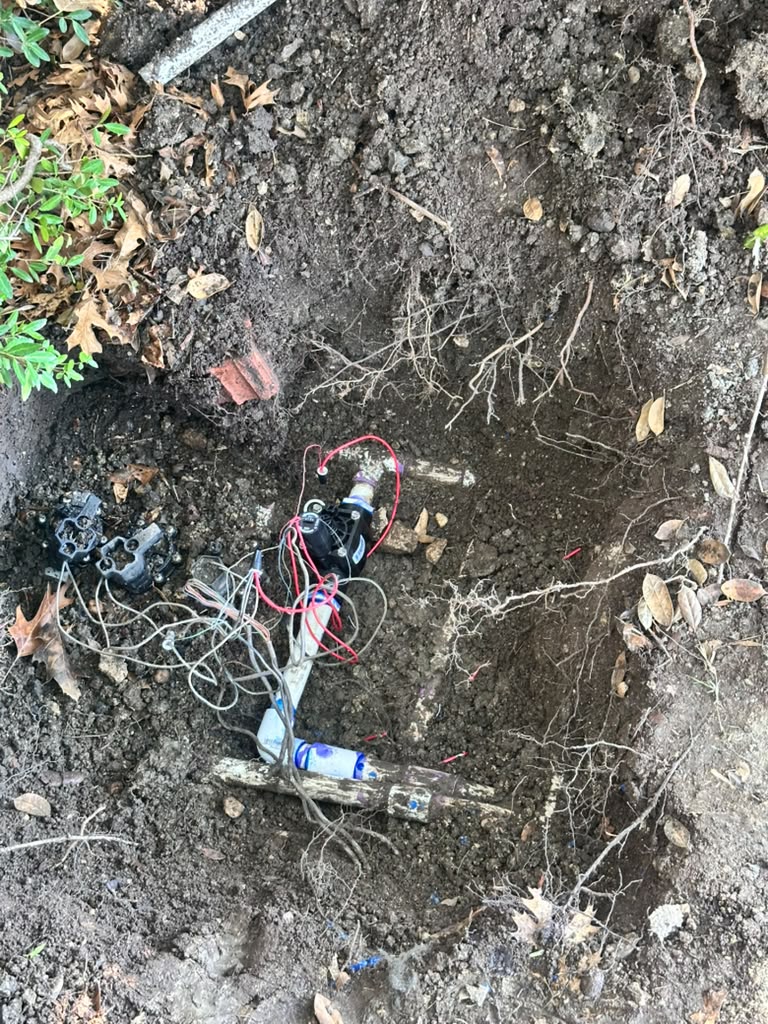
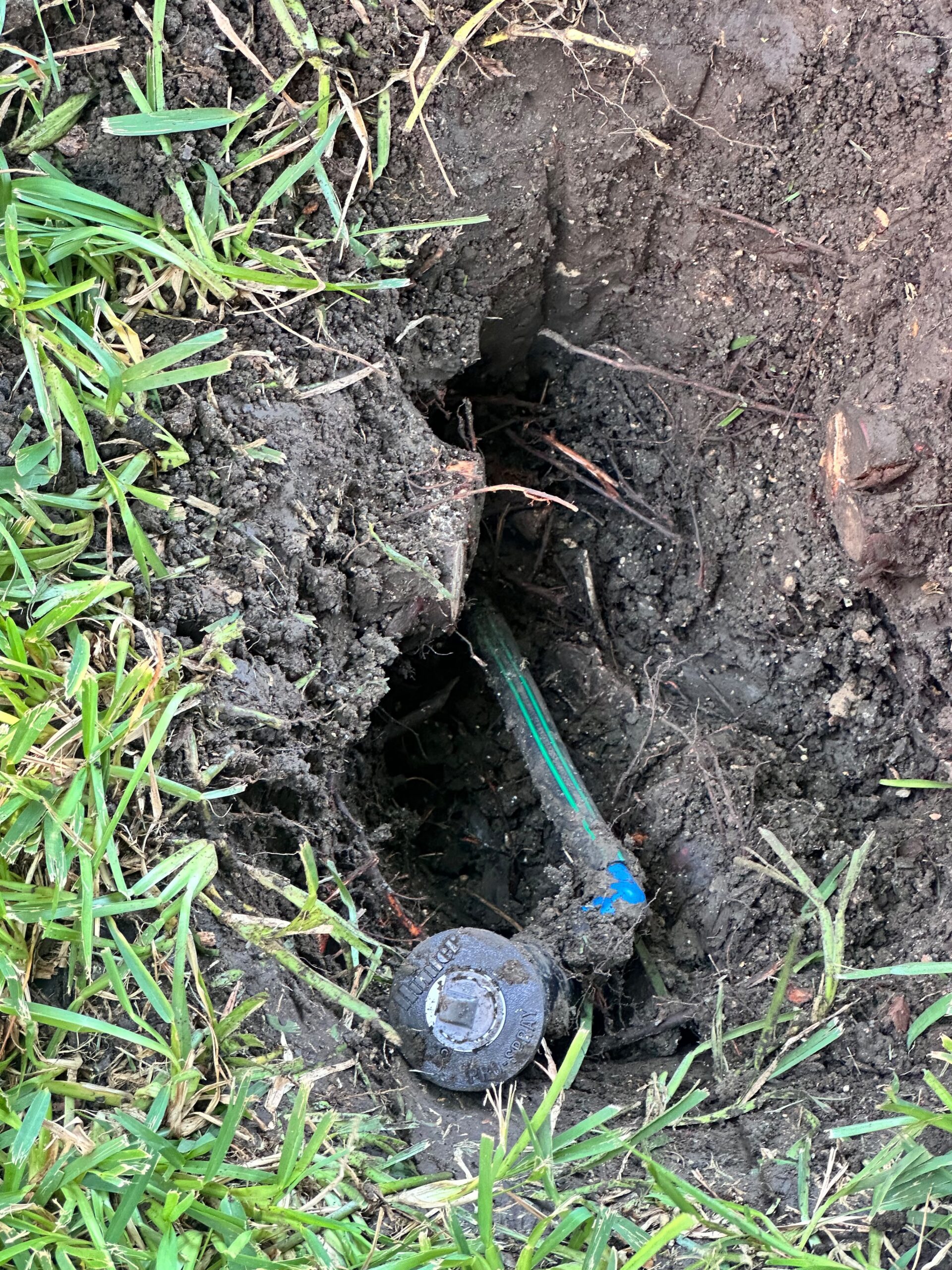
If you have a sprinkler zone stuck on in Murphy TX, stop the irrigation water first. Turn your sprinkler controller off. If the zone continues running, locate your irrigation backflow preventer and turn both attached shut-off handles a quarter turn (90 degrees) until they sit perpendicular to the pipes. Wait a few moments to confirm the sprinklers have stopped. If the handles are damaged, seized, or difficult to operate, do not force them. Once the water is under control, have the valve inspected for debris, a damaged diaphragm, or a faulty solenoid.
At a Glance: Stopping a Sprinkler Zone That Won’t Turn Off
| Category | Details |
| Difficulty | Easy for basic emergency shutoff; valve repairs require experience |
| Estimated time | A few minutes to locate and operate accessible backflow shutoffs |
| Tools needed | Flashlight; pliers only if appropriate and the valve stems are accessible |
| Works for | A sprinkler zone that continues running after the controller is turned off |
| May not solve | A damaged backflow, seized shutoff, broken pipe, or internal valve failure |
Important: The immediate goal is to stop the water, not dismantle the valve while the system is pressurized.
Why Does a Sprinkler Zone Get Stuck On?
A sprinkler zone operates through an electrically controlled valve. When the controller signals a zone to run, the valve opens and allows water to reach the sprinkler heads. When the watering cycle ends, the valve should close and stop the flow.
When a zone continues running, the problem may involve the valve’s internal components rather than the controller.
Here are three common causes.
1. Debris Gets Trapped Inside the Valve
Small particles of dirt, sand, and other sediment can enter irrigation lines and collect inside a valve. When debris becomes trapped between the valve’s sealing surfaces, the valve may not close completely.
Even a small obstruction can allow water to continue flowing after the controller ends the watering cycle.
This may cause:
- Sprinkler heads that continue spraying.
- Water collecting around the affected area.
- A zone that runs even when the controller is switched off.
- Persistent dampness near the valve box.
2. A Worn or Damaged Diaphragm Cannot Seal Properly
A diaphragm is a flexible rubber component inside many irrigation valves. It moves in response to water pressure, helping the valve open and close.
Over time, the diaphragm can become worn, stretched, torn, or weakened.
When it cannot seal properly, water may continue passing through the valve even when the electrical signal has stopped.
Replacing the diaphragm may resolve the problem if the valve body and other components remain in good condition.
3. A Faulty Solenoid Prevents the Valve From Closing
The solenoid is the electrically operated component attached to the valve. It receives signals from the sprinkler controller and helps regulate the valve’s operation.
A damaged or malfunctioning solenoid may prevent the valve from returning to its closed position.
Possible warning signs include:
- One zone continues running unexpectedly.
- The valve does not respond correctly to controller commands.
- The problem occurs repeatedly in the same zone.
- Other zones operate normally.
A technician can test the solenoid and its electrical connections to determine whether the component needs repair or replacement.
Step-by-Step: How to Stop a Sprinkler Zone Stuck On in Murphy TX
When water continues flowing, follow the emergency shutoff procedure before attempting to diagnose the valve.
Step 1: Turn Off the Sprinkler Controller
Locate your sprinkler controller and switch it to OFF to stop scheduled watering. Wait briefly and observe the affected sprinkler heads. If the water stops, the issue may involve controller settings or electrical problems. If it continues, the valve may be mechanically stuck open.
Step 2: Locate Your Backflow Preventer
If the sprinkler zone continues running, locate your irrigation backflow preventer, which protects your home’s drinking water from contamination. It may be underground inside a green valve box near the sidewalk or above ground beside your home, where irrigation piping connects to the water supply.
If you are unsure what the device looks like, use Whale Done’s emergency sprinkler shutoff guide for visual references and instructions.
Step 3: Turn Both Backflow Shut-Off Handles
Once you locate the backflow, identify the two shut-off handles attached to it.
Follow these steps:
- Locate both shut-off handles.
- Turn each handle a quarter turn, or 90 degrees.
- Position the handles perpendicular to the pipes.
- Wait a few moments.
- Check whether the sprinkler heads have stopped running.
When the water stops, the immediate emergency is under control.
Turning off the irrigation water at the backflow should isolate the sprinkler system without interrupting normal household water use.
Step 4: What If the Handles Will Not Turn?
Some backflow handles become rusted, damaged, or difficult to operate over time.
Before using tools, look around the backflow for a separate irrigation shut-off valve. Some systems have an additional shut-off nearby that may be easier to operate.
If the handles are broken off, Whale Done’s emergency instructions explain that accessible metal valve stems may be turned carefully with pliers using steady, even pressure.
Do not force a stuck valve. If it will not move, stop before damaging the assembly or creating another leak.
Step 5: Contact a Licensed Irrigation Professional if Water Continues
If the irrigation water will not stop, the shut-off handles are damaged, or the backflow is difficult to access, professional assistance may be necessary.
A licensed irrigation professional can safely secure the system and determine why the water continues flowing.
Avoid digging around the valve box, cutting pipes, or removing pressurized components while the water supply is active.
What Happens After the Water Stops?
Stopping the water controls the immediate problem, but it does not fix the underlying issue. Once the system is secure, inspect the valve for visible damage, debris, and leaks. Check whether the diaphragm is worn or unable to seal properly, and test the solenoid and wiring for electrical problems. Also, review the controller’s signals and programming to rule out unexpected activation. These checks help identify the actual cause and prevent unnecessary replacement of components that may still be working properly.
For more information, see Whale Done’s sprinkler valve repair service.
Common Mistakes Homeowners Should Avoid
When a sprinkler zone will not turn off, it is easy to focus on the sprinkler heads rather than the component controlling the water supply.
Avoid these common mistakes:
- Turning the controller off repeatedly.
If the zone continues running after the controller is off, repeating the same command will not correct a mechanically stuck valve. - Removing the valve while water is flowing.
Opening a pressurized valve can release water unexpectedly and create additional damage. - Forcing rusty backflow handles.
Applying excessive force can break the handle or damage the shut-off assembly. - Replacing the solenoid without testing it.
A stuck valve may be caused by debris or a damaged diaphragm rather than an electrical component. - Assuming the entire irrigation system needs replacement.
A single faulty valve component does not automatically mean the whole system has failed.
A focused diagnosis can help prevent unnecessary replacement costs.
Local Considerations for Murphy, TX Homeowners
Sprinkler problems in Murphy deserve attention because local weather and soil conditions can affect irrigation performance.
North Texas Clay Soil and Water Retention
Many properties in the Murphy area have clay-heavy soil. Clay can absorb water slowly and retain moisture, especially when a sprinkler zone runs longer than intended.
A stuck zone may contribute to:
- Soggy lawn areas.
- Water pooling around sprinkler heads.
- Soil erosion along landscape edges.
- Excess moisture near sidewalks and foundations.
If water continues running near the house, stopping the irrigation supply promptly helps limit unnecessary saturation.
Summer Heat and Water Waste
North Texas summers can place additional demands on residential irrigation systems. However, a zone that runs continuously is not providing better watering.
It may simply be releasing water beyond what the landscape needs.
The EPA’s WaterSense Sprinkler Spruce-Up recommendations encourage homeowners to inspect irrigation systems for leaks, damaged components, and water waste.
Seasonal Changes and Component Wear
Temperature changes, aging rubber components, and sediment buildup can affect valve performance over time.
Routine inspections can help identify worn parts before they cause a larger irrigation problem.
Could Something Else Be Causing the Problem?
Not every sprinkler zone that continues running has the same underlying cause. Incorrect controller programming or overlapping start times may activate a zone unexpectedly. Damaged electrical wiring or loose connections can interfere with normal valve operation. A manual bleed screw or opening mechanism may also have been left open.
Additionally, underground pipe damage can release water even when the controller is off, while a malfunctioning backflow assembly may require separate attention. Observing whether the zone stops after isolating the irrigation water supply can help determine whether the issue involves the valve, water supply, or controller.
For additional information, explore Whale Done’s sprinkler leak detection service.
Frequently Asked Questions
1. Why does my sprinkler zone keep running after I turn off the controller?
A sprinkler zone that continues running after the controller is switched off may have a valve stuck open. Common causes include debris trapped inside the valve, a worn diaphragm, or a faulty solenoid.
2. Can debris cause a sprinkler valve to stay open?
Yes. Dirt, sand, and other particles can become trapped inside the valve and prevent its sealing components from closing completely. Cleaning the valve may resolve the issue if the internal components are still in good condition.
3. Will turning off the backflow stop a sprinkler zone?
Yes. Closing both backflow shut-off handles according to Whale Done’s emergency instructions should stop the irrigation water supply. This normally does not interrupt water service to the rest of your home.
4. Can I replace a sprinkler valve diaphragm myself?
Some homeowners with irrigation repair experience may be able to replace a diaphragm. However, the water supply must first be safely isolated, and the valve should be inspected to confirm that the diaphragm is actually the problem.
5. Should I replace the entire sprinkler valve if it gets stuck open?
Not necessarily. A stuck valve may only need cleaning, a replacement diaphragm, or a new solenoid. A professional inspection can determine whether repairing an individual component or replacing the complete valve is the better option.
Bottom Line: Stop the Water Before Repairing the Valve
A sprinkler zone that will not turn off should be treated as an irrigation water-control problem. Turning off the controller is the first step, but a mechanically stuck valve may require shutting off the irrigation supply at the backflow preventer.
Once the water stops, identify whether debris, a damaged diaphragm, or a faulty solenoid caused the failure. Addressing the actual problem helps prevent repeated water waste and unnecessary repairs.
Next Step: Get the Right Answer Before Replacing Parts
If your sprinkler zone is stuck on in Murphy TX, start by securing the irrigation water supply. If you cannot safely shut it off, contact a licensed irrigation professional for assistance. Once the emergency is controlled, a system evaluation can identify the failed component and explain your repair options.
Whale Done Sprinklers & Irrigation
Call: (469) 384-7767
Email: clientsupport@callwhaledone.com