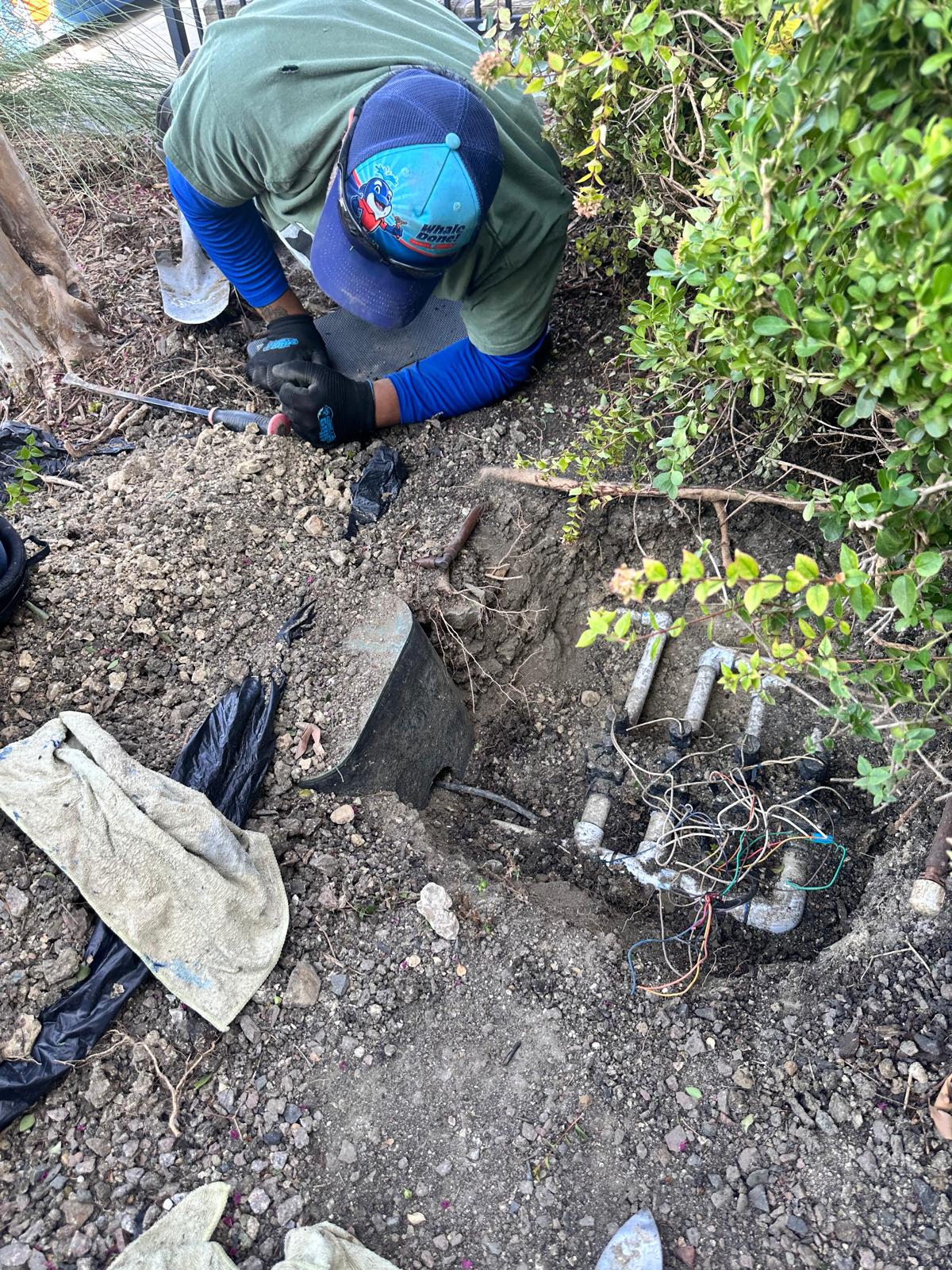
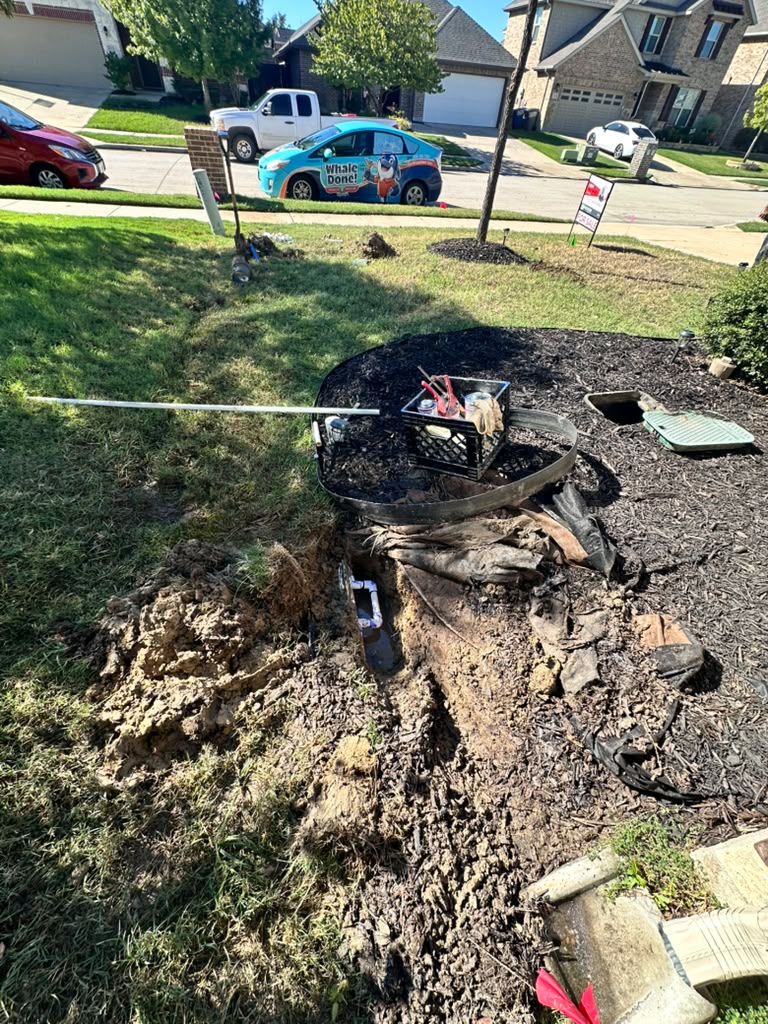
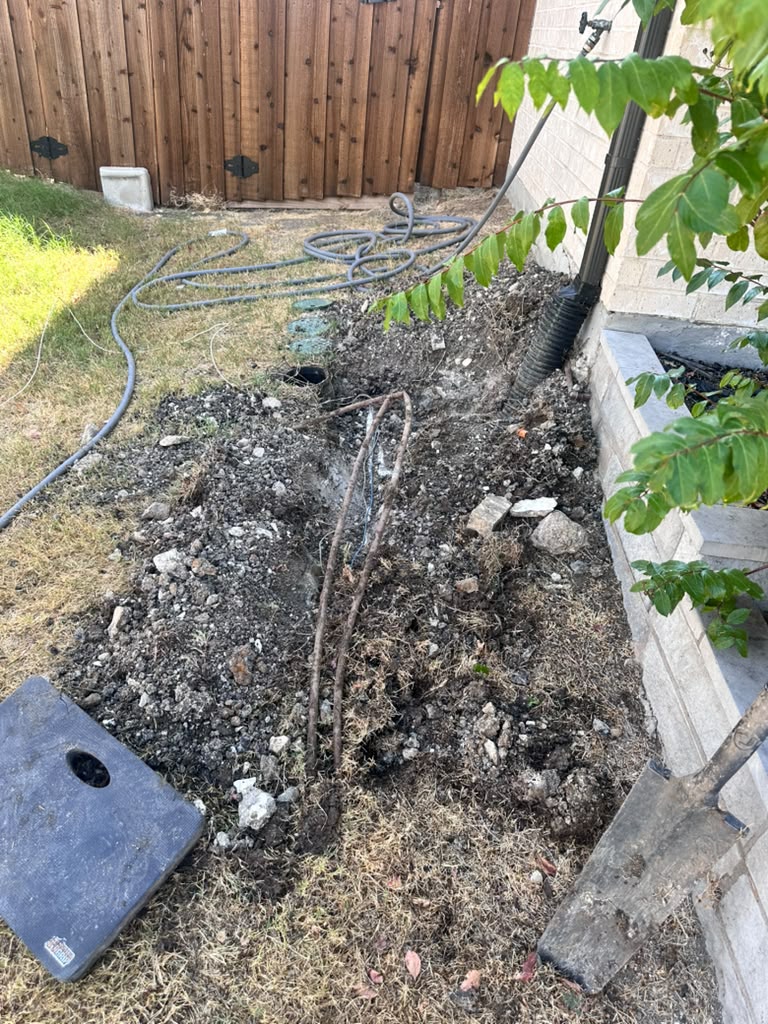
Sprinkler coverage problems in Frisco TX usually persist after summer because the causes are mechanical, not seasonal. Clogged nozzles, tilted heads, weak pressure, and heads blocked by grass don’t go away when the weather cools. Frisco’s clay soil also shifts through the year, which can move heads out of position.
Cooler fall weather just makes the problem easier to ignore. Your lawn needs less water, so dry spots may fade for a while. They often return when spring watering starts, which makes fall a good time to check your system.
At a Glance
- Difficulty: Easy for basic checks
- Estimated time: 45-60 minutes
- Tools needed: Six to eight shallow containers (tuna cans work), a ruler, a flashlight
- Works for: Dry patches, soggy spots, uneven green-up, and heads that spray the wrong direction
- May not solve: Low pressure from the main line, valve failures, or broken underground pipe
Why Coverage Problems Stick Around
Coverage means every part of your lawn gets a fairly even amount of water. When one area gets less, the grass there struggles first.
Summer heat makes these gaps obvious. Fall and winter hide them, because grass slows down and needs less water. The underlying issue stays in place.
Most coverage problems build slowly. A head sinks a little each season, or a nozzle clogs a little more each month. By the time you notice, the problem has often been there for a long time.
What Uneven Coverage Looks Like
Dry spots are the obvious sign, but they aren’t the only one. Look for these:
- Brown or thin patches between sprinkler heads
- Soggy or mushy areas right next to a head
- Stripes or rings of greener grass
- Water spraying onto the driveway, sidewalk, or house
- Heads that barely pop up or don’t pop up at all
- A weak, uneven, or misty spray pattern
Seeing several of these in one zone is a strong hint that the problem is mechanical.
Common Causes of Uneven Coverage
Here are the causes homeowners run into most often:
- Clogged nozzles: Dirt, sand, and debris block part of the spray pattern.
- Tilted or sunken heads: Soil movement pushes heads off-angle or below the grass line.
- Overgrown grass or plants: Turf and shrubs block the spray before it reaches the lawn.
- Wrong nozzle type: Mixed nozzles in one zone water at different rates.
- Low or high pressure: Low pressure shortens the spray, and high pressure turns it into mist.
- Poor head spacing: Heads placed too far apart leave dry gaps between them.
- Run times that don’t match the area: Sunny, sloped areas often need more time than shaded, flat ones.
Several of these can happen in the same zone. That’s why fixing one item sometimes doesn’t fully solve the problem.
How to Check for Sprinkler Coverage Problems in Frisco TX
A simple test shows how evenly each zone waters. It takes about an hour and needs no special equipment.
Step 1: Look at the Lawn First
Walk the yard and note brown, yellow, or thin areas. Take a few photos so you have a record to compare later.
Step 2: Run Each Zone and Watch
Turn on one zone at a time from your controller. Look for heads that don’t pop up, spray the wrong direction, or throw water onto hard surfaces.
Step 3: Check for Blockages
Look for tall grass, shrubs, or mulch around each head. Trim anything in the spray path.
Step 4: Clean the Nozzles
If a spray pattern looks weak or broken, turn off the zone. Unscrew the nozzle and rinse out any debris. Reinstall it and run the zone again.
Step 5: Try the Catch-Can Test
Place containers evenly across one zone, about the same distance apart. Run the zone for 15 minutes. Measure the water depth in each container with a ruler.
Step 6: Compare the Results
Big differences between containers point to a coverage problem. If some containers hold double the water of others, the zone is uneven.
Step 7: Adjust Head Position and Arc
Straighten tilted heads by hand if the soil allows. Many spray heads have an adjustment screw for arc and distance.
Step 8: Retest and Note What Changed
Run the zone again and compare the results. If the pattern improves, you’ve found the fix. If not, check the related problems below.
What You Can Fix and What May Need Help
Some fixes are simple enough for most homeowners. Others are easier with the right tools and training.
Usually manageable at home:
- Trimming grass and plants around heads
- Rinsing out clogged nozzles
- Adjusting arc and spray distance
- Straightening a slightly tilted head
May need a licensed professional:
- Heads that keep sinking after you raise them
- Low pressure across a whole zone
- Zones that don’t turn on or off properly
- Soggy ground that doesn’t dry out
- Redesigning zones with poor head spacing
If you aren’t sure which category your problem falls into, it’s fine to start with the basics and see what changes.
Common Mistakes Homeowners Make
- Adding more run time to fix dry spots. This overwaters the wet areas while the dry areas stay dry.
- Pulling heads up without checking depth. Heads set too high get hit by mowers, and heads set too low get blocked by grass.
- Forcing a stuck head by hand. This can crack the riser or strip the threads.
- Mixing nozzle types in one zone. Different nozzles put out water at different rates.
- Skipping fall checks. Problems found in October are easier to fix than problems found in June.
North Texas Considerations
Frisco’s conditions make coverage problems more likely and harder to spot.
- Clay soil: Clay swells when wet and shrinks when dry. That movement tilts and sinks sprinkler heads over time.
- Foundation movement: Soil near the house shifts more than open lawn, so heads near the slab often move first.
- Heat: Summer heat dries the lawn fast, so coverage gaps show up quickly from June through August.
- Wind: Fine mist from high-pressure heads blows off target, leaving edges dry.
- Seasonal watering: Fall and winter cutbacks hide gaps that return in spring.
- Water restrictions: Check the current watering schedule with the City of Frisco before changing run times.
The EPA’s WaterSense program explains that poorly adjusted sprinklers are a common source of wasted outdoor water. For turf-specific guidance, Texas A&M’s turfgrass resources cover lawn care for Texas grass types.
Related Problems That Look Like Coverage Issues
Not every dry spot comes from the sprinkler heads. If adjusting heads doesn’t help, the cause could be:
- Low water pressure: Sprays that barely reach the next head often point to a pressure issue. See our guide on low sprinkler water pressure.
- Valve problems: A valve that doesn’t open fully can reduce flow to an entire zone. Learn more about sprinkler valve repair.
- Underground leaks: A broken pipe can cause both dry spots and soggy ground. Read our article on sprinkler leak detection.
- Controller settings: Wrong start times or short run times can leave zones underwatered.
- Lawn health issues: Grubs, fungus, and compacted soil can look like dry spots.
- Shade and slope: Some areas dry out faster and may need different watering.
Frequently Asked Questions
Why does my lawn still have dry spots after I adjusted my sprinkler heads?
Adjusting heads only solves aim problems. Dry spots can also come from clogged nozzles, low pressure, or heads spaced too far apart. A catch-can test helps show which one is at work.
Can cooler weather fix uneven sprinkler coverage?
No. Cooler weather reduces how much water your lawn needs, so gaps are less visible. The mechanical problem is still there and usually returns in spring.
How often should I check my sprinkler coverage?
Checking twice a year is a good habit, once in spring and once in fall. Check again any time you see new dry or soggy areas.
Do sunken sprinkler heads cause coverage problems?
Yes. A sunken head gets blocked by grass, and the water can’t reach its full distance. Raising the head to the right height often restores the pattern.
Is uneven coverage always a sign of a sprinkler problem?
Not always. Shade, slope, compacted soil, and lawn disease can all cause patchy grass. Run the catch-can test first to see whether water is really the issue.
Bottom Line and Next Step
Sprinkler coverage problems in Frisco TX don’t disappear when summer ends, so fall is a good time to test each zone. Start by cleaning nozzles, straightening tilted heads, and running a catch-can test. If dry spots remain, or you notice weak pressure or soggy ground, a licensed sprinkler company can find the cause and explain your options. Our goal is to help you decide what makes sense for your lawn, whether that means a simple fix or waiting for spring.