Yes. A sprinkler adjustment in Plano TX can significantly reduce water waste when the system is spraying pavement, running longer than the soil needs, or watering areas that don’t require it. Many systems aren’t broken; they’re simply set up in a way that sends water where it isn’t needed. Correcting spray direction, distance, and run times often solves the problem without any new equipment.
At a Glance
- Difficulty: Easy to moderate, since most adjustments only involve turning a small dial or screw on the head, no digging required.
- Estimated Time: About 20 to 45 minutes per zone, depending on how many heads need adjusting and whether timing changes are involved.
- Tools Needed: A small screwdriver or basic adjustment tool for most heads, plus controller access if run times or schedules need updating.
- Works For: Overspray landing on sidewalks or driveways, run times longer than the soil can absorb, and zones with uneven watering.
- May Not Solve: Waste from underlying leaks, a stuck or broken valve, or a controller that needs full reprogramming, not just tweaks.
Why Adjustments Affect Water Waste
Sprinkler systems are usually installed with settings that work for the landscaping at the time of installation. Over the years, plants grow, landscaping changes, and heads shift slightly in the soil. None of that requires a full system redesign, but it does mean the original settings may no longer match what’s actually in the yard.
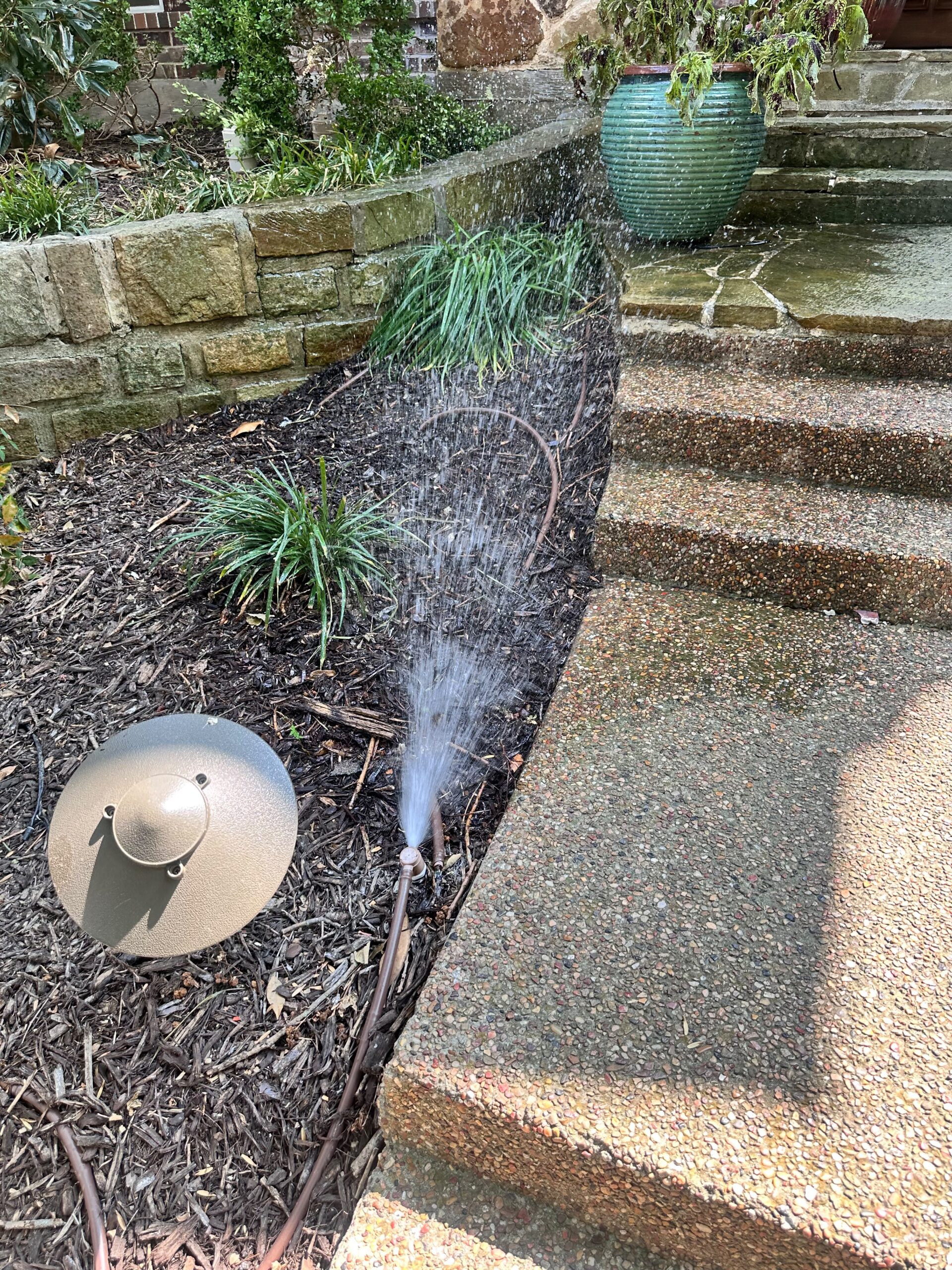
When a head sprays too far, water lands on concrete, streets, or areas with no plants, and none of that water benefits the lawn. When a zone runs longer than the soil can absorb, water runs off into the street instead of soaking in. Both situations use exactly as much water as the system was told to use, but very little of it goes where it’s supposed to.
This is why a sprinkler adjustment in Plano TX is often one of the most cost-effective ways to reduce waste. It doesn’t add new components, it simply corrects settings so the system does what it was designed to do in the first place.
It’s also worth noting that water waste isn’t always obvious from looking at a lawn. A yard can appear healthy while a meaningful percentage of the water applied to it never actually reaches the root zone. Overspray onto pavement is the most visible form of waste, but runoff into the street can be just as significant and much harder to notice unless someone is watching the zone run from start to finish. Both forms of waste share the same underlying cause: the system is applying water faster or wider than the landscape can absorb it.
Small adjustments tend to have an outsized effect because irrigation systems are designed with fairly tight tolerances. A head that’s rotated a few degrees too far, or a run time that’s five minutes longer than necessary, can be the difference between water staying on the lawn and water ending up in the gutter. That’s part of why periodic review, rather than a one-time setup at installation, tends to keep a system running efficiently over the years.
Step-By-Step: How To Reduce Waste Through Adjustment
Step 1: Run Each Zone Manually
Turn on one zone at a time and watch the full pattern. This is the only way to see exactly where water is landing versus where it should be landing.
Step 2: Identify Overspray
Look for water hitting sidewalks, driveways, fences, or the street. Overspray is one of the most common and easiest sources of waste to fix.
Step 3: Adjust Spray Distance And Arc
Most heads have a small adjustment screw or dial that controls how far water travels and how wide an arc it covers. Turning this down slightly can keep water on the lawn instead of the pavement.
Step 4: Check Run Times Against Soil Type
Clay-heavy soil, common throughout Plano, absorbs water slowly. Long, single run times often cause runoff before the water has a chance to soak in.
Step 5: Consider Cycle-And-Soak Scheduling
Splitting one long run time into two or three shorter cycles with breaks in between allows water to absorb before the next cycle starts, reducing runoff without reducing total watering time.
Step 6: Recheck After Adjusting
Run the zone again after making changes to confirm the pattern now stays within the intended area and the timing matches how quickly the soil absorbs water.
Step 7: Document The Settings
Once a zone is adjusted correctly, noting the spray distance, arc, and run time makes it easier to spot when something has drifted out of place during a future check, rather than starting from scratch each time.
Common Mistakes Homeowners Make
- Only checking the system when it’s running on the automatic schedule. Automatic runs are often at night or early morning, when it’s hard to see exactly where water is landing.
- Assuming a longer run time always means better watering. Past a certain point, extra time just causes runoff instead of deeper watering.
- Adjusting one head without checking the whole zone. A single change can affect how much overlap exists with neighboring heads.
- Ignoring seasonal changes. Watering needs in July are very different from watering needs in October, and settings that made sense in one season may waste water in another.
- Not accounting for slope. Sloped areas absorb water more slowly and are more prone to runoff, which is one of the most common reasons cycle-and-soak scheduling helps.
- Assuming all zones need the same settings. A zone with full sun exposure and a zone in heavy shade often need different run times, even if they were originally programmed the same way.
Local Considerations In Plano, TX
North Texas conditions play a direct role in how much water an adjustment can actually save.
- Clay soil across much of Plano absorbs water slowly, making long single-cycle run times a common source of runoff and waste.
- Summer heat increases evaporation, which means water applied during the heat of the day is less effective than water applied early morning or evening.
- Wind can push spray patterns off target, sending water onto pavement even when the head itself is aimed correctly.
- Water restrictions in many North Texas municipalities limit watering days, which makes it more important that every scheduled run is actually efficient rather than wasted through overspray or runoff.
- Seasonal watering needs shift throughout the year, and a schedule set once at installation may no longer match current conditions without periodic review.
Homeowners can review regional watering guidance through resources like the Texas A&M AgriLife Extension or WaterSense, a program supported by the EPA that focuses on water-efficient practices.
What Else Could Cause Water Waste
If adjusting spray patterns and run times doesn’t meaningfully reduce waste, a few other issues may be involved:
- Leaks in the irrigation line, which waste water regardless of how well heads are adjusted
- A stuck or malfunctioning valve, which can cause a zone to run longer than programmed
- A controller that needs full reprogramming, rather than just timing tweaks
- Low water pressure, which can distort spray patterns even after adjustment
- Head-to-head coverage gaps, which sometimes lead homeowners to run zones longer to compensate for dry spots, increasing waste in the process
A licensed sprinkler company can help identify which of these may be contributing if adjustments alone don’t solve the issue.
Frequently Asked Questions
- How much water can a sprinkler adjustment actually save?
It varies by system, but correcting overspray and runoff can meaningfully reduce the amount of water used without changing how well the lawn is watered.
- Do I need special tools to adjust my sprinkler heads?
Most heads can be adjusted with a small screwdriver or a simple adjustment tool that often comes with the head itself.
- How do I know if my system is wasting water?
Signs include water on pavement, puddling, runoff into the street, or a lawn that looks unevenly watered despite frequent runs.
- Is cycle-and-soak watering complicated to set up?
Most modern controllers allow multiple start times per zone, making cycle-and-soak scheduling straightforward to configure.
- Can adjusting my sprinklers lower my water bill?
Reducing waste from overspray and runoff often reduces total water use, which can have a noticeable effect on water bills over time.
Bottom Line
A sprinkler adjustment in Plano TX can reduce water waste by correcting overspray, fixing run times that don’t match the soil’s absorption rate, and improving how evenly water is distributed. In many cases, the system doesn’t need new equipment, just settings that reflect how the yard actually looks today.
Next Step
Checking each zone manually and adjusting spray distance or timing is something most homeowners can do without special equipment. If waste continues after basic adjustments, or if the cause seems related to pressure, valves, or full controller reprogramming, a professional evaluation can help pinpoint what’s happening beyond the surface settings.
Related Resources
- What Does Head-To-Head Sprinkler Coverage Mean In Parker TX?
- How to Adjust Sprinkler Heads in Melissa, TX
- Signs of Low Water Pressure in a Sprinkler System
- Sprinkler Controller Programming Basics for North Texas Lawns
- How to Identify an Underground Sprinkler Leak
Conclusion
A sprinkler adjustment in Plano TX is often the simplest way to reduce water waste without replacing equipment. Correcting overspray, timing, and coverage keeps water on the lawn instead of the pavement. If adjustments don’t resolve the waste, or you’re unsure where water is going, Whale Done offers professional evaluations to identify the cause and help your system run more efficiently.