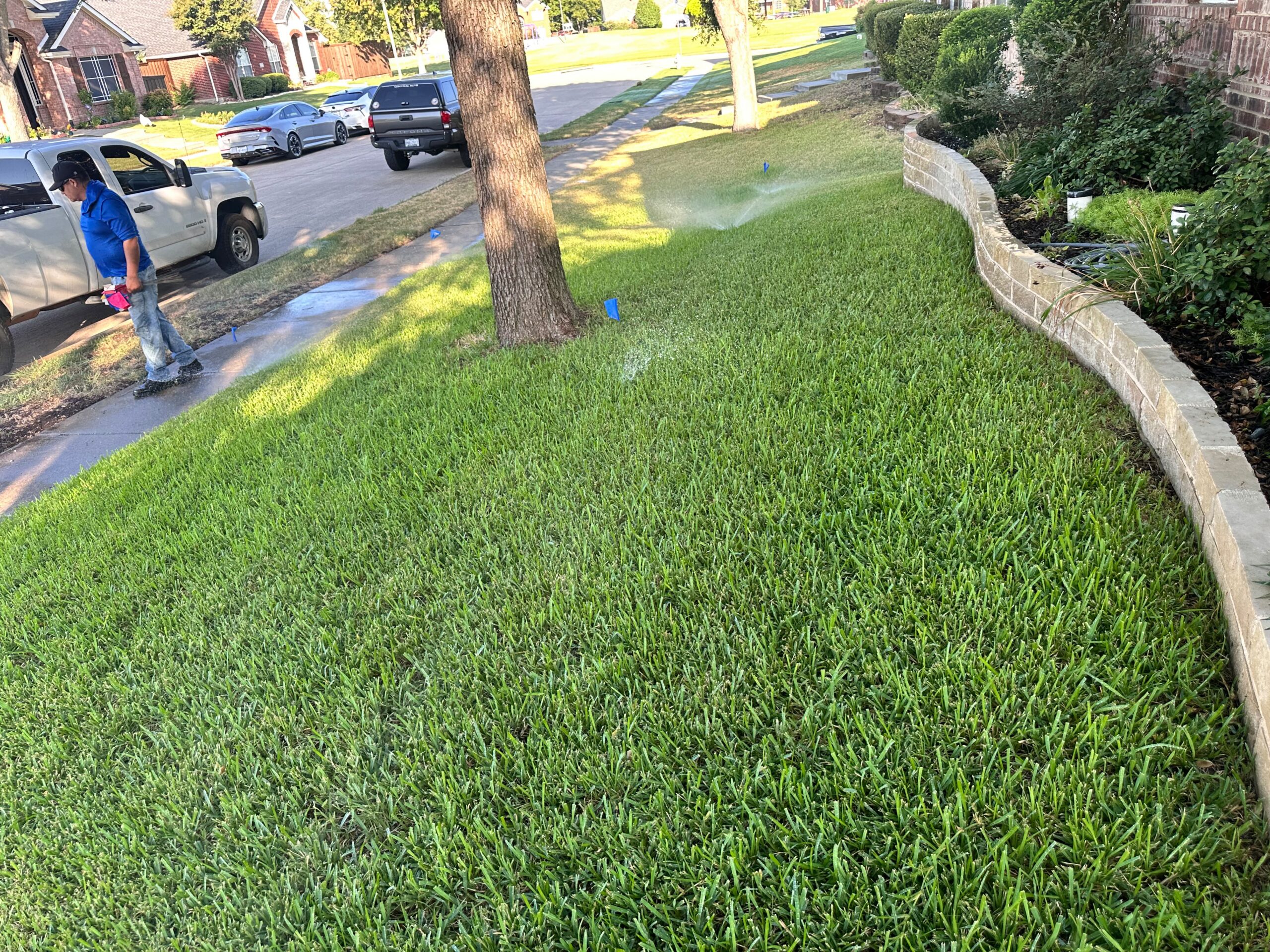
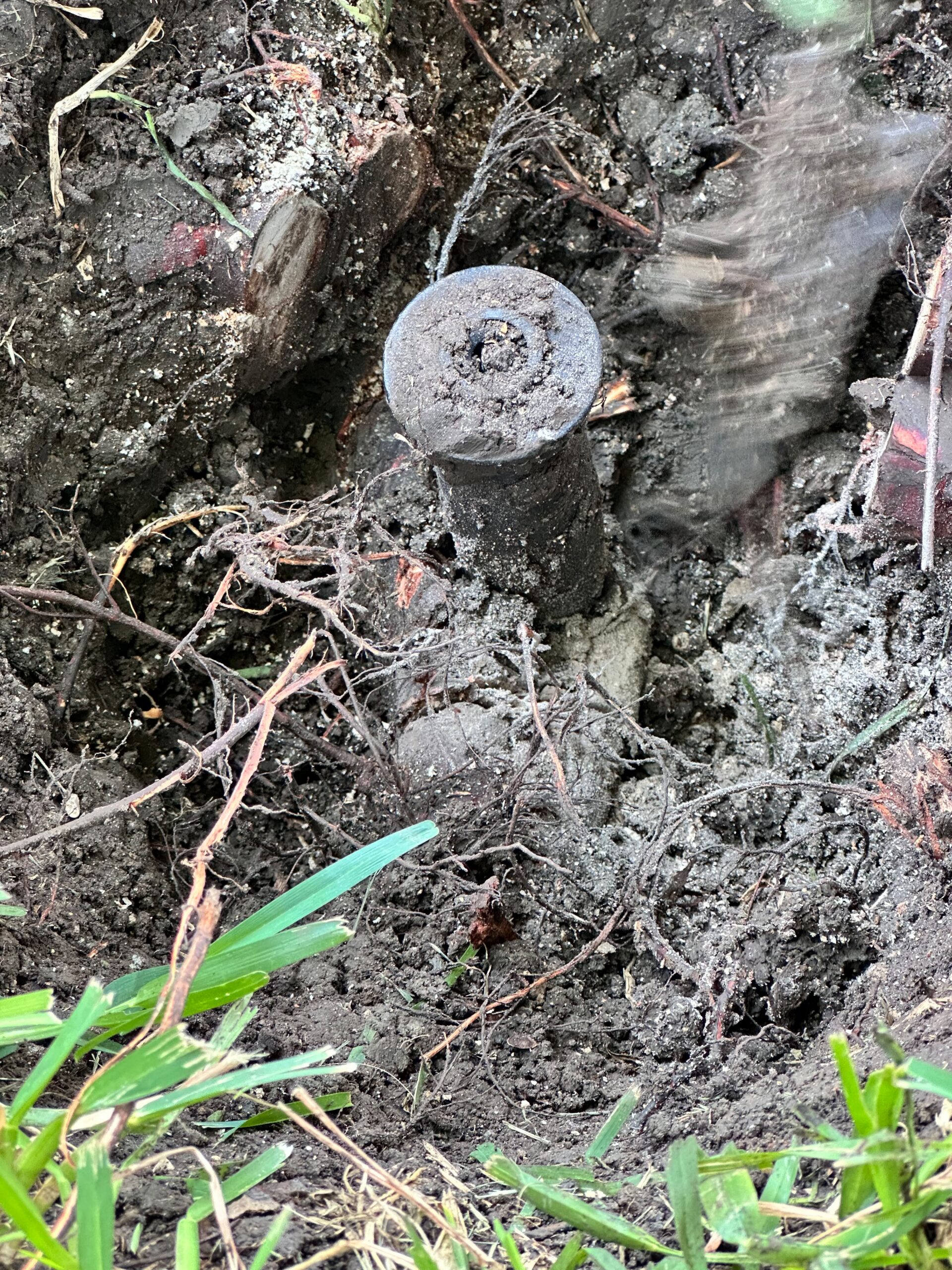
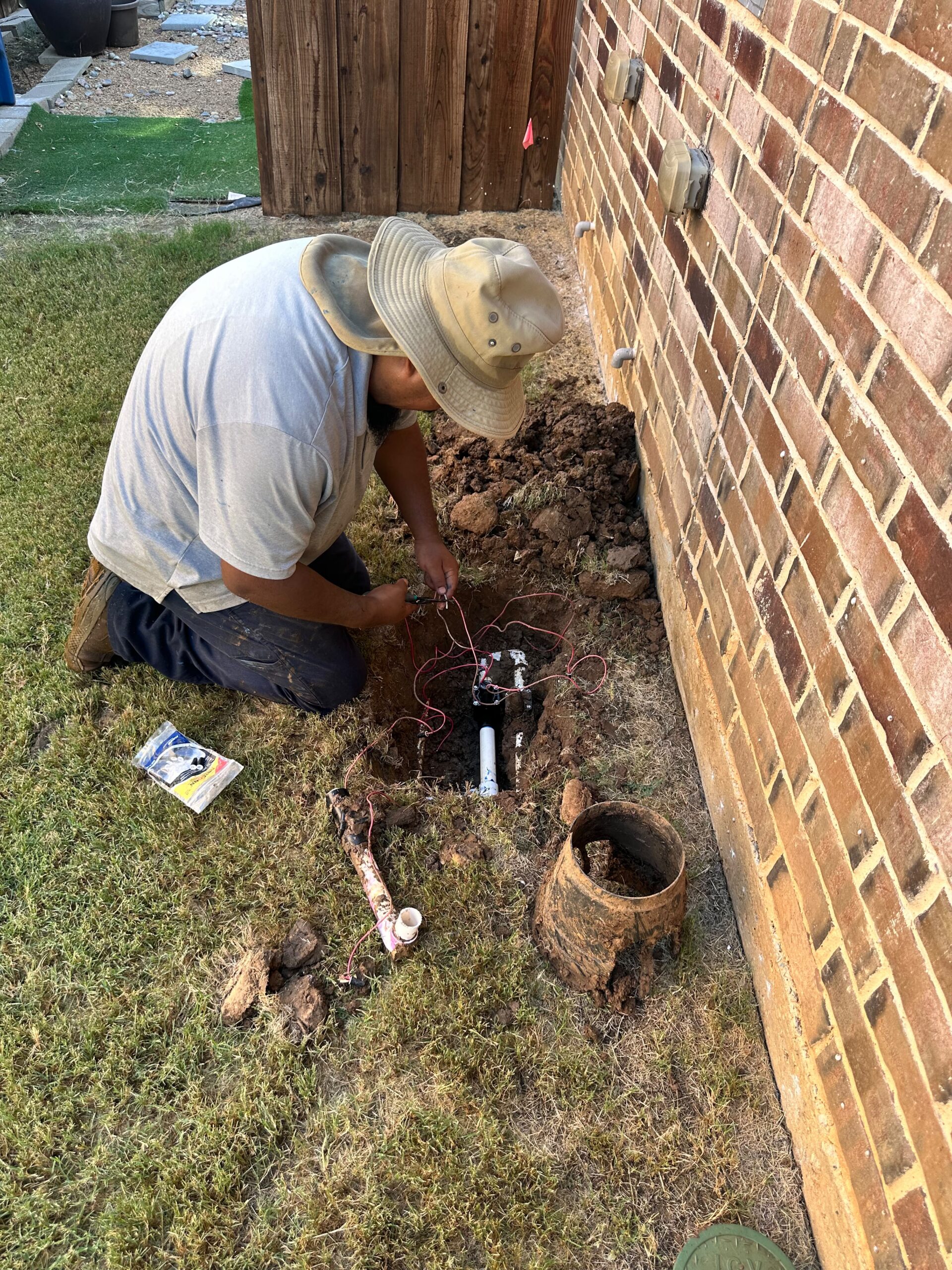
A broken sprinkler line in Celina TX usually shows up as a consistently wet or soggy area in the yard, noticeably lower water pressure across a zone, or a water bill that’s higher than usual without an obvious reason. Other signs include areas of grass that stay greener than the rest of the lawn even without extra watering, or bubbling water at the surface when a zone runs. These symptoms point to a break somewhere along the buried line rather than a problem with an individual head.
At a Glance
- Difficulty: Low to spot signs; moderate to locate and repair the break
- Estimated Time: 15–20 minutes to check for visible signs
- Tools Needed: None for observation; leak detection tools for locating the exact break
- Works For: Identifying whether a zone issue is likely a line break versus a head problem
- May Not Solve: Pinpointing the exact break location without professional equipment
Why Sprinkler Lines Break
Sprinkler lines are buried a few inches below the surface, which protects them from everyday yard activity but doesn’t make them immune to damage. Understanding the common causes helps explain why breaks tend to happen where and when they do.
Typical causes include:
- Ground shifting from clay soil, which expands and contracts with moisture changes
- Freeze damage, when water left in a line expands during a hard freeze
- Root intrusion from nearby trees or shrubs growing into or around pipe
- Accidental damage from digging, aerating, or heavy equipment near buried lines
- Age-related wear, as older PVC or poly pipe becomes more brittle over time
A break can happen suddenly, such as from a shovel strike, or develop gradually, such as a joint slowly separating from soil movement.
Common Signs of a Broken Sprinkler Line in Celina TX
A broken sprinkler line in Celina TX typically produces a recognizable set of symptoms, even before the exact location of the break is known. Recognizing these signs early can help prevent water waste and reduce the size of the repair.
A Consistently Wet or Soggy Area
One of the most common signs is a spot in the yard that stays damp or soggy regardless of recent watering or rainfall. This often indicates water escaping underground before reaching the intended head.
Lower Water Pressure Across a Zone
If one zone suddenly has noticeably weaker spray across multiple heads, while other zones seem normal, a break upstream of those heads may be diverting water before it reaches them.
An Unusually High Water Bill
A sudden increase in water usage without a change in watering schedule or weather is a common indicator of water being lost somewhere in the system, often before a visible sign appears above ground.
Bubbling Water at the Surface
When a zone runs, water bubbling up through the grass or soil away from any sprinkler head is a strong sign of a break in the line beneath that spot.
An Area That Stays Greener Than the Rest of the Lawn
A patch of grass that’s noticeably greener or growing faster than the surrounding lawn, without extra attention, may be receiving unintended water from a nearby break.
Step-by-Step: What to Do If You Suspect a Break
Step 1: Run Each Zone and Observe
Turn on each zone individually and watch for weak spray, bubbling water, or areas that seem to be receiving water outside of the normal spray pattern.
Step 2: Check the Water Meter
With all water use in the house turned off, check whether the water meter is still moving. Continued movement can indicate water loss somewhere in the system, including underground.
Step 3: Walk the Yard for Visible Signs
Look for soggy patches, unusually green grass, or areas where the ground feels soft compared to the rest of the yard, especially near zone boundaries or known line paths.
Step 4: Note the Location and Timing
Write down where the signs are occurring and whether they appear only when a specific zone runs. This narrows down which line is likely affected.
Step 5: Call a Licensed Sprinkler Company for Exact Location
Pinpointing the precise break often requires leak detection equipment, since the visible signs above ground don’t always sit directly above the actual break point.
Common Mistakes Homeowners Make
- Assuming a soggy spot is just poor drainage. In areas with buried irrigation lines, a consistently wet patch is often worth checking as a possible line break first.
- Waiting for a dramatic leak before taking action. Many breaks start small and gradually get worse, wasting water the entire time.
- Digging without confirming the exact location. Guessing where a line is broken can lead to unnecessary yard damage and still miss the actual break.
- Ignoring a rising water bill. A gradual increase is often dismissed as normal seasonal usage when it may actually indicate a slow leak.
- Not checking the water meter. This simple step can confirm whether water is being lost somewhere in the system before further investigation begins.
Local Considerations for Celina TX
A few things about the Celina area are relevant to how and why sprinkler line breaks tend to occur:
- Clay soil movement. Celina sits on clay-heavy soil that expands when wet and contracts when dry, which puts ongoing stress on buried pipe joints and is a common contributor to gradual line breaks over time.
- Summer heat and dry soil. Extended heat causes clay soil to pull away from buried lines as it dries, which is often when previously stable joints begin to separate and develop leaks.
- Freeze events. Although less frequent than in colder climates, occasional hard freezes in the Celina area can still cause water left in lines to expand and crack pipe, particularly in poorly insulated or shallow sections.
- New construction and landscaping activity. As Celina continues to grow, digging related to landscaping, fencing, or utility work is a common cause of accidental line damage in both new and established yards.
- Water restrictions. Celina enforces designated watering days during peak season, and a broken line wastes water within an already limited watering window, making early detection especially valuable for staying compliant and efficient.
Related Problems That Can Look Like a Broken Line
Not every symptom of water loss or coverage change points to a broken sprinkler line. Related issues to consider include:
- A failing valve that isn’t closing fully and continues to leak water
- A cracked or loose head rather than a break in the buried pipe itself
- Controller programming issues causing a zone to run longer or more often than intended
- Natural drainage patterns unrelated to the irrigation system entirely
A licensed sprinkler company can typically distinguish between these causes through a combination of visual inspection and pressure testing.
Frequently Asked Questions
- How can I tell if it’s a broken line versus just a bad sprinkler head?
A broken head is usually visible above ground and easy to spot, while a broken line often shows up as a soggy area, low pressure across multiple heads, or a rising water bill without an obvious surface cause.
- Can a broken sprinkler line affect my water bill even if I don’t see any signs in the yard?
Yes. Depending on the depth and location of the break, water can be lost underground for some time before any visible signs appear above the surface.
- Is a broken sprinkler line an emergency?
It’s not usually a plumbing emergency, but addressing it promptly helps limit water waste and prevents the surrounding soil or landscaping from being affected by prolonged saturation.
- Can I locate the exact break myself?
Visible signs can point you to a general area, but pinpointing the exact location typically requires leak detection equipment that most homeowners don’t have access to.
- How much yard disruption does repairing a broken line usually involve?
This depends on the depth and location of the break, but a licensed sprinkler company can often minimize disruption by locating the exact spot before digging, rather than excavating a larger area.
Bottom Line
A broken sprinkler line in Celina TX often reveals itself through a handful of consistent signs, including soggy patches, weak zone pressure, unusually green grass, or a water bill that doesn’t match your normal usage. These symptoms typically point to water escaping underground before it reaches the intended heads. Catching them early, before the break worsens, can reduce both water waste and the extent of repair needed.
Next Step
If you’re noticing a consistently wet area, a sudden change in zone pressure, or an unexplained rise in your water bill, it’s worth having a licensed sprinkler company take a look. Locating the exact break usually requires specialized equipment, and addressing it early tends to be simpler and less disruptive than waiting until the problem becomes more visible.
Related Resources
- Can Clay Soil Movement Affect Sprinkler Lines in Melissa TX?
- Common Causes of Low Water Pressure in Sprinkler Systems
- Sprinkler System Repair in Celina TX
- Why Do Sprinkler Problems Show Up During Summer in Anna TX?
For additional background on water efficiency and leak detection, the EPA WaterSense program and Texas Commission on Environmental Quality (TCEQ) both publish resources relevant to North Texas homeowners.
Conclusion
A broken sprinkler line in Celina TX is easiest to manage when caught early, before soggy patches, low pressure, or a rising water bill turn into a larger repair. These signs are worth checking as soon as they appear rather than waiting for something more obvious. If you’re seeing any of these symptoms, a licensed sprinkler company can locate the break and get it repaired with minimal disruption to your yard.